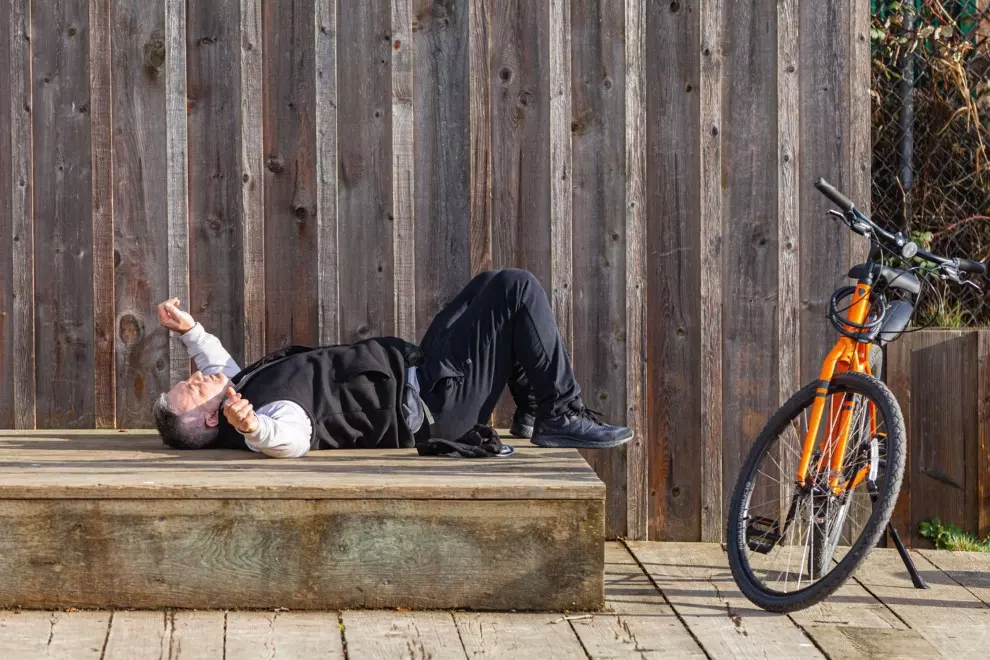
Usually by September, I’m flying. That’s my season. Long, ugly cross-country days, 48 km with 2,000 meters of climbing, the kind of rides where your legs complain early and then shut up because they know they’re not being consulted. Last year, that rider never showed up.
The confirmation came at the end of October, at my last race of the season. Heavy rain, snow, organisers panicking, so the course got chopped to 32 km and 1,300 meters of climbing. On paper, a gift. Two and a half hours, maybe less.
Instead, my legs cramped so hard they basically resigned. The final 7 km were almost flat. They took me forty minutes. Alone. No attacks, no tactics, just me pedalling like I was a puppet on strings, careful not to twist my muscles too much. Embarrassing. A week later, I decided to stop guessing and check the damage.
It was worse than expected. I was over 100 kg. My normal weight is around 85. My FTP was 198 watts. Yes, 198. That put me at just over 1.9 W/kg. At that point, I wasn’t “out of shape”; I was a public service announcement. A cautionary tale. That was the moment. Not inspirational, not cinematic. Just shame, very clean and very motivating.
So I made a decision. No half measures, no “let’s see how it goes”. Three months. A plan. And actual execution. Spoiler alert: it worked.
By the end of January, I was at 2.74 W/kg. More importantly, I felt like a cyclist again, not a guy borrowing a bike. And no, it wasn’t easy. It wasn’t fun either. And no, I’m not pretending this will work for everyone. It worked for me, though. And here is how it all happened.
Rouvy made indoor riding something to look forward to
The first thing I had to do was take care of the mind-altering boredom that usually comes with indoor training. At first, I was playing films or listening to podcasts. Unfortunately, they turned out to be way too much of a distraction. I stopped following my stats like cadence, heart rate, and zone, and instead I followed the plot. During high-intensity action scenes, I simply stopped pedalling and started watching. Not the best training session.
So, it was clear I needed to add a bit of fun to these mundane sessions. Rouvy came to aid. I was choosing between Zwift and Rouvy and went for the latter simply because I had explored it more several years back. I found riding in the real world a bit more exciting, especially since I wasn’t really going to join too many races. That wasn’t the point. So I subscribed, and man, oh man, is there a difference.
I started riding 35-40 minutes without even noticing. I enjoyed the scenery while chasing other riders and maintaining my goals. Watching the road roll by tricks your brain into thinking time is behaving normally. You’re also “travelling”, which sounds better than saying you spent another evening sweating in place. Motivation stopped being abstract. It became visual, competitive, and, to be honest, very, very exciting. I simply couldn’t wait for the next ride.

Structured training sessions
Once I committed, the week stopped being flexible. Every day had a role, and though I missed some sessions due to still being alive and having other things to do, I mostly stuck to the plan.
Tuesday, Wednesday, and Thursday were double days. Mornings were deliberately dull. Thirty to forty-five minutes before breakfast, mostly Z2 drifting into low Z3. No climbs, no spikes, no ambition. The goal was fat burning, and what better way to break your fast than completely exhausting your body? Believe me, it works better than coffee or black tea.
Evenings were when the plan truly became brutal.
Monday was recovery. Forty-five to sixty minutes of easy spinning, Z1 with some Z2. Nothing heroic. Just reminding the legs that they were allowed to relax.
Tuesday was climbing day. Usually, a route with several short climbs, one to three minutes, punched hard at Z6. On top of that, one longer effort, ten to fifteen minutes at Z5. It was uncomfortable, but that was the point, right?
Wednesday shifted to punchy work. Flatter routes, repeated one to two minute climbs at Z6 and Z7. This wasn’t about elegance. It was about snapping power back into tired legs.
Thursday was the threshold. One long climb, thirty to thirty-five minutes at Z4. Slow, heavy, mentally sticky. The kind of effort where you don’t look at the timer because that only makes things worse.
Friday was cadence. Mostly downhill routes, spinning above 100 RPM, with short bursts to 130. Legs moving faster than they wanted to, brain trying to keep up.
Saturday was fiancé time. I mean, I do want to get better, but I don’t want to be left alone. So, yeah, making time for your loved one is always a priority.
Sunday was the long ride. Three to four hours. Eighty to a hundred kilometres, or around 2,000 meters of climbing. No structure beyond duration. Just time in the saddle.
Not every session went well. Especially early on, some rides ended with me barely moving, stuck in Z1, legs empty. But the plan didn’t change. I showed up again the next day. That’s where the progress came from.
Losing weight
Weight loss was inevitable, but it definitely wasn’t the main goal. I mean, when you’re burning 1,500 calories each day, you’re bound to start losing weight. And with fat-burning sessions every other day, this is pretty much guaranteed.
Still, my main goal was to better my performance. To become stronger, to push harder, to be able to keep higher power for a longer time. To achieve this, you need fuel, which means carbs. So, when I was going for one of the harder rides, I always stuffed myself with some nuts, fruits, and even some granola bars. After all, I wanted my legs to feel the burn, not die in the fire.
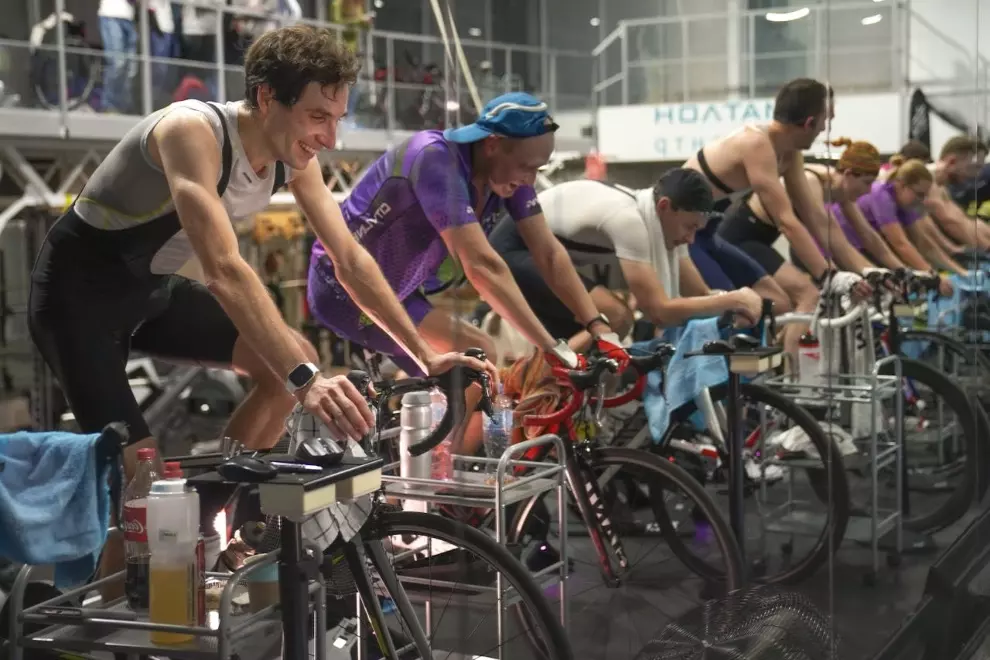
The main point was to treat these sessions as a normal ride. Or a normal race. So, I dressed in bibs and a jersey, filled my pockets, put a second bottle in my back pocket, and added electrolytes. The whole nine yards. I tracked when to eat, when to drink, and how to keep my legs fresh for the tougher climbs and the late game. So, while calories were definitely burned, more than enough were welcomed back.
Even so, and despite Christmas and the obligatory gluttonous fest during the holidays, I managed to lose 9 kg. This alone drove my FTP with (almost) 0.2 W/kg. And while it was a small boost, it really allowed me to feel much better about myself as a whole. It also gave me the motivation I needed to move to the next phase.
What’s next?
At the end of January, I ran my control FTP test. I test monthly, so there was nowhere to hide. FTP moved from 198 watts in early November to 260 watts. With the weight loss, that puts me at roughly 2.7 W/kg, an increase of 0.8 in three months.
Cadence improved, too. Flat efforts now sit around 100 RPM, climbs over 8% hover closer to 67. Winter didn’t give me many chances to test this outside, only two rides in real conditions, but the direction is clear.
The next targets are simple. 85 kg, 300 Watts FTP, and 3.5 W/kg by my first race in late April. After all, that’s just another 0.8 W/Kg in 3 months. I know how it’s done. I already did it.