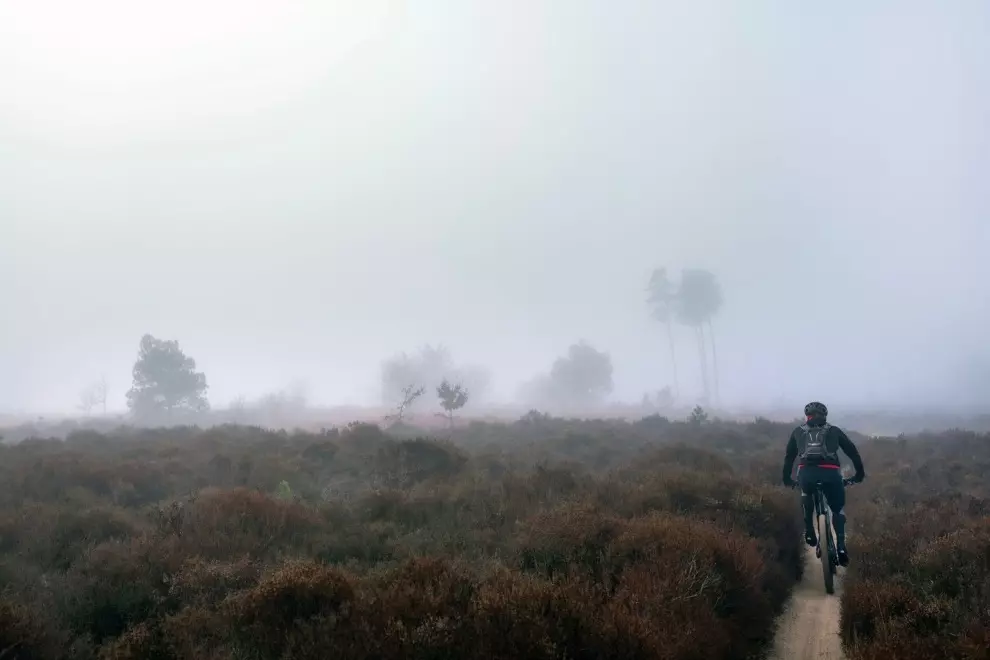
Why winter drains your motivation
Light does far more than help you see. It’s one of the main signals your brain uses to set its internal clock and regulate the chemistry behind mood and drive. When researchers at the Baker Heart Research Institute in Melbourne sampled blood from the jugular veins of 101 healthy men, they found that serotonin turnover was lowest in winter. Its production tracked the hours of bright sunshine and rose quickly as days got brighter.
For most riders, the result is a mild flatness. For some, it’s more. A 2025 meta-analysis of 24 studies and almost 33,000 people put the prevalence of seasonal affective disorder (SAD), a recognised form of depression, at around 5%. Another 9% had subsyndromal SAD, the milder “winter blues” that many cyclists will recognise as the sofa winning the argument more often than it should.
So, when your motivation dips in November, it isn’t a character flaw – your brain chemistry has shifted, and willpower is a weak tool against biology.
Why your living room isn’t bright enough
Here’s the part that surprises most people. Indoor light that looks perfectly bright to your eyes is very dim by biological standards. A typical room sits at around 300 to 500 lux, while a cloudy day outdoors usually delivers 1,000 lux or more and full daylight reaches 10,000 lux and beyond.
Real life confirms it. In a study by Aarhus University, around 500 workers wore light sensors for a week. Indoor workers received only about 400 lux during winter working hours, compared with 1,000 to 2,000 lux for those working outside.
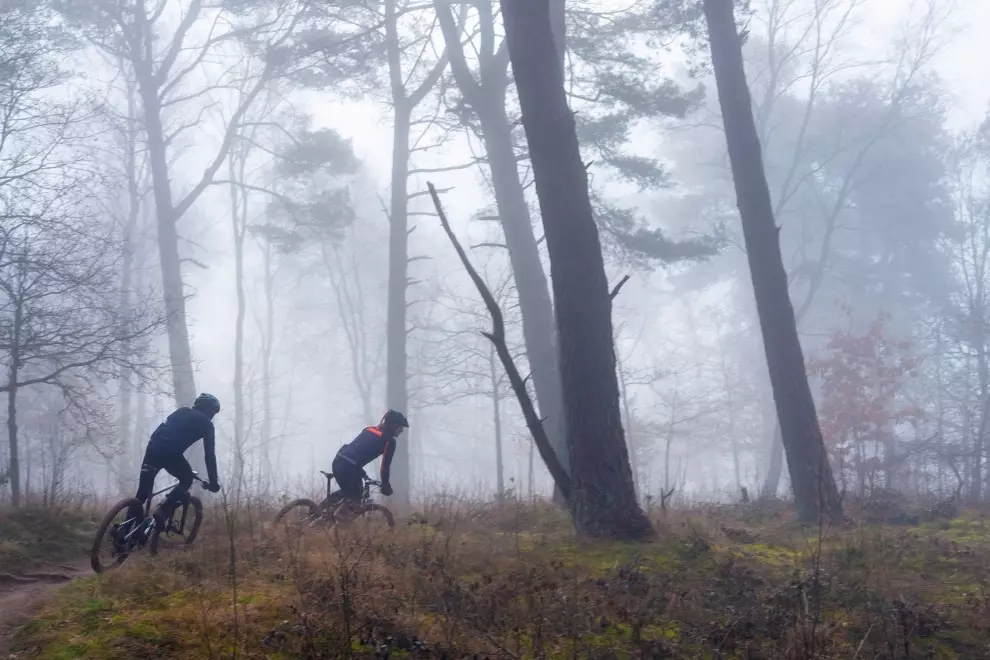
That’s why an ordinary lamp won’t move the needle, and why clinical light therapy uses dedicated light boxes delivering around 10,000 lux, usually in the morning. For diagnosed SAD, the evidence is solid: a 2020 meta-analysis of 19 randomised controlled trials found bright light therapy clearly outperformed placebo. Whether it helps riders with only a mild winter dip is much less clear. The key point is simpler: even grey winter daylight is far brighter than anything your living room can offer.
You need less training than you think
Now the good news. In classic studies from the early 1980s, Robert Hickson had young adults train hard for 10 weeks and then cut back. Those who dropped to 4 or even 2 sessions per week kept their VO2max essentially at trained levels for 15 weeks, and cutting session length by up to two-thirds had a similar result. The catch: when intensity was reduced, VO2max fell.
These were small groups of previously untrained people, so the findings won’t map perfectly onto experienced cyclists. But the contrast with stopping altogether is stark. A review of detraining research notes that VO2max drops significantly within just 2-4 weeks of doing nothing.
In other words, winter doesn’t call for a heroic programme. Fewer and shorter sessions that keep some intensity hold on to more than you’d expect. It’s the complete stop that costs you.
Why other people make it easier
When you train alone, skipping a session is invisible. Nobody notices, so the cost of staying on the sofa is close to zero. A meta-analysis of 44 studies compared different ways of exercising and found that cohesive groups beat standard exercise classes, while people exercising at home did better when someone kept in regular contact with them.
That’s the logic behind club rides, online group sessions, and a training partner who asks where you were. Commitments to other people are much harder to break than private intentions, especially on a dark, wet Tuesday evening.
Why a short ride still counts
The other winter trap is all-or-nothing thinking: if you can’t do the full planned session, why bother at all? Research on habits suggests that this logic is wrong. In a UCL study that followed 96 volunteers for 12 weeks as they built a new habit, missing one opportunity did not materially affect the habit-forming process.
How you see yourself matters too. In a study of 528 exercisers, those with a stronger exercise identity exercised more frequently, although the design can’t prove cause and effect. A short spin won’t transform your fitness, but it keeps both the habit and your sense of being “someone who rides” alive.
The dark months won’t make you lazy, but they will test your plan. Expect the dip, keep a little intensity, ride with others, and let the short rides count.