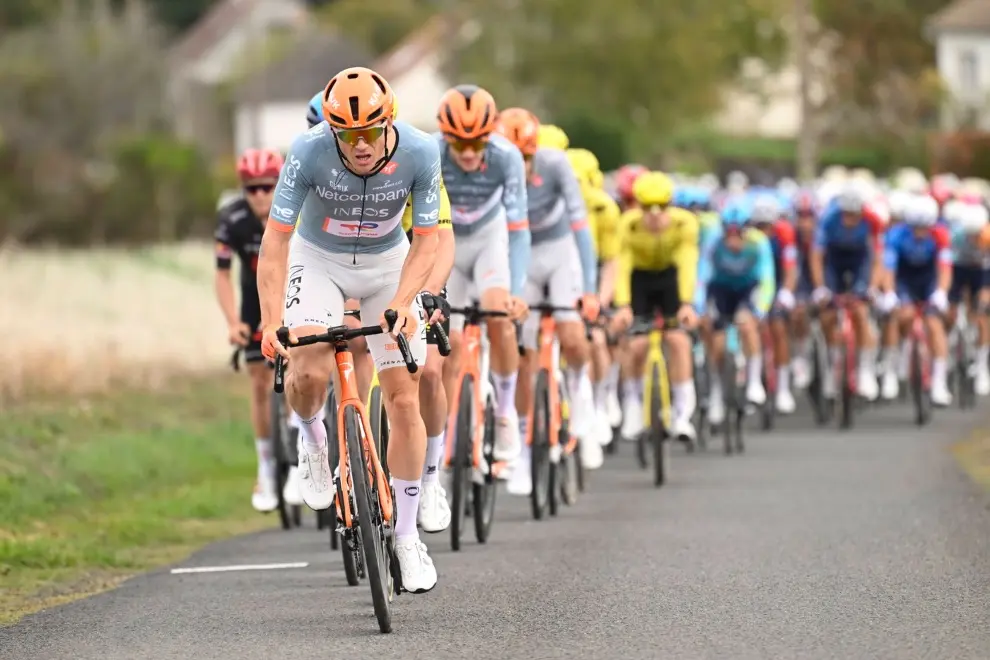
In 2026, Team Sky’s name successor, Netcompany INEOS, won 36 races, its best performance since 2023. But if you scratch the surface, you’ll find that eight of those victories came in national championships, 15 were from lower-ranked events, and only 13 were accomplished in WorldTour races.
“Purely from results, I’d say it definitely wasn’t good,” INEOS Director of Racing Geraint Thomas said. “We had a lot of wins, but they were like smaller wins. It wasn’t like any big wins really.”
AI but no top dog
The team was buoyed by the addition this year of Netcompany and its promise of €100 million over five years, plus its vast AI resources that will be used to improve performances and, everyone hopes, help put the team back on top. But despite all the hoopla, AI is not a magic wand you wave at a problem to make it go away. It can certainly optimise training and performance-enhancing technology, but you can’t win without a top dog rider – and the INEOS kennel appears to be bare.
While the 13 WorldTour victories ranked third among all teams, tied with Alpecin–Premier Tech and ahead of Lidl-Trek, another deep-pockets outfit, it is far from the level the team wants to reach, that of UAE Team Emirates–XRG, which had 40 WorldTour victories, or even Visma–Lease a Bike, with 27. That means that to approach the two teams that now sit atop the WorldTour, Netcompany INEOS needs to double or even triple its success rate.
According to Thomas, that kind of turnaround will take a while. “Let’s just say we’re starting at 20% of what we used to be, just to pick a number,” he said. “You can’t just go from 20 back to 80 straight away. It’s like climbing a ladder, isn’t it? You can’t go from the second rung of a ladder straight to eight. You’ve got to go to three, four, five.” In other words, step by step.
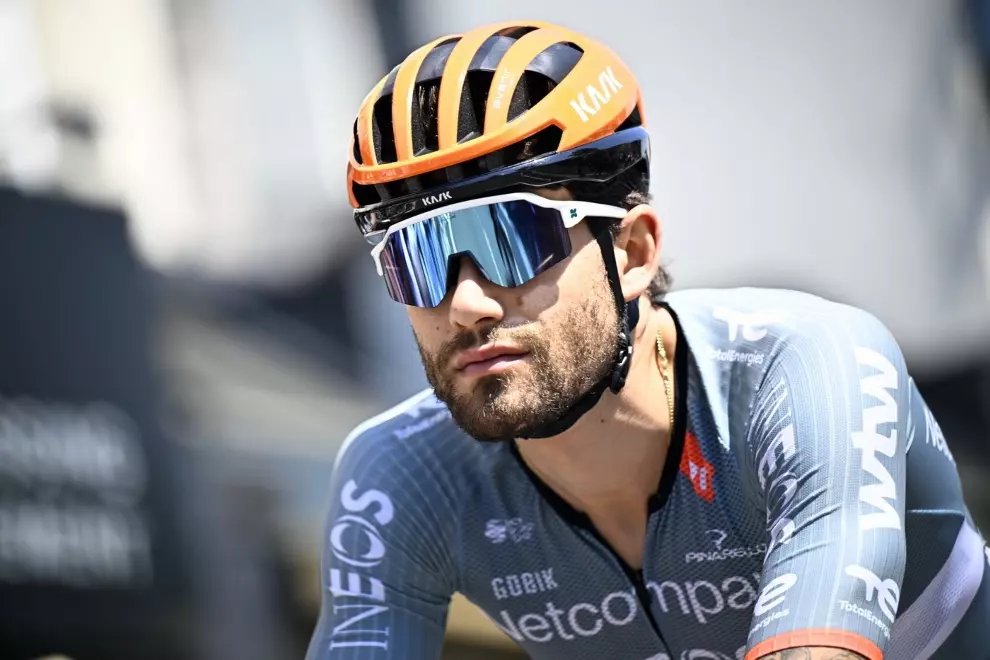
Perhaps the team’s biggest failure this year was in the three Grand Tours, where it did not register a single podium finish. Thymen Arensman was 4th in the Giro d’Italia, Oscar Onley placed 6th in the Vuelta a España and Egan Bernal was 20th in the Tour de France, nearly two hours behind Tadej Pogačar. And the team won only one Grand Tour stage, a time trial at the Giro by Filippo Ganna, who also won INEOS’s other marquee victory of the year, Dwars door Vlaanderen.
Will big turnover fuel turnaround?
But Ganna is gone, moved to Lidl-Trek, joining a massive exodus of riders, 16 in all, who have either signed with other teams, retired or remain unsigned. As of mid-November, the team’s squad consists of only 22 riders. However, according to Daniel Benson’s Cycling Substack, which is often on the money, six riders whose contracts expired at the end of 2026 have reportedly agreed to stay on for 2027, which will soon be formally announced: Tobias Foss, Axel Laurance, Brandon Smith Rivera, Óscar Rodríguez, Connor Swift, and Samuel Watson.
Of the nine new riders who INEOS has signed so far, 21-year-old Markel Beloki and 2024 Tour de l’Avenir winner Joseph Blackmore look promising. But the real star of the team’s transfer season is 18-year-old Spanish academy rider Benjamín Noval, who won 19 junior-level races this year, including the junior road race and time trial world championships and the European time trial championship.
After such a season, INEOS reportedly changed the length of his contract from three to five years and increased the original €1 million salary, giving him reportedly the biggest contract ever for a rider his age. Speaking at the time, team CEO John Allert said that Noval was the team’s future. “At the heart of our team is a belief in long-term development and investing in the next generation of talent. Benjamín represents that future – and we’re delighted he’s chosen to grow and develop with us,” he said.
That effectively puts an end to the hope the team had placed in another youngster, Oscar Onley, when it signed the British rider after he had placed fourth in the 2025 Tour. But to reach the stratospheric level it once occupied, Netcompany INEOS needs to sign a rider who can compete with Remco Evenepoel, Isaac del Toro and Paul Seixas in the Grand Tours. The only one who could be available soon is Seixas himself.
Letting Ganna go suggests that the team wants to have money available for the 20-year-old superstar, just in case. That may also explain why the team signed Beloki, Harold Tejada, Javier Romo, and James Shaw, excellent climbers who could form the nucleus of a strong support team for Seixas. But every team with enough money has that dream – and some of them have the experience of recently winning one or more Grand Tours.
It’s clear that, in today’s racing, a team needs to have a superstar to flourish. There are teams who have been successful without having a dominant rider, such as the old Soudal teams under Patrick Lefevere, which did very well by winning one-day races and Grand Tour stages. But that strategy is not part of the Team Sky/INEOS DNA. The team will not feel in its element again until it makes the headlines again by winning the Tour de France.