
“There’s actually a funny story,” Pogačar began a recent interview with The Athletic. “Two weeks ago, I was in Slovenia, and I went to do another CT scan. I knew I had a C7 fracture, but then we saw I had two more broken vertebrae, the T1 and T2.”
He was referring, of course, to injuries he suffered in his crash in the Vuelta, which left him bloodied and wounded and forced him to drop out of the race and cancel the rest of his 2026 season. The C7, T1, and T2 vertebrae are three stacked spinal bones located at the base of the neck and the very top of the upper back. Together, they form the cervicothoracic junction, which connects the neck to the upper back.
This means that the injury was significantly more serious than originally thought. According to medical experts, recovery for an athlete who breaks the C7, T1, and T2 vertebrae typically takes 3 to 6 months for stable fractures, though severe injuries requiring surgery can take 6 to 12+ months or can even end a career. Pogačar finally understood the severity of the injuries he had sustained. “At that moment, I was happy I didn’t do the European Championships, which had been my initial goal,” he said. “When I saw I had three broken vertebrae? I’m just happy to be alive, actually, or just to be standing.”
He went on to say that he has returned, more or less, to his normal routine, though he is still being careful. “I don’t have discomfort anymore,” Pogačar said. “I have to be careful not to crash on the bike or do some heavy lifting with my left arm or with my neck. But I can do basically everything normal now. Like eat with a fork and sit on a bike.”
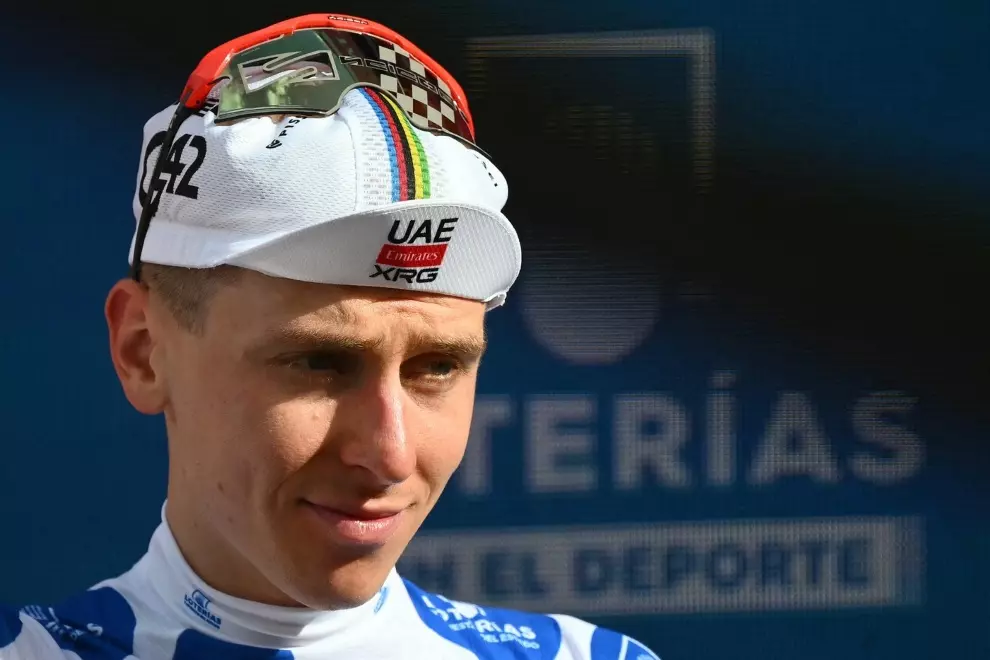
Because the three vertebrae he fractured form the high-stress bridge between the neck and upper back, recovery timelines depend on which part of the bone broke and whether the spinal column remains stable. Let’s assume, since we have no information to the contrary, that the spinal column remained stable. The question is, however, not only when he will be able to return to normal training and when he will race again, but also, just as importantly, when he will be able to race like the old Poggi again.
In other words, how long will he still “be careful not to crash on the bike.” Because if he rides cautiously, which is so un-Pogačar, it will definitely inhibit his ability to dominate. And that would cut into UAE’s success margin.
Of UAE’s 78 wins in 2026, 21 were achieved by Pogačar: that’s 27 per cent. The 78 wins were the team’s worst showing since 2023, and way below the record it set last year with 97 victories. The major reason for that was that the team had an unusually crash-filled season. Team sports manager Joxean Fernández “Matxin” told Eurosport, “This year, we’ve had very bad luck with crashes. We’ve had 78 crashes. Eighteen of our 30 riders have suffered fractures.”
Nevertheless, Matxin remains undaunted. Asked by Eurosport about his goals for next year, he said, “What Visma has achieved: winning the Giro, Tour, and Vuelta in the same year.”
That will require Pogačar to again win two Grand Tours, no doubt the Tour de France (for a record sixth time!) and the Vuelta (for the first time). For that, he will have to regain top form by late June, or 10 months after his devastating crash. It took Jonas Vingegaard two years to find his form after his horror crash in the Itzulia Basque Country.
The team will also need to get Marc Soler back from the pelvic fracture he sustained in the Giro and the three fractured ribs he suffered in pre-Vuelta training. He did not return to racing until the Tour of Guangxi, last month. And João Almeida will need to bounce back from a nightmare of a year, plagued by persistent illness and major crashes, and which saw him without a win for the year and almost as many DNFs (did not finish) and OTLs (over the time limit) as races completed.
And who would then win the Giro for the team? No doubt the exciting young Mexican Isaac del Toro, whose only race as a Grand Tour leader took place at the 2025 Giro, where he was outridden and out-schemed by Simon Yates and Visma– Lease a Bike. Del Toro won 12 races in 2026, including a superb performance in the Grand Prix Cycliste de Montréal, but he was apparently bothered by a knee issue and fared badly in Il Lombardia.
“Getting back into training is going quite well so far, but we have to take it step by step,” he told L’Equipe. “I won’t know if it’s really okay until I push myself to the limit, and that’s the problem. But it’s been going on for three years now, so I think it won’t affect me.”
So, UAE now has its two best riders returning in uncertain form and with health issues. With Paul Seixas and Decathlon CMA CGM getting stronger, Remco Evenepoel and Red Bull–BORA-hansgrohe becoming more ambitious and Lidl-Trek raiding the transfer market for Grand Tour stage winners, it may just become a little harder to own the road in 2027.
Everything that rises eventually falls. Just ask INEOS.