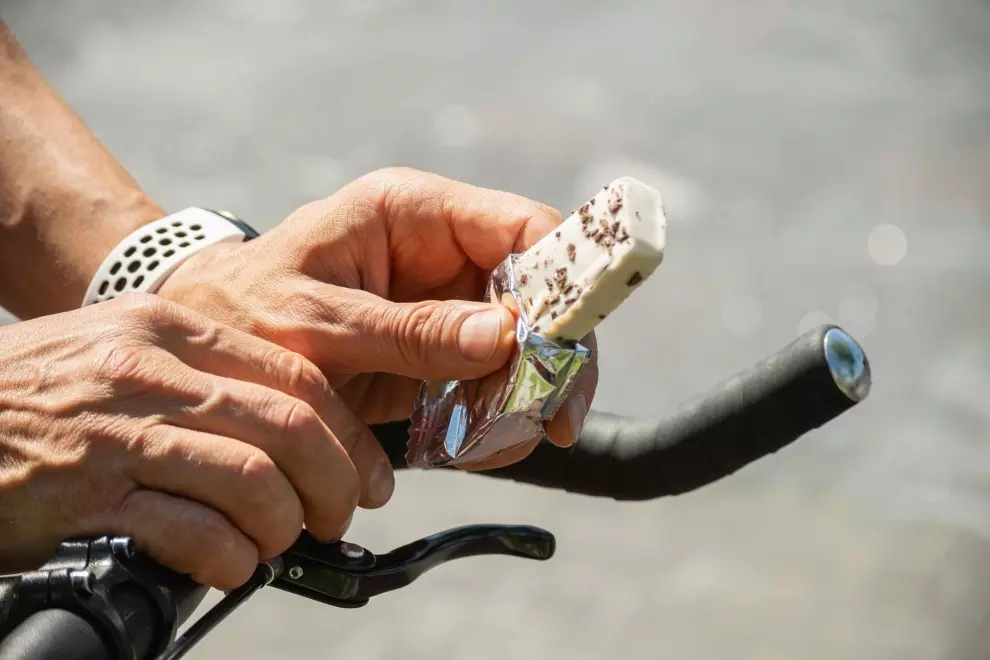
Unfortunately, your stomach didn’t agree to any of this.
Because while fitness is important on long rides, your ability to fuel properly often determines whether you finish feeling strong or spend the final hour fantasising about lying down in a hedge.
TL;DR
- Start eating early, not when you’re hungry
- Aim for 60–90g of carbohydrates per hour
- Drink regularly throughout the ride
- Choose simple, familiar foods
- Avoid trying new products on big rides
- Heat increases the risk of stomach issues
Eat before you’re hungry
One of the most common mistakes cyclists make is waiting until they feel hungry.
By that point, you’re already behind.
Your body can only absorb so much energy each hour, so it’s far easier to stay fuelled than to catch up later. A good rule is to start eating within the first 30–45 minutes of the ride, even if you feel perfectly fine.
Future you will be grateful.

Keep foods simple
Your digestive system is already working harder in hot weather. The last thing it wants is a surprise.
Most cyclists do best with familiar options such as:
- energy bars,
- bananas,
- rice cakes,
- gels,
- sports drinks,
- jam sandwiches.
Simple carbohydrates are generally easier to digest than foods loaded with fat, fibre, or protein.
The ride is not a food challenge.
Hydration matters more than you think
Summer riding creates a unique problem.
As temperatures rise, blood is diverted toward cooling the body, leaving less available for digestion. This is one reason stomach issues become more common on hot rides.
Drink regularly and consistently.
You don’t need to empty a bottle every 15 minutes, but you also don’t want to realise three hours into the ride that you’ve barely touched your fluids.
Be careful with café stops
Cyclists love café stops. Cyclists also love making terrible nutritional decisions at café stops.
A giant cooked breakfast, extra cream-filled pastries, and three coffees might sound appealing after four hours on the bike.
Your stomach may have other opinions. For most riders, lighter options are easier to tolerate before heading back onto the road.
Heat changes everything
Foods that work perfectly in spring can become problematic in July.
High temperatures often slow digestion and increase the risk of:
- bloating,
- nausea,
- stomach cramps,
- feeling generally miserable.
If you’re riding in significant heat, consider relying more heavily on:
- drinks,
- gels,
- softer foods,
- smaller portions eaten more frequently.
Your stomach tends to appreciate moderation.
Practice your race nutrition
Many riders save race nutrition for race day. This is a fantastic way to discover that your digestive system strongly disagrees with your plan.
Long summer rides are the perfect opportunity to test:
- fueling amounts,
- hydration strategies,
- products,
Nothing should make its debut appearance during an important event.
The real secret
The best nutrition strategy is rarely the most exciting one.
It’s usually the boring approach:
- eat early,
- eat consistently,
- drink regularly,
- don’t experiment halfway through a six-hour ride.
Because while running out of fitness is unpleasant, running out of energy while sitting on a bicycle in 30°C heat is a truly special kind of regret.
FAQ
How many carbohydrates should I eat per hour on a long ride?
Most cyclists should aim for around 60–90g per hour, depending on ride intensity, duration, and what their stomach can comfortably tolerate.
What are the best foods for long summer rides?
Simple, carbohydrate-rich foods such as bananas, bars, rice cakes, gels, sports drinks, and sandwiches tend to work well for most riders.
Why does my stomach hurt during long rides?
Common causes include dehydration, eating too much at once, consuming unfamiliar foods, or riding hard in hot weather.
Should I eat if I’m not hungry?
Usually yes. Hunger often arrives after you’ve already started running low on energy.
Are energy gels necessary?
No. Many cyclists successfully fuel with ordinary foods. Gels are simply a convenient option when intensity or practicality matters.
How much should I drink on a summer ride?
It depends on temperature and sweat rate, but most riders need significantly more fluid in summer than they expect.