But does this newfound freedom mean you have to forsake your indoor bike entirely? Isn’t there at least a hint of Stockholm Syndrome to drive you back in the same old lab, just to see a few more numbers inch up?
You didn’t spend months staring at a wall just for the aesthetic; you built fitness that’s very real, very usable, and very easy to waste if you suddenly decide it no longer counts. Outdoor riding brings back everything the trainer removed, which is exactly why it feels great, and also why it stops being efficient the moment you try to do anything specific.
Even if you’re sick of it, riding indoors still has its merits. But before you start throwing lamps, gear, helmets, and tomatoes (which, shame on you, throwing away food), just hear me out.
Outdoor riding breaks your plan
With all that indoor riding, sooner or later, you decide it’s time to take the intervals outside. Fresh air, real roads, same session. Simple.
You start your 30 seconds in Zone 6, and someone casually walks across the road, as if you’re not breathing like a The Walking Dead extra. Fine. You reset. Next one. You go again, and a car pulls out of a parking spot with perfect timing. The driver apologises, which is nice, but it doesn’t restart the interval or undo the braking. Right. New plan. Leave the city, find a quiet stretch, and do it properly. You finally hit the effort, legs working, numbers climbing, everything aligned. Then it’s time to recover, except now the road tilts up at 12%, and your recovery becomes something like eating chocolate to lose weight.
Outside, effort doesn’t follow instructions. It reacts. You push when you shouldn’t, ease off when you didn’t plan to, and somehow convince yourself it still counts because the average looks respectable. Indoors may be dull, but at least it behaves. Structured training outside is possible, but it requires planning, luck, and a level of patience most people don’t have.
So when you’re outside, do what outside is actually good at. Ride, enjoy it, maybe even talk to other humans. The training can stay at home, waiting for you to stop pretending this was the session.
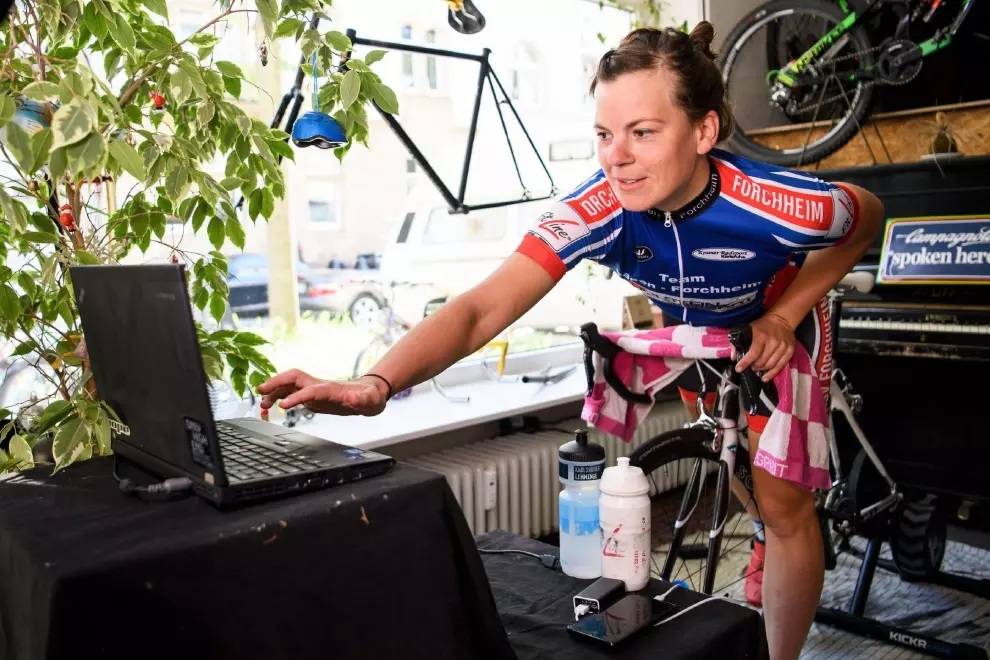
Time still works against you
The weather outside may be better, but the sun is still way too shy to stay out past 7 p.m. For a working person, that basically kills weekday riding.
You might think that’s not a big deal. Night rides are fun. Sure. Until the temperature drops like the Tesla stock value after a 3 a.m. Elon Musk’s tweet, and, suddenly, that “pleasant evening spin” turns into a Mr Beast video.
Then there’s the preparation. Riding outside isn’t immediate. If you’re in a bigger city, you need to get to a place where riding actually makes sense. For MTB riders, it’s even worse. The mountains in early spring after dark feel like putting your hand in a blender to dislodge stuck knives. You might succeed, but there’s a strong sense this won’t end well.
So you don’t just close your laptop and roll out in five minutes. Even a short ride turns into 90 minutes once you factor in getting there, riding, and getting back. You might squeeze one or two during the week, but doing it consistently every day is a different story.
Indoor cycling doesn’t have that problem. You start immediately, you finish exactly when you planned, and the entire block of time goes into actual work. No interruptions, no logistics, no fighting off White Walkers on the way home after sunset.
Most riders don’t skip training because they’re lazy. They skip it because it doesn’t fit their lives. Indoor training closes that gap.
Recovery outside is a scam
A proper recovery ride is supposed to be calm, controlled, and almost boring. Now imagine doing that at 3 degrees, in complete darkness, after a full workday. This practically screams relaxation, doesn’t it?
There’s no middle ground here. You either start pushing just to stay warm, which defeats the whole purpose, or you ride so easily that you slowly turn into a moving icicle. At that point, your best chance of “warming up” involves decisions that have nothing to do with cycling, and none of them improves recovery.
Even if you manage to keep the effort low, the experience itself works against you. You’re tense, you’re uncomfortable, and you’re counting the minutes until it’s over. That’s not recovery. It’s not even the start of a joke. That’s just sad. So you skip it. Or you push it to the weekend, and now you’re wasting actual riding time on something that was never meant to be the main event.
Indoors, it finally makes sense. Warm, controlled, uneventful in the exact way recovery should be. You spin, you switch your brain off, and you get off the bike better than you got on. That’s the whole point.
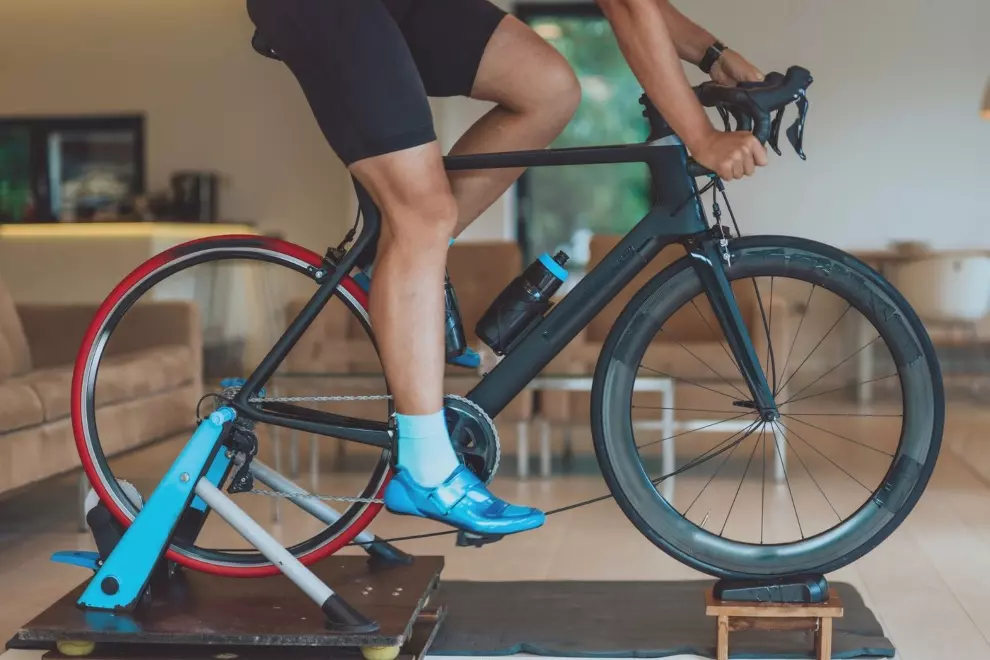
Spring weather is not your friend
Spring has excellent marketing. At least when we talk about it. Sun, mild temperatures, everything fresh and green. Then you step outside and realise the ad doesn’t fully represent the product.
To put it mildly, the weather in spring is like a toddler that just ate a box of candy. One moment it’s all sunshine and happiness, but blink, and you’ll be riding in a hailstorm, heavy rain, a thunderstorm, and why not a snow blizzard. You really have no idea what you’re up against… and, as it seems, neither do the meteorologists, but that’s a whole different article.
In summer, rain is part of the ride. It’s almost welcome. A bit of drama, a story for later. In early spring, getting wet is different. The temperature drops just enough to turn the rest of the ride into a slow, uncomfortable countdown. You’re not training anymore, you’re surviving. In Spring, especially early spring, getting wet means you will soon shiver like a deranged backup dancer in a Shakira video.
While the weather is cold, and getting wet outside means getting ill and skipping a week or two of training, indoor cycling still makes perfect sense. Picking your rides outside in early spring is not a sign of weakness; it’s just not being stupid.
You built something – this is how you keep it
You didn’t spend your winter on the indoor trainer for a medal of honour. You built something. Fitness that actually shows up the moment the road opens again. Stronger legs, better tolerance for effort, and the ability to push without immediately falling apart. That didn’t happen by accident. It happened because you showed up, again and again, and followed a plan.
Unfortunately, spring has the nasty habit of quietly messing with your progress. Outdoor rides are important, no debate there, but as we’ve already established, they’re not always available, and more importantly, they don’t replace structured training.
To be fair, if you can ride outside often and actually make the efforts count, not just roll around and call it training, you’ll keep improving. That’s not the problem. The problem is everything else.
Unpredictable weather, short days, cold evenings. Just enough friction to skip a session here, cut another one short, and slowly drift away from what got you fit in the first place. Nothing dramatic, just a steady slide that only becomes obvious when you need your legs, and they’re not quite there.
Indoor cycling prevents that. It keeps things in place when everything outside is slightly off. It gives you a way to stay consistent without relying on conditions, timing or motivation. Sure, indoor cycling is no longer the main event. But it still has a very important supporting role… one that deserves an Oscar… or at least an Emmy.