What you’re breathing in on your home trainer
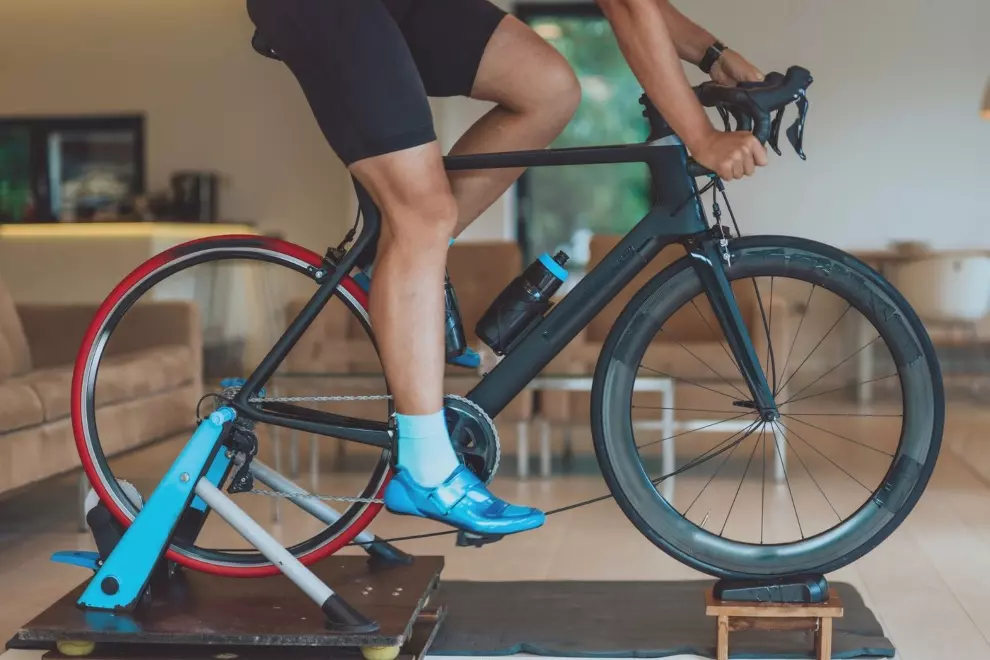
When you set up your bike in a spare room, garage or basement, you’re not just pedalling in a controlled environment – you’re also breathing in whatever is in that space. Dust, mould, pet dander, and volatile organic compounds from cleaning products, paint or furniture can irritate your airways and weaken your immune response. Studies on indoor air pollution show that poor ventilation and high levels of particulate matter can increase lung inflammation, making you more vulnerable to respiratory infections.
But the bigger issue for cyclists is what happens when you start sweating. Indoor training increases your breathing rate. If the air is dry as it often is in heated homes, your mucous membranes dry out, reducing their ability to trap and expel viruses and bacteria. Dry air also irritates the throat and sinuses, creating micro-tears that make it easier for pathogens to enter your system.
What you can do:
- Ventilate: Open a window or use a fan to circulate fresh air, even if it’s cold. Aim for at least 1–2 air exchanges per hour.
- Humidify: Use a humidifier to keep indoor humidity between 40–60%. This protects your airways and reduces static electricity, which can stir up dust.
- Clean: Dust and vacuum your training space regularly. Consider an air purifier with a HEPA filter if you train in a dusty or poorly ventilated area.
- Hydrate: Drink more water than you think you need. Indoor training dehydrates you faster than riding outside.
Why even cyclists can have low vitamin D
You’d think that cyclists, who spend so much time outdoors, would have robust vitamin D levels. But winter changes that. Even if you ride outside, the angle of the sun in winter means your skin produces little to no vitamin D from sunlight. This is true for European countries north of 40° latitude, basically all countries north of Spain, Italy and Greece. Compounding the issue, many cyclists reduce outdoor riding in favour of indoor training during winter, further lowering their exposure.
Vitamin D isn’t just about bone health; it’s a critical regulator of immune function. Low levels are linked to higher rates of respiratory infections, slower recovery from illness, and even reduced muscle repair.
A study of elite athletes found that those with vitamin D levels below 50 nmol/L were twice as likely to get sick during winter training blocks.
What you can do:
- Supplement: Aim for 1,000–2,000 IU of vitamin D3 daily from October to March. Discuss with your doctor: if you’re deficient, your doctor may recommend higher doses.
- Test your levels: A simple blood test can tell you if you’re in the optimal range (75–150 nmol/L).
- Get outside when you can: even 20 minutes at midday helps maintain circadian rhythms and mood, both of which support immunity.
Training indoors without compromising immunity
The goal isn’t to avoid indoor training, it’s to mitigate the risks so you can stay consistent through winter. Here’s a quick checklist to protect your immune system while training inside:
Optimise your air. Ventilate your training space, use a humidifier and air purifier if needed. Keep your space clean and dust-free.
Support your immune system. Supplement with vitamin D if levels are low. Prioritise sleep even more than in other seasons.
Listen to your body. If you’re feeling run down, swap a hard session for an easy one. Don’t push through early signs of illness; rest now to avoid a longer setback later.