The truth is that indoor training solves several problems I repeatedly face in winter. I solve some of them by switching to other sports in winter, but not all. Let’s take a look at some of the most appealing qualities of indoor training from my perspective.
A new kind of short ride
Short outdoor rides have always been my last resort. It’s because short routes inevitably mean repeating the same loops close to my home that I’ve ridden hundreds of times. There’s nothing wrong with familiar roads, but repetition kills motivation for me. If I’m only heading out for 45 minutes, I want something new or at least something that feels purposeful.
Indoor training changes that equation. A short ride can be a race, an interval session, a personal challenge or a virtual visit to an exotic climb thanks to platforms such as Zwift or Rouvy. The scenery changes, the stimulus changes, and the goal changes, without leaving the house.
I can see the appeal immediately. If I could turn a 40-minute window into something engaging, not a compromise, I would get more cycling done in winter.
Convenience that outdoor riding can’t match
One of the biggest advantages of indoor cycling is simply how easy it becomes to say yes to a ride. If I’m short on time, I usually lace up my running shoes instead. Running fits neatly into small gaps in the day and requires almost no prep time. Cycling outdoors rarely fits in when getting the clothing right takes time, and cleaning the bike afterwards is almost guaranteed in winter.
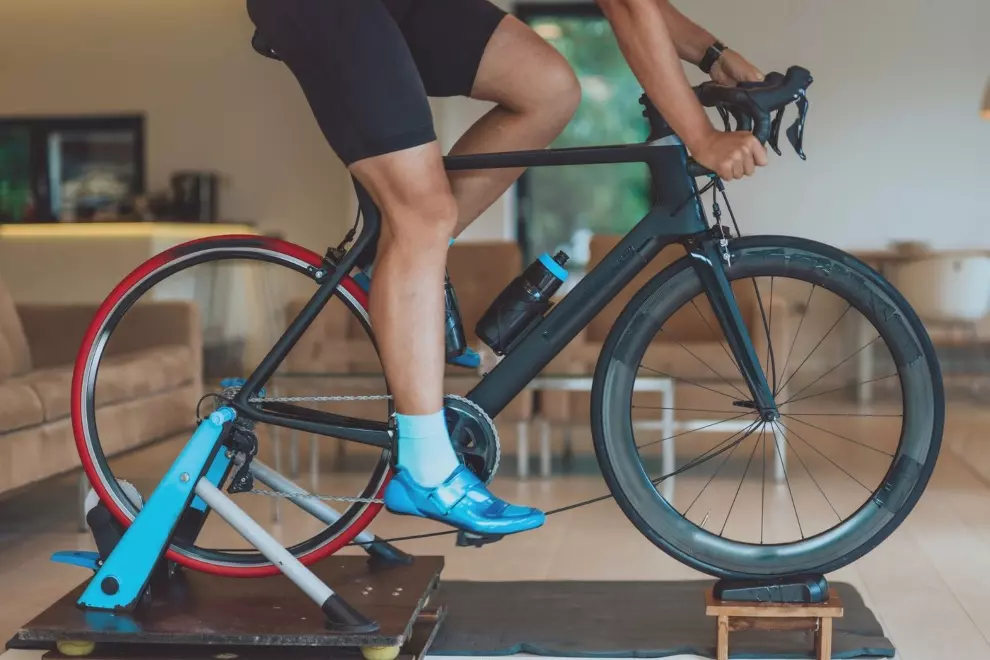
Indoor cycling eliminates all the friction. No layers, no lights, no puncture risk, no dirty drivetrain. If the ride is only twenty or thirty minutes long, it doesn’t feel like a waste of preparation. Everything is already set up.
There’s also the comfort factor. When I’m not feeling 100% or I’m easing back after an illness, the idea of stepping out into cold air is rarely appealing. An indoor setup would let me reintroduce cycling gently, keeping the intensity low without the environmental stress. And if the only training window is in the evening, I wouldn’t have to weigh up the risks of winter riding in the dark.
Indoor cycling’s convenience is no small thing. For time-crunched riders, it can be the difference between training consistently and training sporadically, regardless of season.
Structured intervals made simple
If I’m honest, I almost never do structured intervals outdoors. My riding tends to gravitate towards exploration, long climbs or social days, none of which encourage the discipline required for repeated interval sets. Doing intervals on the road also requires the right gradient, a lack of intersections, and good traffic conditions. Most days, that combination just doesn’t materialise.
This is where indoor training shines. A trainer removes every external variable. ERG mode forces the effort, interruptions disappear, and power zones become exact rather than approximated. It’s the perfect environment for cyclists who struggle to make structured training stick outdoors – cyclists like me.
An entire off-season of precise interval work would almost certainly improve my riding. It’s tempting to imagine what kind of gains I could make if I dedicated a few winter months purely to consistency and controlled intensity.
Data and progress, without the noise
I’m motivated by numbers. This year, after finally buying a power meter, I found myself comparing efforts on favourite climbs and analysing power curves after almost every ride. Seeing progress is addictive.
Indoor training amplifies this feeling. Without freewheeling, wind, temperature changes, and variable road gradients, the data becomes cleaner. Testing FTP, doing ramp tests, and even lactate assessments suddenly become practical and comparable. It’s much easier to track improvement when the conditions never change.
For cyclists who enjoy the analytical side of the sport, indoor training provides an incredibly satisfying environment.
What indoor training gets right for everyone
My reasons are personal, but indoor cycling also offers universal strengths:
- Consistency unhindered by weather, daylight or road conditions.
- Safety, no cars, ice or risk of a crash in the dark.
- Community, especially on Zwift, where group rides and races foster motivation.
- Precision training, particularly for riders with clear performance goals.
And for cyclists living in harsher climates, indoor training is not an optional extra; it’s the only way to ride through winter.
Indoor cycling solves problems I experience every winter. I may not have a trainer in my living room, but I understand exactly why so many riders rely on one, and why I keep considering it myself. In the next part of this series, I’ll dig deeper into the worlds of Zwift and Rouvy and explore what I would be most likely to choose and why.