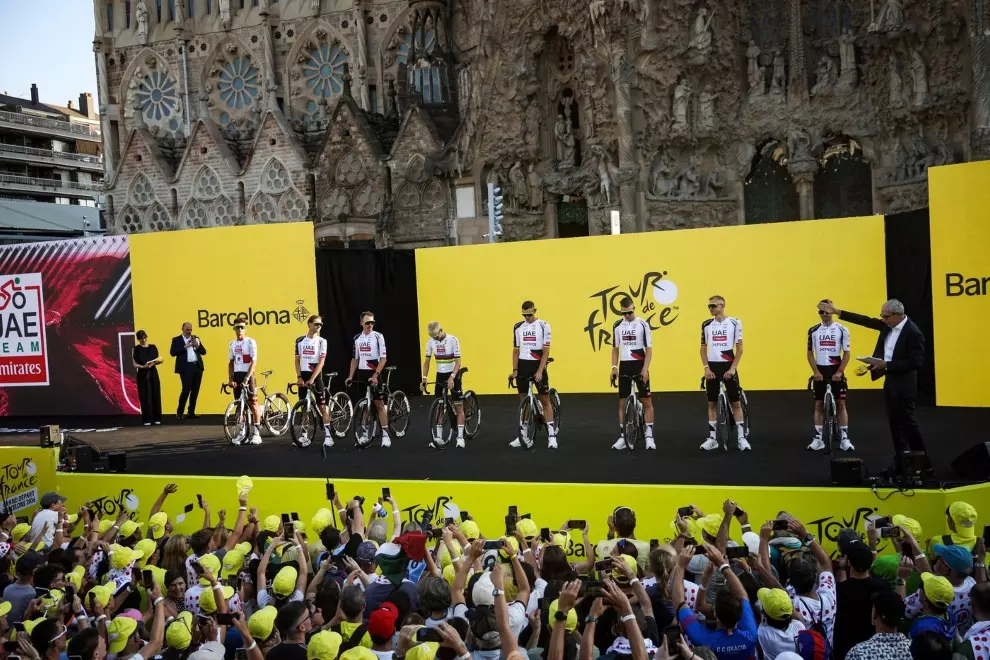
Consider the principals: Tadej Pogačar has won the race four times and is universally considered one of the, if not the, best cyclists of all time. Jonas Vingegaard has won the Tour de France twice, both times beating Pogačar. Remco Evenepoel is the world and Olympic time trial champion who moved to Red Bull–BORA–Hansgrohe this year to win the Tour. And, last but not least, 19-year-old Paul Seixas has shown such brilliance on the WorldTour this year that everyone regards him as a future Tour winner.
All things being equal, and with no accident or illness to weaken the principals, the course is set up in such a way that all four could still be in contention by the end of the third week, when the riders hit the Alps. Wouldn’t that make for a brilliant climax? On the other hand, there are so many unknowns going into the race that anything, including what the smart money says, is still possible.
The smart money says that Evenepoel will falter on one of the early mountain stages, stage 6, for example, with its 4,100 meters of elevation, including the Tourmalet (17.1 km @ 7.3%), and is never in contention again; that Seixas makes another young rider’s mistake on a curve or descent and crashes out late in week 2; and that Pogačar and Vingegaard come to stage 19, and the summit finish on Alpe d’Huez (13.8 km @ 8.1%), neck and neck, with the Slovenian pulling ahead to register his fifth Tour victory.
Here are the four favorites, in order of expected (by me) finish:
Tadej Pogačar (UAE Team Emirates–XRG)
The 27-year-old Slovenian is in his prime and, apparently, in the form of his life, which is saying a whole lot. He has already won 13 races this year, including Strade Bianche, Milan–San Remo, the Tour of Flanders, Liège-Bastogne-Liège, the Tour de Romandie and, most recently, the Tour de Suisse. And his motivation is high because he is going for his fifth Tour victory, which would make him a member of the most elite club in the sport, along with Jacques Anquetil, Eddy Merckx, Bernard Hinault and Miguel Induráin. I think he wants to join that club more than anything else.
And I think he will, if only because he is the strongest rider in the sport, able to produce powerful accelerations that no one can match. In his only major loss this year, when he lost Paris-Roubaix to Wout van Aert, he suffered a few mechanical issues, even being forced to ride a service bike for a while, and was a little short in the final sprint. The rider we will see in this Tour will be the ideal Pogačar, as finely tuned as an F1 race car before the Monaco Grand Prix.
Also, despite the damage to the squad suffered in the stage 2 crash of the Giro d’Italia, which caused Marc Soler to drop out of the Tour, he will have another team of super-domestiques at his side, led by the excellent Isaac del Toro, who would be considered a co-favorite for the title if he were leading the team. Should something happen to Pogačar, the young Mexican would make a formidable contender for the yellow jersey.
Jonas Vingegaard (Visma–Lease a Bike)
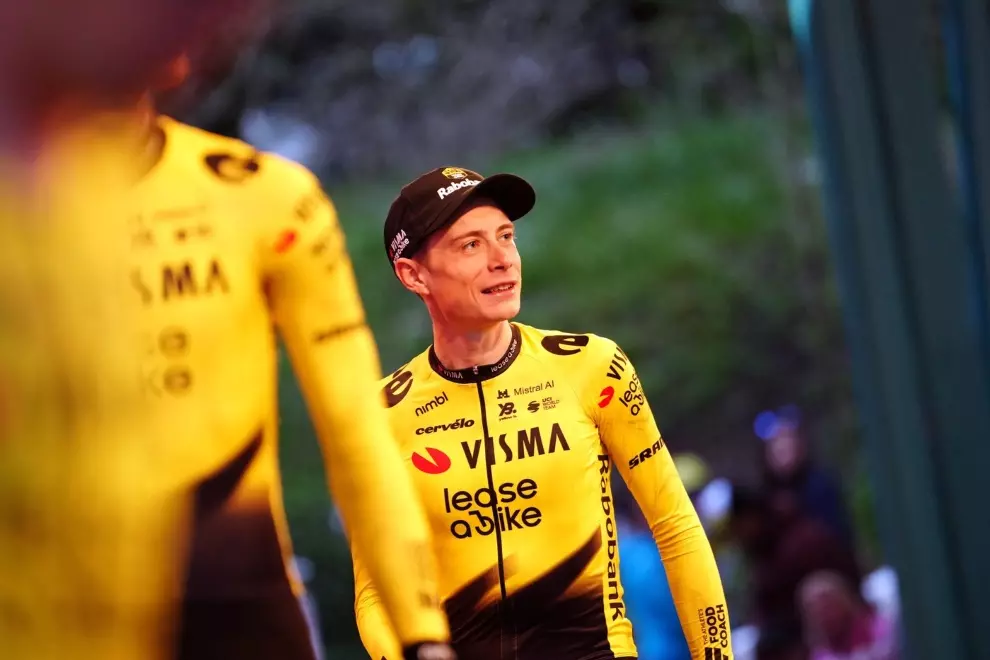
Vingegaard’s dominant, Pogačar-like victory at the Giro showed that he is back to his best, after 18 months of slow form recovery from his 2024 Itzulia Basque Country crash, and he may be, as he has claimed, better than ever. Until proven otherwise, the 29-year-old Dane is at least the second-best Grand Tour rider in the world and at least the second-best climber. Whether he can be the best this year is one of the delicious unknowns in this race.
The question is whether he has the team to match that of his rival. The squad that supported him in the Giro certainly seemed to be, with young Davide Piganzoli a revelation in the mountains and the entire squad clicking like clockwork for the entire three weeks. However, Wout van Aert had to bow out of the Tour after suffering an infected elbow, and Edoardo Affini crashed last week in the Italian time trial championship. That he has been declared fit to ride relieved a lot of anxiety in the Visma camp.
Piganzoli replaced van Aert and will be an added plus on the critical mountain stages, with the indomitable Sepp Kuss heading the climbing support in this race. But both van Aert and Affini will be missed in the flats, on the hills and in the important stage 1 team time trial, which Visma has targeted. “It’s something where we can already make a difference as a team in the GC for Jonas,” said Lead Sports Director and soon-to-be Head of Racing Marc Reef.
In addition, with 23-year-old Piganzoli and 22-year-old Per Strand Hagenes making their Tour de France debuts, this is a young and relatively inexperienced squad, which may not hold up under the intensity and pressure of the race. But if the Giro experience was a sign, they’ll hold up just fine.
Paul Seixas (Decathlon CMA CGM)
Seixas is still a young diamond in the rough and therefore prone to rash decisions and panic, such as his bonehead move in the final stage of Itzulia Basque Country, when he took off on his own from the group he was riding with and found himself alone in no man’s land for far too long because he was afraid that a breakaway would steal his race lead; or when he crashed out of his last race, the Tour Auvergne–Rhône-Alpes, because he took a corner too quickly, admitting afterwards, “I took too many risks.”
The other question is whether he already has the chops to win a three-week Grand Tour. No one knows. Just as no one knows if he will be able to pace himself responsibly for three weeks, so that he won’t come onto Alpe d’Huez and discover he has no legs left.
Personally, I’d love to see him finish in the top 5 or even 10, which would be quite a feat for a rider of his age. He won’t win, but he might surprise. It’s important to remember that Pogačar was 21 when he won the Tour for the first time. That sounds about right.
Remco Evenepoel (Red Bull–BORA–Hansgrohe)
Yes, I’m putting Evenepoel at the bottom of this list because I have always believed that he simply doesn’t have the right body to be a good enough climber to win a Tour de France in which Pogačar and/or Vingegaard are riding. The body that makes him the best time trial rider in the world makes him unfit for the Tour’s massive climbs. Which is why he and Red Bull resorted to the radical training strategy of no racing for two months before the Tour.
The emphasis was on losing weight to increase his power output, measured in watts produced per kilogram, the idea being that fewer kilograms on the body will make it easier to produce more power on a climb. In other words, they are trying to turn him into somebody he is probably not.
What effect this strategy will have on Evenepoel’s climbing and what not racing competitively for more than two months will do to his in-race decision-making and reactions are more unknowns. Clearly, the feeling underpinning this strategy was desperation. And I’m not really sure that Red Bull actually believes in its prize recruit because they were reportedly trying to sign up Seixas for next year.
The other question is what effect the weight loss will have on his and the team’s time trialing. It would be grievously ironic if he were to lose 30 seconds, say, or more to his rivals in that stage 1 TTT.
The others
If he falters, Red Bull have a very good alternative in the 25-year-old German Florian Lipowitz, who finished third in last year’s Tour and recently won the Tour of Slovenia. Lipowitz is not about to challenge Pogačar or Vingegaard, but if Seixas also disappoints, he’s a strong candidate for the podium. As are Tobias Halland Johannessen (Uno-X Mobility), Tom Pidcock (Pinarello Q36.5) and Juan Ayuso (Lidl-Trek). Ayuso especially will want to show his old team, UAE Team Emirates–XRG, that it made a mistake by not believing more in his Grand Tour ability.
A tip: Keep an eye on the stage 1 team time trial. Everybody wants to come out of that wearing the yellow jersey, if only for a day, because it is a tone-setter and a message-bringer, saying, “We mean business and are loaded for bear.”
The Škoda Green Jersey contenders
Jasper Philipsen (Alpecin–Premier Tech) is coming into the Tour in great form, after wins in the Copenhagen Sprint and Baloise Belgium Tour, in which he won the GC and the points classification. He has won 10 Tour stages but only one green jersey, in 2023. He crashed out last year and was beaten in 2024 by Biniam Girmay (now NSN Cycling). He will again have the best lead-out rider in the sport, Mathieu van der Poel, bringing him into position, which should give him an advantage.
He may need it. Lidl-Trek’s Mads Pedersen is coming into the Tour after a disappointing spring season marked by a high-speed crash at the Volta a la Comunitat Valenciana in February, which left him with a fractured wrist and a fractured collarbone on opposite sides of his body. Though he made an astonishingly quick recovery, his form did not. He has yet to win a race this year, but something tells me he was riding in preparation for the Tour.
Other potential green jersey winners include Seixas’s teammate Olav Kooij, Tim Merlier (Soudal Quick-Step) and 2024 Škoda Green Jersey winner Biniam Girmay (NSN Cycling).