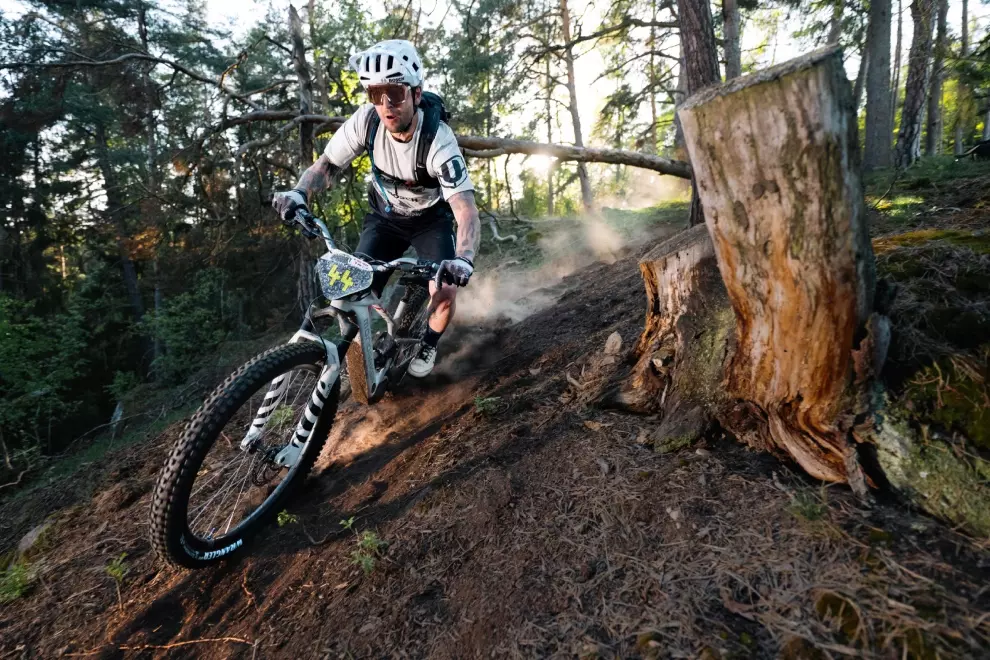
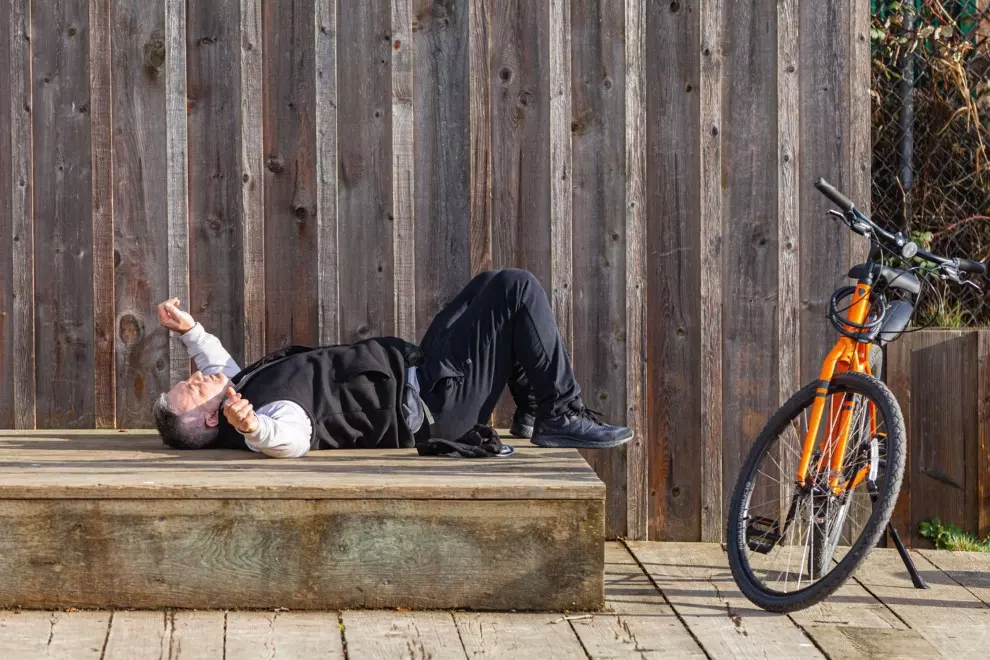
Are you cold? Well, that’s just how it is. Winter cycling hurts more than summer riding, but that’s exactly why it’s better. An experience doesn’t have to be nice, as long as it’s strong.
Let me start with a memory. Years ago, I was supposed to join a group road ride. Temperatures hovered around freezing, the frost turning everything along the road into an Elsa’s frozen kingdom. I arrived by train, and it wasn’t until I reached the meeting point that I realised I had forgotten my gloves. What now? I wasn’t going to bail, though. Just when I thought I couldn’t take it anymore and was ready to quit, relief came. How? My body finally reached operating temperature and sent heat where it was needed. I finished the remaining 80 km and realised that this is simply how cycling works.
Don’t worry. We’re not advising you to ride in January wearing a summer kit. But everything starts with the determination to get on the bike, no matter the weather. “Only when you step outside your comfort zone does the real adventure begin, and that’s ultimately what cycling is about, winter included,” says Richard Gasperotti, who shares his cold-weather tips below.
Layers
Of course, layering works. It’s great for thermal comfort and for your wallet, because multiple well-chosen layers can deliver similar results to one high-performance – but unfortunately high-cost – piece. A simple example? “Instead of buying one universal, perfect, but expensive jacket, get two cheaper ones: a rainproof shell and an affordable thermal jacket. The advantage is that you can combine them depending on conditions. For rain, take the waterproof one. For cold, the thermal. And when it’s both cold and raining, put the thermal on first and the waterproof on top,” says Gasperotti.
Go for bigger sizes
This theory is tried-and-true, and as they say, there’s no way around it. If your winter outfit fits as tightly as a sausage in its casing, it’s probably not going to keep you as warm as it could if some layers had a bit more space. There are two reasons for that. “First, when you compress insulating layers, you reduce their ability to insulate. Second, when layers are packed too tightly together, there’s no air between them, and that space acts as an insulating layer on its own,” says Richard.

A warm, dry butt
When talking about cold-weather clothing, most riders obsess over jackets to protect the torso and various leg warmers, but they overlook an equally important part of the body: your backside. Many of us wear the same Lycra shorts in winter as in summer. “Experienced year-round cyclists swear by thermal bib tights, which many consider the greatest invention for winter riding. Things are slightly easier on a mountain bike, where you can wear looser winter MTB pants over thermal tights for better protection against water and mud,” Richard says.
Tricks against a frozen forehead
Keeping your head warm is crucial, and it’s not only because a frozen forehead or neck can shorten your ride, but because it can also lead to an unpleasant cold. Here we run into the technical limitations of helmets, and you obviously can’t ride without one. You could start frantically searching for winter-specific helmets, but instead of another investment, try working with what you already have. “Personally, I don’t like wearing a beanie under my helmet – it slides down into my eyes and usually heats more than I’d like. I much prefer a headband that warms the forehead, ears, and nape. To make it fit under the helmet, just loosen the inner adjustment dial as much as possible. And the problem of icy wind cutting through your helmet vents? Even easier: just cover them with duct tape before your ride.”
And don’t underestimate the power of the cheapest miracle of all: a neck warmer (and in the worst case, even your daughter’s Paw Patrol buff will do the job).
Stone-cold feet
Road cyclists know the feeling all too well: you step off the bike, and your feet from the ankles down are so frozen you’re not even sure they’re still attached. You can prevent cold feet, but it’s always a bit of a battle because while your thighs and calves warm up as you pedal, the tops of your feet and your toes freeze without compromise. What to do? Stuffing thick socks into tight shoes is a guaranteed recipe for frozen toes. Thin summer socks won’t help either. The typical solution is a wool sock combined with overshoes.
The base layer
Speaking of wool, every time the debate starts about wool versus synthetics, both sides have their passionate supporters. This article won’t crown a definitive winner. The task of a base layer is to balance heat regulation with moisture management. So, is wool better or should you go for synthetic fabrics like polyester or nylon?
First – definitely not cotton. It soaks up sweat fast, doesn’t wick it away, and leaves you wet for the entire ride. Lab tests show that polyester and polypropylene wick sweat faster and more efficiently, which matters during intense efforts. Studies also indicate that merino fibres absorb moisture into their core while remaining dry to the touch, which feels better. And on top of that, merino wool insulates even when damp.
Again, it comes down to what works for you. “I personally prefer natural merino, both for base layers and for socks, but that’s just my choice,” says Gasperotti.
And it’s not just what you wear, but how you use it. For example, when climbing and sweating more, unzip your collar to let steam out so it doesn’t accumulate on your chest as moisture. Before descending, zip everything back up tightly.
Gloves
Despite my intro memory, it is, of course, wise to put gloves on before heading out. Gloves are almost like cycling alchemy; each part of the ride may call for a different type. “That’s why I recommend wearing a thinner pair and keeping a thicker backup pair in your pocket in case the first ones get soaked or the temperature drops,” says Richard. If you enjoy extra comfort, try heated gloves (or heated socks). A company called Inuheat offers batteries that connect to various products and can be controlled through a smartphone app, where you set the ideal temperature.
“And if you’re still cold even with heated gear, I have only one last piece of advice: Don’t force it. Just wait for spring,” Richard concludes.