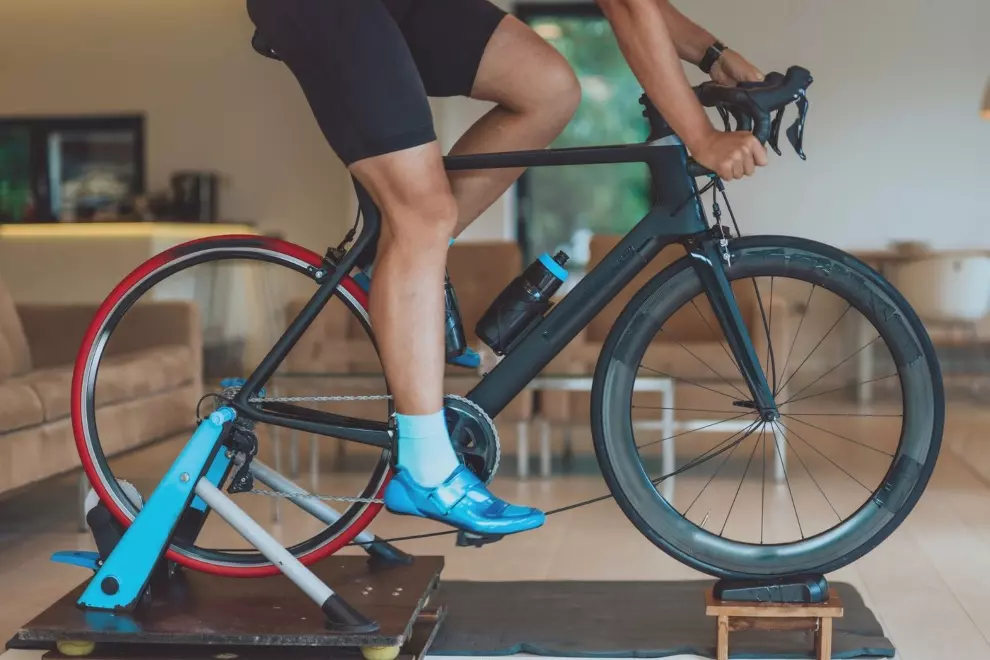
It’s not because I dislike training or the idea of cycling indoors. And this is not a series of articles that should convince you to stay away from indoor trainers. Rather, I want to take a look at how I approach winter training and what would make me ride indoors.
Why I still ride outdoors in winter
First, I should say that I don’t stop cycling outdoors entirely when temperatures drop. If it’s not freezing and the roads are dry, I’m usually out on my road bike. Good winter clothing goes a surprisingly long way. That said, mistakes happen. I recently came home with a cold after underestimating the wind and overestimating my jacket. That’s the kind of error that simply doesn’t happen on an indoor trainer.
When true winter arrives, with below-freezing temperatures and frozen soil that finally stops being muddy, I switch to my mountain bike. I find winter MTB genuinely fun. There’s a childlike joy to carving through frost-covered trails and navigating the icy parts. But even then, cycling becomes less frequent and more dependent on the weather. Some weeks, the window simply doesn’t open.

Why I don’t feel the need for an indoor trainer
I’ve considered buying an indoor trainer more than once. I’ve analysed the prices, watched the review videos, and imagined myself exploring virtual Alpine climbs or getting competitive in Zwift races.
But the truth is, I don’t need structured indoor cycling to stay fit, motivated or happy during winter.
When the weather closes in, I don’t sit on the sofa wishing I had a trainer. I just lean into the other sports I enjoy.
- Running gives me something cycling struggles with: higher-impact loading for bone density. And I like how time efficient it can be compared to cycling.
- Swimming is a whole-body workout, and winter gives me the opportunity to work on technique. Plus, the steam room afterwards feels so nice.
- Bouldering is something I do all year round, but I can go for longer sessions in winter and work on my strength endurance, and just have more fun.
- Cross-country skiing, when I’m lucky enough to get the conditions, is my favourite winter cycling replacement: endurance, technique, beautiful scenery, and fresh mountain air.
This mix keeps me fit in a way indoor cycling can’t match alone. Sure, it doesn’t get me as cycling-ready for the next season as an indoor trainer would. But so far, the trade-off has been OK with me. Also, there’s something refreshing about not chasing power numbers all year round. A few months of looser structure resets my motivation.
The appeal of indoor cycling
For some riders, indoor training keeps them engaged, and it’s a way to maintain cycling form during the cold months. I fully understand the appeal of having cycling-ready legs in March. And that’s not all, indoor training solves very real problems:
Lack of daylight: You can train any time of day
Icy roads: You don’t have to deal with the increased risk of a fall
Limited time: You can get a proper session done in an hour
Need for structured intervals: Sometimes impractical outdoors, but easy to do indoors
Because I don’t ride indoors, I’ve had to learn the limitations of my approach. Consistency is harder, weather dictates everything, and I do lose a bit of cycling fitness. I may not be an indoor cyclist, but I keep my options open. Winter fitness isn’t a single path. Indoor cycling is just one tool in the toolkit, and you need to know when it’s the right time for you to use it. Next time, I will write about when I think that may be for me.