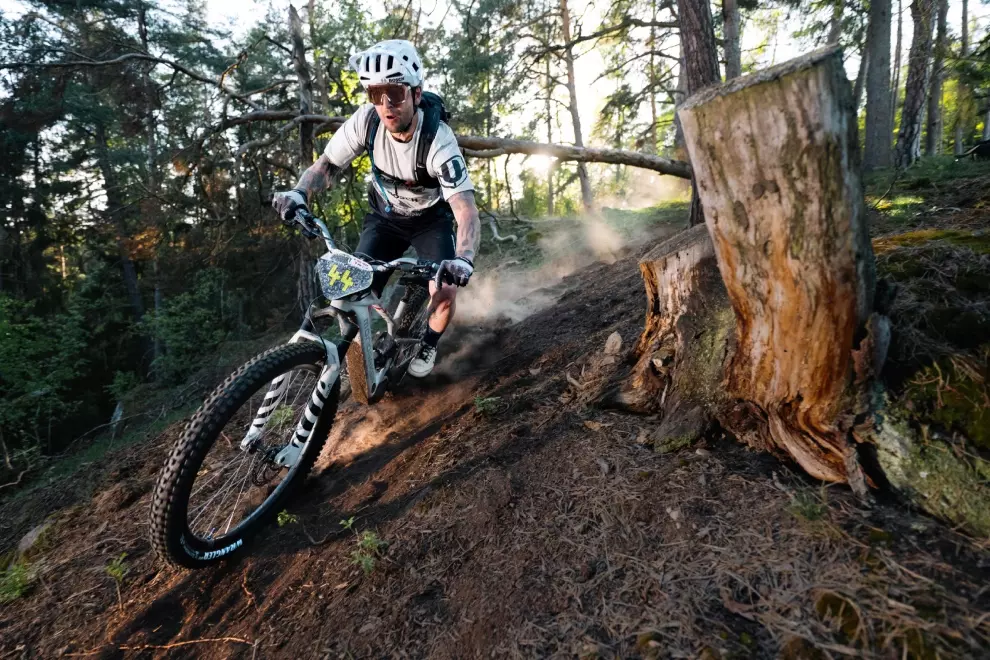
A mullet bike? Some riders know it well; for others, it’s a complete UFO. A bike named after a hairstyle? Business in the front, party in the back? What does that have to do with cycling?
The mullet concept isn’t new, and it didn’t start with mountain bikes. Dirt bikers and motocross riders have known this setup as one of the standard motorcycle configurations for years. The mullet setup is defined by a larger front wheel and a smaller rear wheel. We’ll dive into the pros and cons in a moment, but first, let’s untangle that name, which is funny but also a little misleading. After all, in terms of hair, a mullet means short at the front, long in the back – the exact opposite of what we’re talking about here.
In reality, it’s more of a play on words than a literal comparison. The name most likely emerged as a tongue-in-cheek reference to the mix of two different riding qualities, not a direct visual parallel to the haircut. “The name caught on in the community simply because ‘mullet bike’ sounds catchy and memorable,” says professional e-biker Richard Gasperotti, known as Gaspi.
So, what’s it good for?
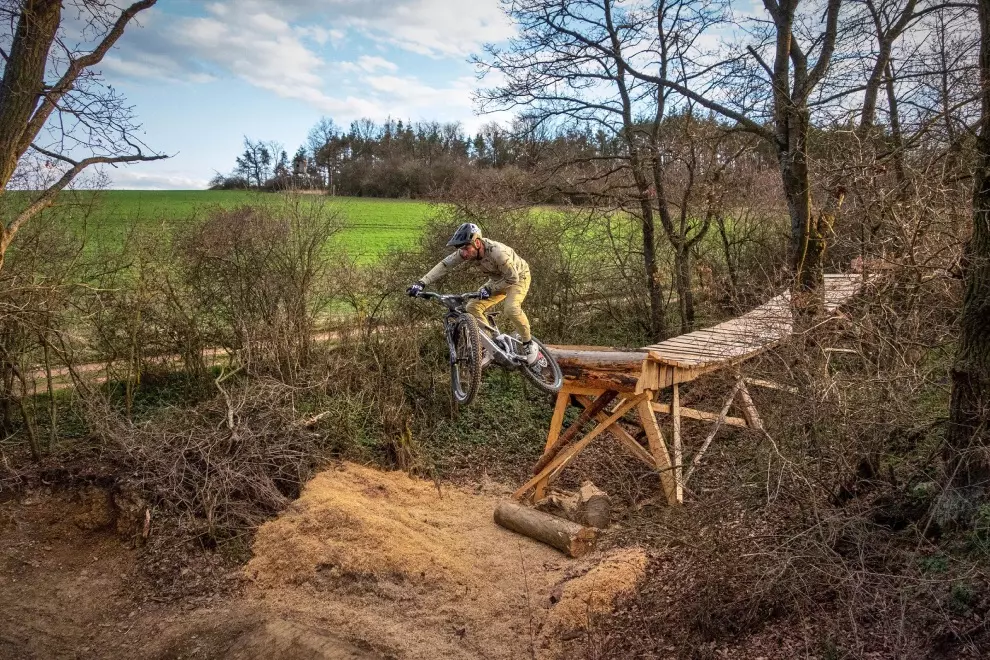
The mullet shines in tight, technical terrain and steep descents. The idea is pretty simple: combining two different wheel sizes in one bike might give you the best of both worlds. A bigger front wheel – typically 29″ – rolls over obstacles more easily thanks to its larger diameter. In plain language, that means fewer sudden jolts or dips: instead of dropping into every hole, the wheel just rolls right over it.
On the flip side, larger wheels are a bit clumsy and sluggish when it comes to handling – their greater size means more rotational mass, which makes them more resistant to quick direction changes. “You could say big wheels just aren’t as playful,” Gaspi explains.
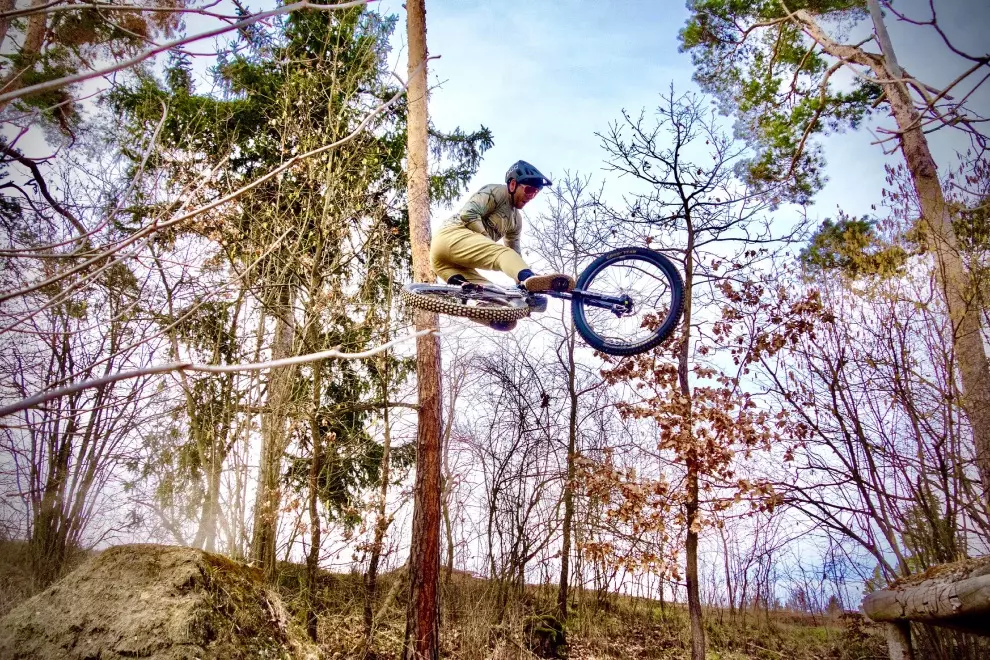
So what happens when you replace the rear 29” wheel with a smaller one, usually 27.5″? “The bike becomes easier to handle in almost every way. It corners better in tight switchbacks, it’s easier to control when drifting, it descends more confidently, and it’s way more fun for jumps. The smaller rear wheel makes it easier to lift the front end into manuals or bunny hops,” says Richard. However, he also cautions against quick DIY conversions.
It’s not just about swapping wheels
When the mullet trend first appeared, a lot of people said, “Great idea!” and simply swapped their rear wheel for a smaller one. “But that kind of quick mod also changes the frame geometry and lowers the bottom bracket clearance – which can make you hit obstacles like stair edges much more easily,” Richard explains.
He’s had plenty of experience with mullets. His first taste came back in 2003 while riding for Canadian brand Banshee, which was experimenting with 26” front and 24” rear wheels. He still owns a mullet bike today, though this time, it’s an e-bike. “It’s called the Mondraker Dune. Even before it hit the market, we tested it in Morocco – from riding down Saharan dunes to tackling brutal rocky gorges. Both experiences sold me on it. I kept the Dune, and it’s still one of my favourite e-bikes to this day. The playful feel of the mullet setup is boosted even more by the lightweight Bosch Performance Line SX motor.”

Modern mullet bikes, especially e-MTBs, are designed with this setup in mind right from the factory. Their frame geometry is purpose-built to offset the difference in wheel sizes.
Is it for everyone?
“Mullet bikes are used in downhill racing, too. Riders choose their setup depending on the course profile,” says Gaspi. But there are definitely scenarios where the mullet falls short. Long-distance grinders and classic XC riders probably won’t be thrilled: the smaller rear wheel isn’t as efficient, and it’s slower over flat terrain. “Honestly, you kinda look like you’re riding a chopper,” Richard laughs, also pointing out some practical drawbacks. “You always need two different tyre sizes, two different rim sizes, different spoke lengths… It’s more to think about in terms of maintenance.”
Still, if fun and control are high on your list, the mullet might just be your perfect match.