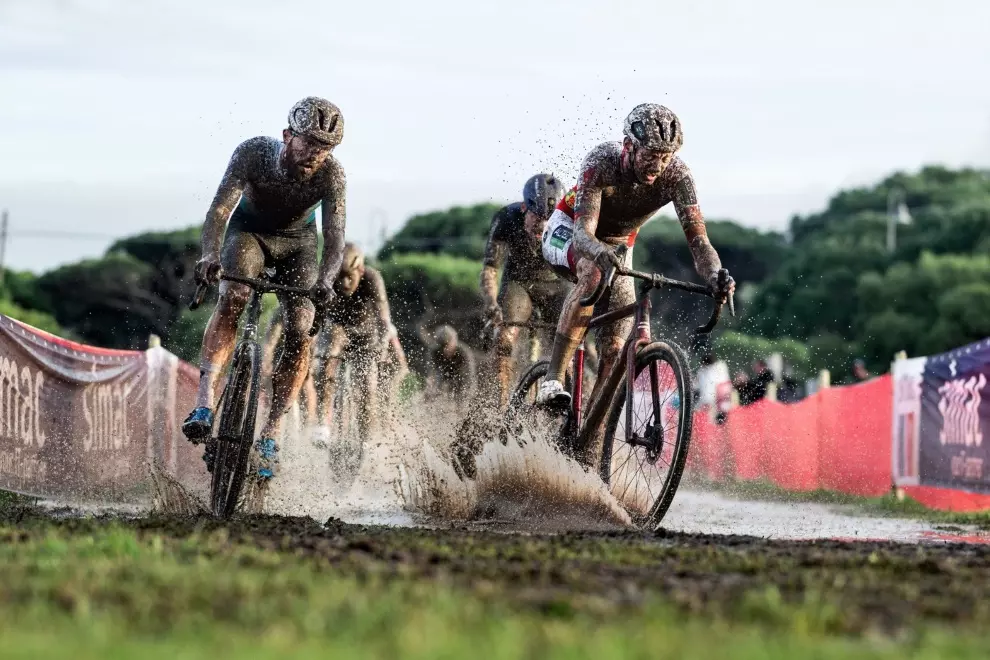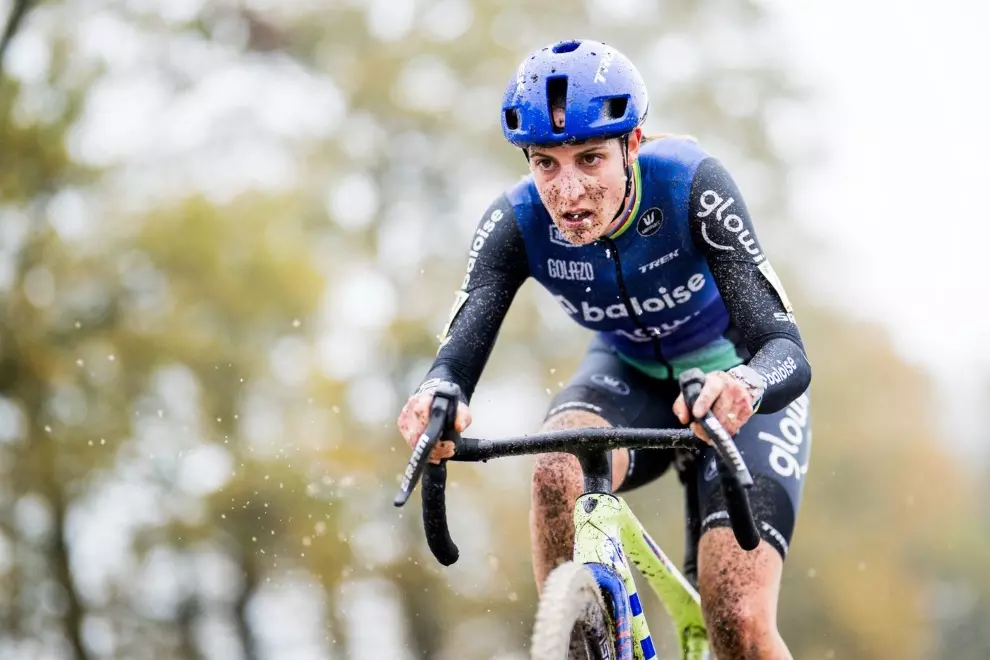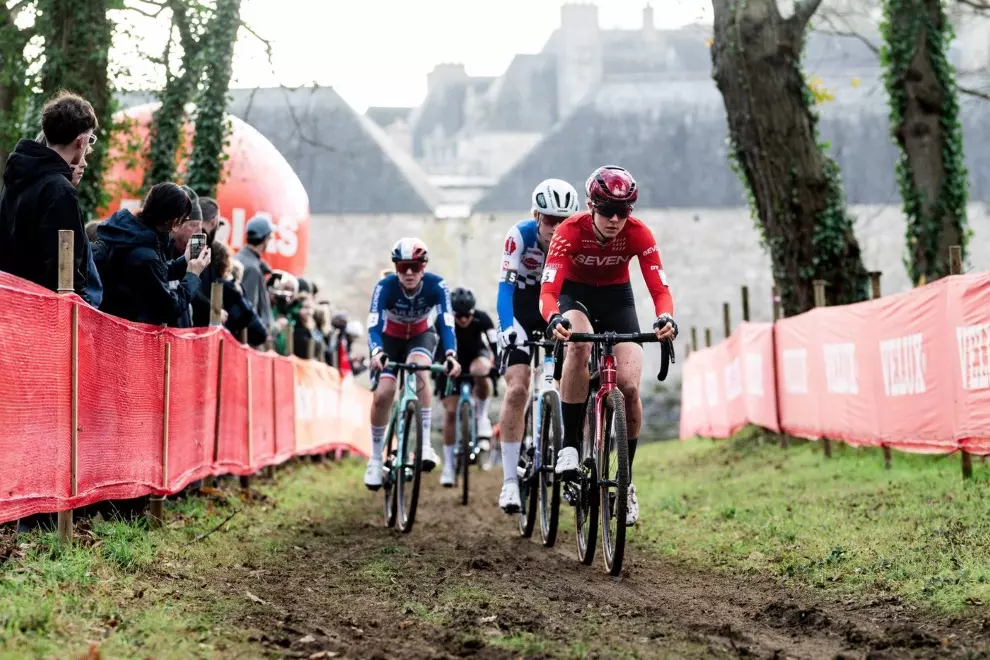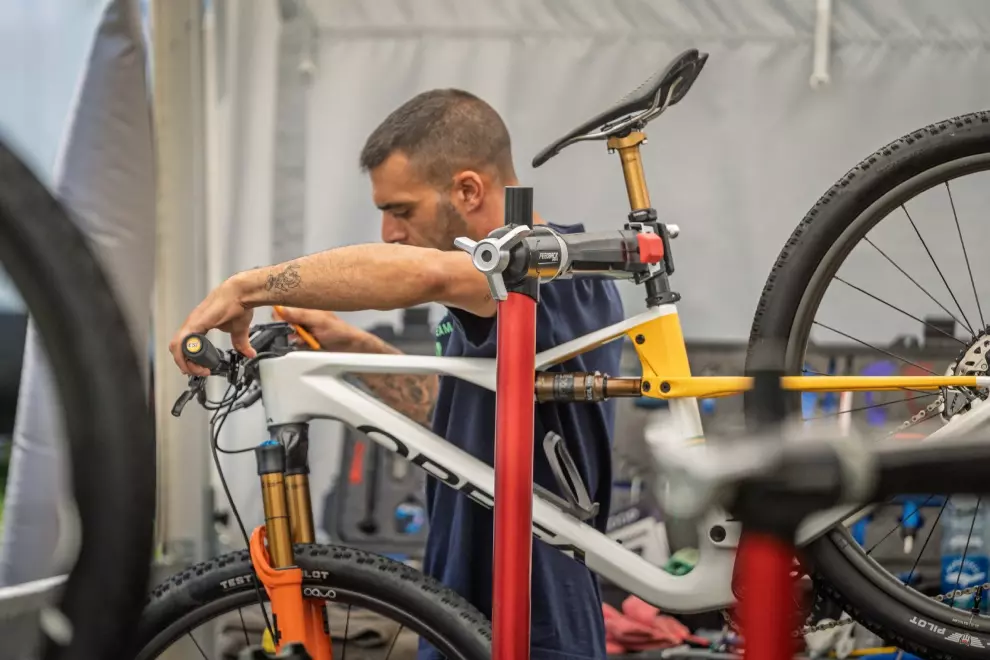
Mud. Mud. Mud. It sounds like a mantra, but for riders and mechanics, it’s more like a nightmare. Then again, mud is fair – it punishes everyone equally. And as in any competition, in the mud, the winner is still the fastest. Or… the best prepared.
Reading the weather, planning the race
Every team has its own way of prepping for mud, based on how used they are to racing in those conditions. The specific race and the evolving weather play a huge role. According to Jakub Šulc – the mechanic for Ondřej Cink, this year’s World Cup winner in Leogang – it’s much easier when the conditions stay the same all weekend: either consistently wet and muddy or consistently dry. “If the weather flips overnight like it did in Leogang this year, it’s a lot trickier,” laughs the Czech mechanic, who also looks after German elite racer Kira Bohm’s bike. Bohm won the overall U23 World Cup title last year.
The job starts with watching the forecast, trying to predict how wet the race will be and how much mud is coming. It makes a big difference whether it rains all day or stops halfway through – that changes whether the mud will stick to the bike or slide off. The mechanics build their strategies around that.
For Alejandro Rodriguez, who works with Australian star Rebecca Henderson, the first step is getting up early and heading trackside to see the conditions firsthand. “We walk the course, take photos and videos to show the riders, and check out how the U23 race went – it’s usually before the elites. Then we make the bike setup call,” explains the Alicante-born mechanic with over a decade of experience.

Tyres: The game-changer in the mud
Both Alejandro and Jakub agree: tyres are the single most important factor. “The right tyre choice can make a huge difference, it’s time you don’t lose,” says Jakub, whose team gets three different mud tread patterns from Schwalbe. Each pattern comes in two widths and three compound hardnesses. “Clearance through the frame and fork is key, so we usually go 2.25” or narrower. The slimmest we have is a 1.9”, that’s only for truly extreme conditions.” Jakub usually preps two or three setups for the rider to try in training before they pick what feels fastest.
Alejandro notes that while older mud tyres used to have aggressive, tall, widely spaced knobs, today’s pros often go narrower – sometimes as slim as 2.0 – with very low tread, so mud won’t pack into the rear triangle or fork.
“When it’s really wet, we often run smaller chainrings along with different tyres because you’re pedalling more in the mud,” says Alejandro.
Brake pads, suspension, and drivetrain tweak
Brake pads also get special attention. “In the wet, we use sintered pads. They don’t bite as hard, but they last the whole race,” says Jakub, who’s survived more mud-soaked races than he can count.
Some were legendary. He recalls the 2020 World Championships in Leogang, which turned into a fight for survival. “Every lap we were cleaning bikes, putting chains back on – even pulling cranks to free a chain jammed between the frame and chainring. We just tried to keep the wheels turning, because the sticky mud clogged everything.”
Suspension settings get tweaked for wet races, since riders can’t attack the course as aggressively. Chain lube also changes – Jakub switches from waxed chains to wet lube for better water resistance and durability. Alejandro, on the other hand, swears by hot-wax treatments even for wet, muddy races.
Keeping the bike light and the rider sharp
From there, prep gets personal. The goal is to stop the mud from sticking, so the bike stays as light as possible for the whole race. “Some use polishes or sprays, others tape the downtube so mud sticks less – or so the rider can rip the tape off mid-race,” says Jakub.
For eyewear, it’s clear or high-transmission lenses, ideally treated with anti-fog spray. Riders often swap glasses multiple times – sometimes every lap. “We’ll plan it pre-race, but in the heat of the moment, it’s up to them,” says Jakub, who, like most mechanics, will hand over a water bottle during the race so the rider can wash the derailleur, chain, chainring or other mud-caked parts.
And what about the old-school mud-in-your-face solution – the front fender? “If it’s actively raining, we run one. But if it rained earlier and the track’s just wet, we skip it – otherwise mud builds up on it and adds weight,” says Alejandro. In the end, he adds, it’s about the rider’s determination. “Once they roll off the start line, nothing stops them. They’re true fighters, and it still amazes me how many different conditions they can handle, and how strong they are.”