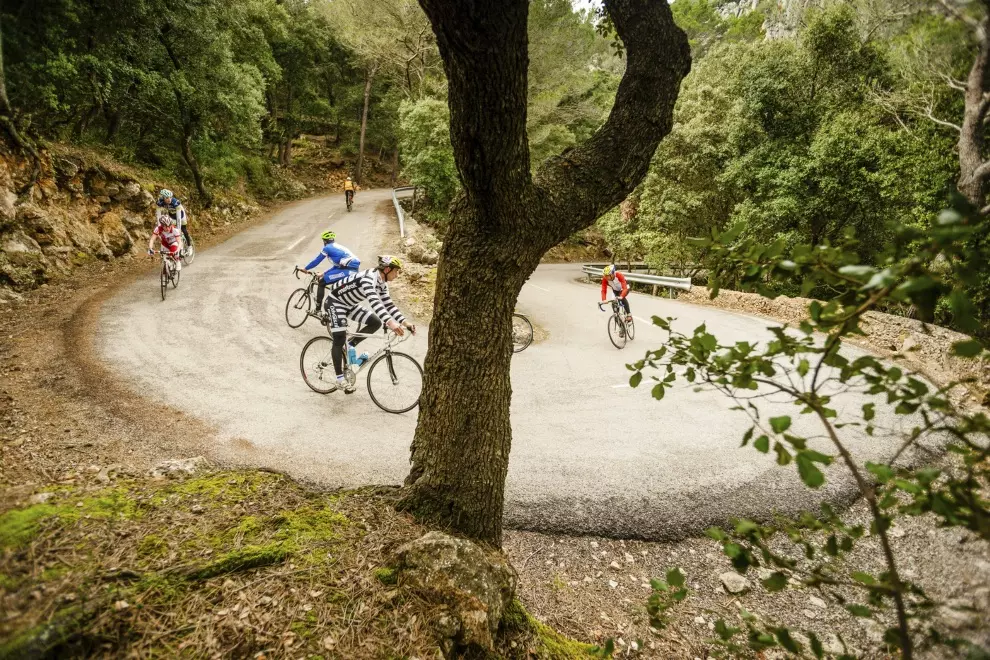
Same watts, different legs
Power on the bike is simply torque multiplied by cadence. Hold 250 watts at a low cadence, and each pedal stroke has to be stronger to make up for fewer revolutions. Spin faster, and every stroke gets lighter, but you make more of them.
In the first part of this series, we looked at the three fibre types in your legs: fatigue-resistant Type I fibres, adaptable Type IIa fibres and powerful but short-lived Type IIx fibres. In the second, we covered how fascicle length and pennation angle shape whether you are built to spin or to grind. Now it is time to see how those two systems interact with every turn of the cranks.
Force, not speed, calls up your fast-twitch fibres
Your nervous system recruits muscle fibres in a fairly strict order, known as the size principle. Small, efficient Type I motor units are called up first. As the force needed rises, larger Type II units join in.
Think of it like a building site. The regular crew handles the everyday work all day long. When something heavy needs lifting, the foreman calls in the specialists with the crane. They get the job done, but they are expensive, and they burn through the budget fast.
On the bike, the heavy lifting is the force you need per pedal stroke. At low cadence, each stroke demands more force, so more fast-twitch fibres get called in, even though your power meter shows the same number. And as we saw in part one, Type II fibres rely heavily on glycogen, the limited store of carbohydrate in your muscles.
What the muscle biopsies show
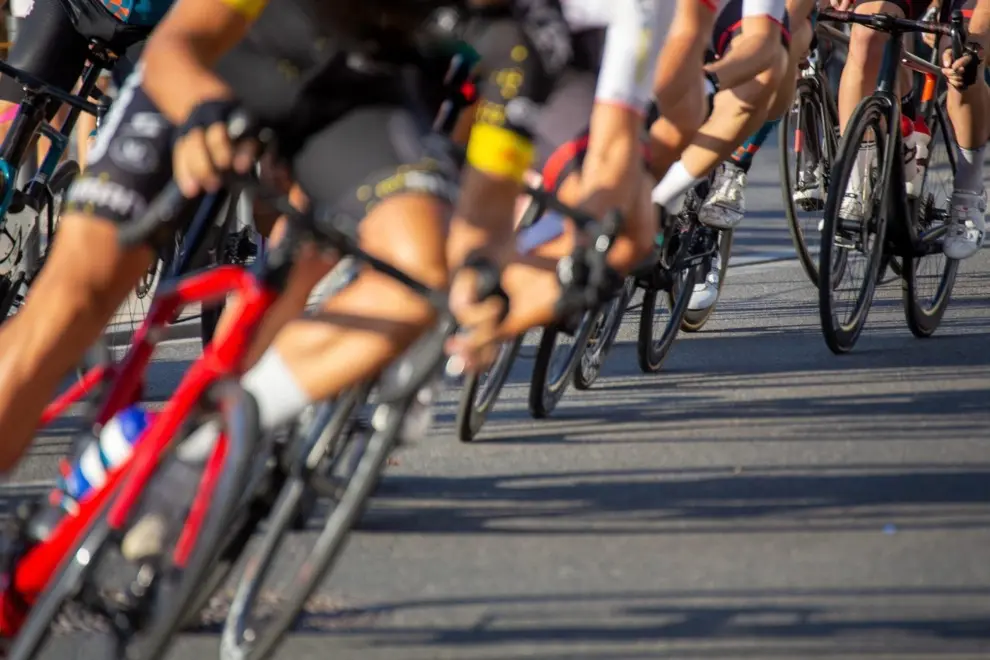
This is not just theory. In a classic study, Ahlquist and colleagues had 8 men cycle for 30 minutes at about 85% of their aerobic capacity on two separate days, once at 50 rpm and once at 100 rpm. The metabolic cost was the same; only the cadence changed. Muscle biopsies from the vastus lateralis were taken before and after each ride, and the researchers measured how much glycogen each fibre type had lost.
- Type I fibres: glycogen fell by 46% at 50 RPM and by 35% at 100 rpm.
- Type II fibres: glycogen fell by 49% at 50 RPM and by 33% at 100 rpm.
The difference is modest, but it points one way: at low cadence, your fast-twitch fibres carry more of the load. The researchers attributed this to the extra muscle force required per pedal stroke at the lower cadence. In other words, it was force, not the speed of your legs, that decided how hard the fast-twitch fibres had to work.
Keep in mind that this was a small study of 30-minute efforts. It did not follow riders through a 4-hour ride. But the logic is easy to extend: if you grind up every climb on a long, hilly day, you are drawing harder on the very fibres you will need for the final climb, the attack or the sprint.
But spinning isn’t free either
Before you start spinning at 120 rpm everywhere, there is a catch. As we covered in part two, very high cadences carry their own cost. Moving your legs faster takes energy in itself, and if your muscle architecture favours shorter fascicles, ultra-high cadences push your fibres to shorten at speeds where they work less efficiently.
Researchers in Kraków also point out that at around 120 rpm, recruitment of Type II fibres starts earlier than it does at 60 rpm. So, at the extremes, both grinding and spinning can bring your fast-twitch fibres into play sooner than you would like. The sweet spot sits somewhere in the middle, and it is personal. That is why the cadence drop-off test from part two is worth doing.
What this means for your rides
Long climbs: Shift down earlier than your ego wants. A comfortable, slightly higher cadence keeps more of the load on your Type I fibres and saves fast-twitch glycogen for the final kilometres.
Gearing: A compact chainset or a bigger cassette is not a sign of weakness. On a hilly ride, it is a glycogen-saving tool.
Deliberate torque work: Low-cadence, high-force intervals have a place as a training stimulus. The point is to do them on purpose in specific sessions, not by accident on every climb.
Flat endurance rides: At steady endurance pace on the flat, the forces involved are lower, so cadence is less likely to be what empties your tank. Ride at whatever feels natural.
Your power meter tells you how much work you are doing, not which fibres are paying for it. Grind less, spin smarter, and save the expensive specialists for when the race really starts.
If heavy pedal strokes are so costly, the obvious question is whether you can make each one feel lighter. In the final part of this series, we will look at why heavy squats and leg presses can make you a more efficient endurance rider, without adding bulk to the bike.