
Durability isn’t just endurance. While endurance refers to your ability to ride long distances, durability is about maintaining power and efficiency when tired. Research from Muriel et al. (2022) shows that WorldTour cyclists outperform ProTeam riders not because of higher fresh power, but because they retain a greater percentage of their power output late in races. The good news is that durability is trainable and measurable.
What is durability?
Durability is your capacity to produce power in a fatigued state – and it’s not a new concept. Cyclists have long understood that late-race performance matters. But modern data analysis and training methods now allow us to quantify and target it directly.
Unlike FTP or VO2 max, which measure peak performance in a fresh state, durability focuses on how well you hold that performance after hours of riding. For instance, a study by Spragg et al. (2023) found that riders with higher VO2 max, gross efficiency, and fat oxidation rates experienced smaller drops in power when fatigued.
How to measure durability
Durability isn’t yet a standardised metric like FTP, but you can quantify it using the following test:
Fresh vs. fatigued max efforts
- Perform a 5-minute max effort after a warm-up (fresh state).
- Ride 1–3 hours in zone 2-3 to accumulate fatigue.
- Repeat the 5-minute max effort and compare the results.
- Benchmark: A 5-10% decline is considered good; <5% is elite. If your drop exceeds 10-15%, durability is a limiter.
-
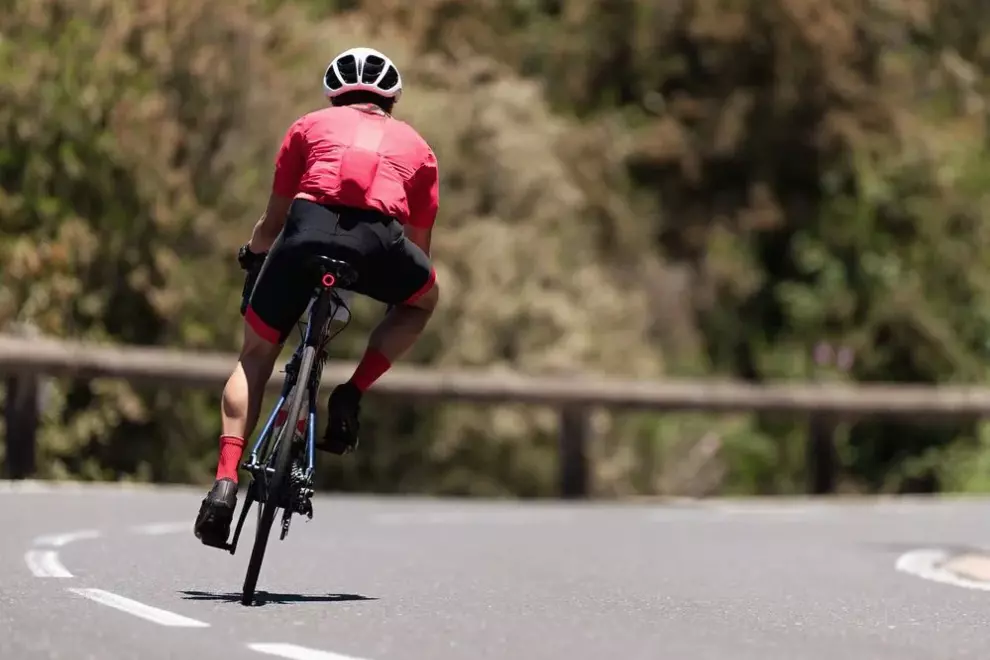
Durability is your capacity to produce power in a fatigued state – and it’s not a new concept. © Profimedia
The science behind durability
Durability depends on four key physiological, metabolic, and neurological factors:
Fat oxidation capacity: Your body’s ability to burn fat as fuel spares glycogen for critical moments. Highly trained cyclists oxidise fat at 4-5x times the rate of untrained individuals, even at 70–75% VO2 max.
Resistance to muscle damage: Long rides cause micro-tears and swelling in muscle fibres, leading to dysfunction. Training improves your muscles’ ability to resist damage and recover faster during prolonged efforts.
Central fatigue resistance: As you ride, your central nervous system’s ability to activate muscle fibres declines. The longer the ride, the larger this effect is. Training helps reduce the size of this effect.
Gross efficiency: Improving pedal stroke efficiency, bike fit, and aerodynamics reduces energy waste, allowing you to sustain power longer. Strength training also enhances neuromuscular pathways, helping you recruit muscle fibres more effectively.
How to train durability
Durability improves with structured, progressive training that targets all of the elements mentioned above. Here are a few specific tips.
Start by building an aerobic base with long rides in zone 2 (65–85% FTP). These rides are the foundation of durability, improving your body’s ability to burn fat efficiently, boosting mitochondrial density, and increasing capillary growth, all of which help delay fatigue. Staying in zone 2 will help you accumulate enough volume. If you spend too much time in zone 3 or higher, the recovery cost will be too high and you will either burn out or accumulate less volume.
Next, incorporate late-stage intensity to simulate race conditions. Try negative split rides, where you start in zone 2 and gradually increase to zone 3 (85–95% FTP) for the final 30–60 minutes. Another effective method is adding late-stage intervals: after 2–3 hours of steady riding, throw in 2–4 sets of 5–8-minute efforts at threshold (95–105% FTP) with short recoveries. This teaches your body to push hard even when fatigue sets in.
For a more advanced challenge, use pre-fatiguing intervals. Begin your ride with high-intensity efforts, like 3 sets of 8 minutes at 105–110% FTP, then continue with 1–2 hours of zone 2 riding. This approach creates glycogen depletion and forces your body to adapt to performing under stress, which is critical for late-race durability.
Don’t overlook muscular endurance work. Low-cadence, high-torque intervals (5–10 minutes at 60–70 RPM in zone 3) improve muscle fibre recruitment and resistance to damage. Pair this with strength training 2x per week, focusing on exercises like squats, deadlifts, and lunges to mimic cycling movements and enhance neuromuscular efficiency.
Remember, the rider who wins isn’t the one who starts the strongest – it’s the one who finishes the strongest. Train your durability, and you’ll be the one making the decisive move when it matters most.