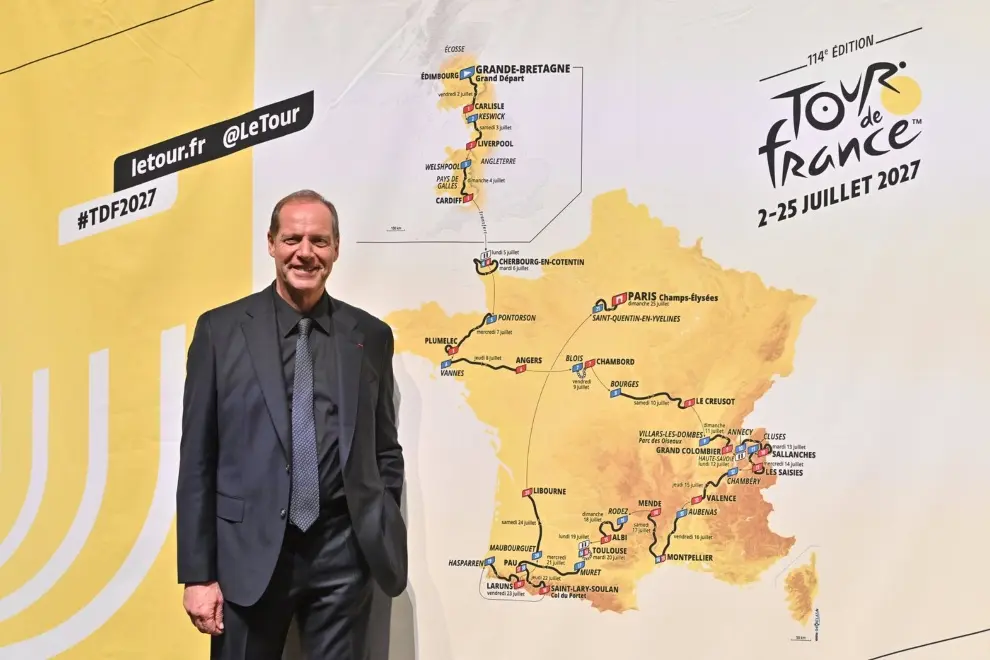
The route for the 114th Tour de France was officially unveiled in Paris on Thursday, October 22, offering the first detailed look at what awaits the peloton next summer. Covering 3,479 kilometres across 21 stages, with approximately 53,450 metres of climbing, the 2027 edition combines a relatively traditional Grand Tour structure with several notable changes.
The race will run from July 2 to 25, starting in Edinburgh and finishing in Paris. Along the way, riders will face two substantial individual time trials, demanding stages in the Alps and Massif Central, and a particularly challenging final week in the Pyrenees.
Here are the key features of the newly announced route and what they could mean for the battle for the yellow jersey.
A historic Grand Départ in Scotland
For the first time in Tour de France history, the race will begin in Scotland. Edinburgh hosts the Grand Départ on Friday, July 2, with the opening 185-kilometre stage taking riders south to Carlisle.
The following two stages will continue through Great Britain, from Keswick to Liverpool and then from Welshpool to Cardiff.
The opening three days should provide opportunities for sprinters and Classics specialists, although the increasingly demanding terrain, particularly in Wales, could also produce early differences in the general classification.
The peloton will then enjoy its first rest day on July 5 before transferring to France.
The British opening is expected to attract considerable roadside support, building on the success of previous Tour visits to the United Kingdom.
Time trialling returns to the spotlight
One of the most significant features of the 2027 route is the inclusion of 71 kilometres of individual time trialling, the highest total since 2012.
The first test against the clock comes on stage 7, covering 38 kilometres from Blois to Chambord. A second, 33-kilometre time trial around Toulouse follows on stage 16.
This represents an important tactical consideration for the general classification contenders.
Recent Tour editions have frequently featured relatively limited individual time trial distances, increasing the importance of mountain performances. The 2027 route offers specialists against the clock a greater opportunity to establish an advantage before the decisive climbing stages.
Zobrazit příspěvek na Instagramu
Remco Evenepoel, in particular, could benefit from the additional kilometres. His time trialling credentials are well established, and two relatively long efforts provide a platform to gain time on less accomplished specialists.
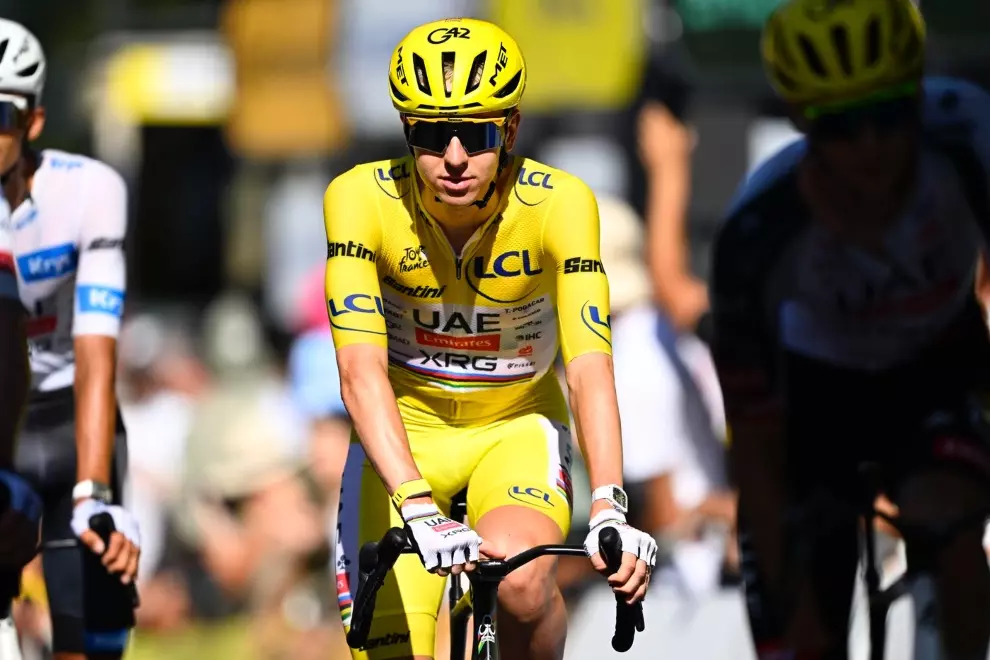
However, Tadej Pogačar has repeatedly demonstrated his ability to perform at the highest level in both the mountains and time trials. The Slovenian is unlikely to view the additional kilometres as a disadvantage.
For riders who struggle against the clock, the challenge will be finding enough opportunities in the mountains to recover any lost time.
The Alps and Massif Central provide the first major tests
The first significant summit finish arrives on stage 9 at the Grand Colombier, a climb that has played an important role in previous editions of the Tour.
Following the second rest day, the peloton enters the Alps, with stage 10 taking riders from Annecy to Sallanches and stage 11 finishing at Les Saisies on Bastille Day.
The race then moves towards the Massif Central, where stage 14 concludes in Mende.
While these stages should help establish the hierarchy among the leading contenders, the route appears designed to keep the overall classification competitive deep into the third week.
Teams will need to manage their efforts carefully, particularly with the second individual time trial and the hardest Pyrenean stages still to come.
A decisive final week in the Pyrenees
The most demanding section of the 2027 Tour comes during its final week.
Stage 18, from Pau to the Col du Portet, stands out as the likely queen stage. The 174-kilometre route features approximately 5,400 metres of climbing, including the Col du Tourmalet, before finishing at an altitude of more than 2,200 metres.
The Col du Portet has previously provided the setting for significant general classification battles, and its combination of altitude and sustained gradients makes it a natural location for a decisive showdown.
The following day offers little opportunity for recovery. Stage 19 takes riders 160 kilometres from Hasparren to Laruns, with approximately 4,300 metres of climbing.
Together, these two stages could determine the outcome of the race, particularly if the general classification remains close after the Toulouse time trial.
Their positioning is significant. By placing the toughest mountain stages so late in the race, the organisers have increased the potential impact of accumulated fatigue, team strength and recovery.
A rider who looks dominant during the first two weeks may still face a considerable challenge in the closing days.
What does the route mean for Pogačar and his rivals?
As Tadej Pogačar targets a historic sixth Tour de France victory, the 2027 route presents an interesting combination of opportunities and challenges.
Its demanding mountain stages should suit the Slovenian’s aggressive racing style, while his ability against the clock makes him well equipped to handle the longer time trials.
For Jonas Vingegaard, the demanding final week could provide an opportunity to challenge Pogačar through sustained climbing performances and careful management of energy across the three weeks.
Evenepoel may find the route particularly encouraging because of the emphasis on individual time trialling. However, the final Pyrenean stages will require him to match the best climbers after nearly three weeks of racing.
France’s emerging talent Paul Seixas will also attract considerable attention, particularly as the French public looks towards a new generation of potential Tour contenders.
The main tactical question may be how the challengers approach the race. With two time trials and several major mountain stages, there are opportunities to gain time throughout the three weeks rather than relying on a single decisive attack.
A route that rewards versatility
The 2027 Tour de France offers a balanced test of the qualities required to win a modern Grand Tour.
The substantial time trial distances reward aerodynamic efficiency and sustained power, while the major mountain stages demand exceptional climbing ability. The difficult final week will also place considerable importance on endurance and recovery.
Perhaps most importantly, the route provides several opportunities for the general classification to change, from the first individual time trial to the consecutive Pyrenean stages.
Whether that translates into a closely contested race will ultimately depend on the riders themselves. But the organisers have provided a course that should encourage different approaches and a variety of tactical possibilities.
With the route now confirmed, teams can begin the detailed preparation that will shape their ambitions for July.
For the leading contenders, the countdown to the 2027 Tour de France has officially begun.