It’s the entire allure of the sport: you can do everything on your bike. Go down some stairs? Sure. Climb in an elevator? Why not. Go on a romantic dinner with your crush? Absolutely. Still, there are a few places and situations where getting off the bike and walking is probably the smarter move. No, a romantic date isn’t one of them. So, let’s discuss those places and situations.
Tourist hotspots
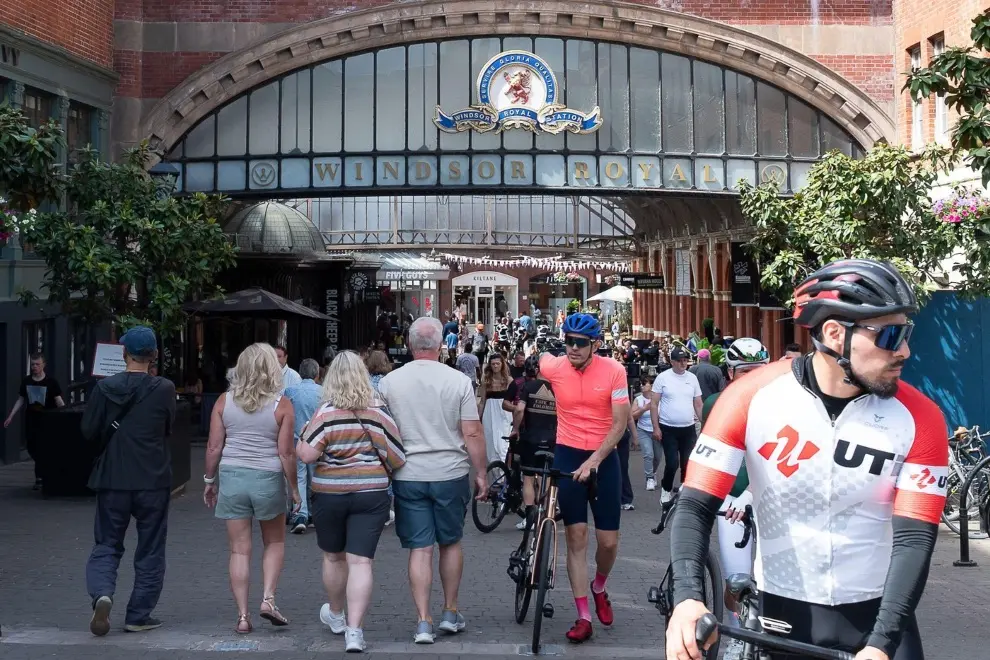
There is absolutely nothing wrong with cycling through a famous tourist spot. In fact, getting to a spectacular place on your own beats feeling like a clown stuffed with 218,468,273,641 other people in a coach, which was obviously designed for no more than 10% of the passengers inside. Still, getting there and riding, where several hundred buses with the same number of passengers have arrived, is entirely different. Tourist hotspots, especially during summer, transform into what can only be described as a zombie horde, marching chaotically, regardless of what’s in their way.
They stop without warning. They walk backwards while taking photos. They suddenly spread across the entire street because someone has spotted a cathedral. Children move according to physics that hasn’t yet been properly documented. Trying to ride through that at normal speed isn’t technical riding. It’s a lawsuit waiting to happen.
And yes, technically, you probably can weave through the crowd. You’ve got excellent bike control. Your brakes work. You can trackstand. Wonderful. Nobody standing there with an ice cream cares.
This is one of those rare occasions when just giving up and joining the horde is a whole lot better. You can look around instead of searching for a six-inch gap between a German tour group and a family taking their seventeenth identical photograph. You’re not constantly feathering the brakes. And, most importantly, nobody will remember you as “that idiot on the bike”.
High and steep mountain peaks
Mountain bikers have an unhealthy relationship with altitude. The higher the trail goes, the stronger the urge to take a selfie with your bike there. Sometimes, however, what appears on the map as a “trail” eventually turns into loose rock, exposed ledges, and something that would require a very generous interpretation of the word “surface”.
That’s usually the point where riding stops being impressive and starts becoming an unnecessarily complicated way to fall down a mountain. Steep alpine terrain leaves very little room for correction. A front wheel slipping on a normal trail is annoying. The same thing happening on a narrow traverse with several hundred metres of empty space beside you suddenly makes tyre choice feel considerably less important.
And even if the exposure isn’t dramatic, there comes a gradient where riding stops serving any purpose. It’s not faster, it’s not easier, and it’s not even close to enjoyable. You’re fighting for balance, clipping pedals into rocks, restarting every 15 metres, and burning enough energy to power a small Bulgarian village.
At that point, get off. Or better yet, know where you’ll be riding and avoid places where hikers consider a bit too extreme. Push the bike. Carry it if necessary. Enjoy the view. Pretend this was always part of the plan. There’s no shame in hike-a-bike. In the high mountains, it’s often simply the most efficient gear you have.
Beaches
There is a reason why every time you see sand on a corner or on a trail, your heart skips a few beats, thinking whether it’s worth working for you. There is a reason for that. Sand and bikes don’t go together. They’re like jalapeños and eye drops.
Sand has the impressive ability to make a perfectly functional bicycle feel like you just found it in a dump after it spent years underwater. It gets everywhere, and if you think any lube can protect your drivetrain, try putting oil on sandpaper and rubbing it on your skin. That’s pretty much what happens to the bike’s joints.
Moreover, sand has a mind of its own. You want to turn left? Yeah, but you obviously filled in the wrong form, and now you’re turning right. You might argue that your handlebars are pointing left, but that doesn’t concern the sand under your tyres. And if you think you can go faster than crawling speed, guess again.
Finally, let’s not forget the endemic species found on every beach: people on vacation. These solemn creatures lie chaotically across the sand, usually in uneven patterns. Then there are the little hellions running and screaming, seemingly doing everything in their power to throw themselves under your tyres.
Just leave the bike at the edge of the beach, grab your towel, and if you insist on sweating, go for a swim. Much easier, much safer and, most importantly, much cheaper in the long run.
Protected nature areas and fragile trails
Mountain bikers love finding new lines. Nature, however, is not particularly interested in your creativity.
Some trails and areas are fragile for a reason. Alpine meadows, dunes, wetlands, and freshly restored sections can take months or even years to recover from a few badly placed tyres, especially when the ground is wet.
And no, “there was already a faint line there” doesn’t count as permission. That faint line may have been made by wildlife, hikers, drainage or another cyclist who had exactly the same bad idea five minutes before you.
The worst part is that riding through these places rarely gives you anything worthwhile anyway. You spend 30 seconds feeling adventurous and the next several months helping create a new scar across the landscape. If the trail is closed, clearly marked as sensitive or looks like your tyres will leave trenches behind, get off and walk. Your Strava file will survive the interruption. So will the trail.
Urban staircases
Urban staircases are usually used by, well, urban dwellers. People can appear from doorways, side streets, underground entrances or blind corners at any second. That’s already annoying enough when you’re walking. On a bike, halfway down a staircase with almost no room to stop, it becomes an incident waiting to happen.
Then there’s the exit. Most staircases were never designed for someone arriving at the bottom with the speed usually reserved for free-falling objects. They usually end in a tiny patch of pavement, followed immediately by a street where cars do what cars usually do: move rapidly. And they definitely aren’t expecting a cyclist to launch into their path from a staircase.
There’s another problem we tend to ignore. Bikes damage stairs. Tyres slide over the edges, brakes skid, pedals hit corners, and repeated riding slowly chips away at infrastructure designed for pedestrians. Especially for the people who actually need those stairs every day. So yes, the staircase may be technically rideable. That doesn’t mean it’s a good idea. Find another way down. Preferably one that was designed for wheels.
Know when to get off
A bike lets you get farther, see more and have a hell of a lot more fun getting there. That freedom and the thrill that comes with it are exactly why we ride. But bikes aren’t a good idea everywhere, especially when your fun comes at someone else’s expense. So pick the places where riding actually makes the experience better, respect the people and terrain around you, and save the heroics for the rides you’ll genuinely enjoy.