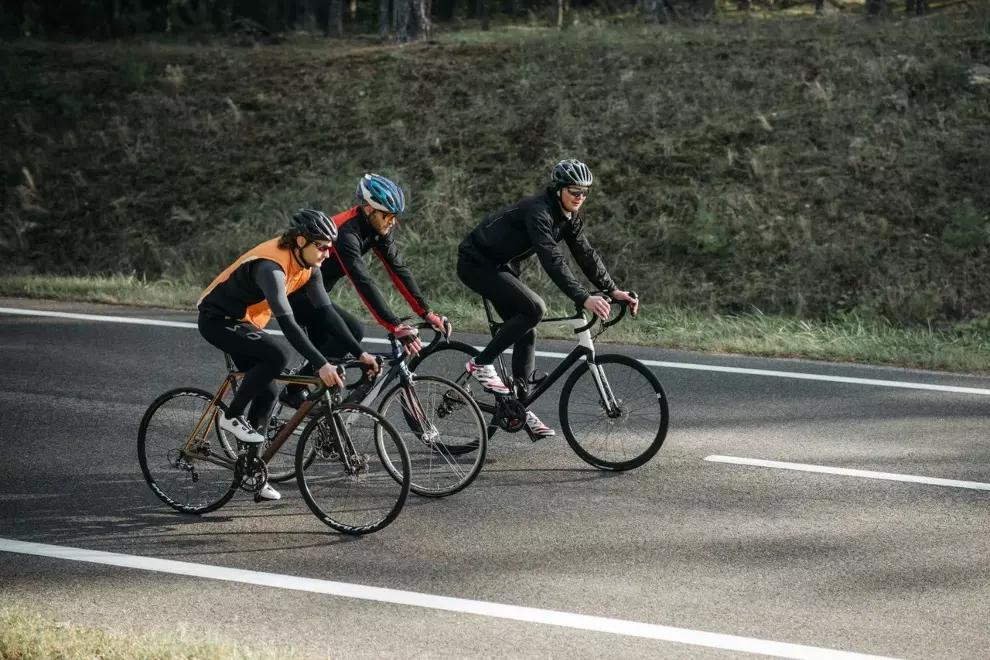
Having that much left in the legs is a lovely feeling. We spend enough time training for it. But once you’re consistently the strongest rider, or the one everyone follows through the awkward bits, your ability starts shaping the whole group’s day. You can make a difficult ride manageable. You can also make six people decide they’re busy next Sunday… and every weekend after that.
So, as the best of the bunch, you have a few obligations. And you, my friend, will have to follow some unwritten rules if you don’t want to end up riding alone.
Keep the group together
Knowing the route can make you surprisingly bad at leading it. You take a familiar turn without thinking, the two riders on your wheel follow, and everyone further back gets an unexpected opportunity to develop their navigation skills.
Keep an eye on how far the group is stretching and ease off before people lose contact. Agree on clear regrouping points before climbs or technical sections so everyone can ride at a comfortable pace and know where they’ll find you afterwards. Pick somewhere obvious. “At the top” becomes less useful when the trail offers three convincing candidates.
At junctions, make sure the last rider knows which way to go before moving on. “They were just behind me” has an extremely short shelf life when somebody stops to fix a dropped chain. Count heads when you regroup. Being first to arrive is considerably less impressive when nobody can establish what happened to half the people following you.
The last rider gets to rest too
You reach the top, have a drink and spend five minutes explaining why you’re actually having a bad day. Then the last rider arrives, and you immediately start clipping in. Apparently, their appearance marks the end of everyone’s break.
They’ve spent those five minutes still climbing. Give them time to catch their breath, have a drink and eat something if they need to. Their recovery starts when they arrive, however thoroughly you’ve already recovered on their behalf.
Ask whether they’re ready while you’re still stopped. Shouting the question over your shoulder as you roll away does tend to influence the answer. And if waiting has made you cold, put another layer on. You’ve had time for a snack and a detailed assessment of your legs. You can probably find a moment to operate a zip.
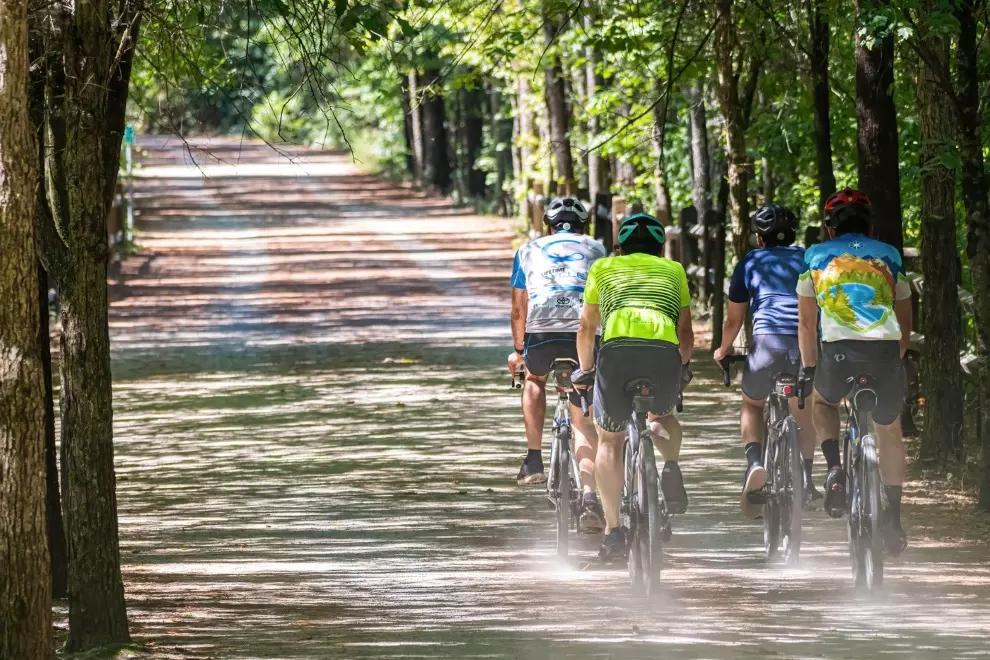
Drop back on the steeper climbs
The back of the group is an excellent place to discover that the climb you described as “a bit of a drag” is currently ruining somebody’s afternoon. When the gradient steepens, ease back and join whoever is finding it hardest.
Ride alongside them where there’s room or give them space and follow on narrow trails. Match their pace properly. Hovering a few metres ahead and accelerating whenever they catch your wheel is a particularly irritating form of encouragement. They already have a summit that refuses to get closer. They don’t need you doing it as well.
If you know the climb, offer something useful: where the gradient eases, where the loose section ends or where they can catch a breather. Save “nearly there” for when the summit is actually near. Being exhausted doesn’t prevent people from remembering that you said the same thing fifteen minutes ago.
Talk while the others breathe
Tell them about the time you fell over outside the café because you’d forgotten to unclip. Include the bit where you tried to get up with the bike still attached. You’ve finally found an audience that can’t interrupt, and your humiliation might make the next few minutes of climbing more bearable.
Carry the conversation without making them work for it. Asking about their job and following up with “What does that involve, exactly?” is a fairly cruel use of your remaining lung capacity. Give them something to listen to and let the occasional grunt count as full participation.
Choose your material, though. Your latest FTP improvement may be fascinating, but the person struggling beside you probably won’t appreciate a detailed explanation of why this climb feels so easy. And if they want quiet, shut up. Even a captive audience has its limits.
Let the KOM wait
Your favourite segment is approaching. There’s a tailwind, your legs feel good, and Strava has suddenly become more important than the six people you specifically invited to ride with you.
This is where you let the attempt go. Charging off with “I’ll wait at the top” can still drag half the group into chasing you, while the other half watches their company disappear. By the time you stop, somebody else may have spent the energy they needed for the next climb.
Stay at the agreed pace and save the attempt for a day when that’s the point of the ride. You don’t need to announce this sacrifice, either. Nobody owes you a thank-you speech because you managed to ride past a segment without treating it as an Olympic qualifier.
Go first on the descents
“Follow my line” is a fairly useless instruction when you disappear round the first corner. Your mates now have a brief memory of your rear tyre to guide them through the next half kilometre.
Lead at a pace that lets the rider behind see how you approach corners and choose your line, with enough space to react for themselves. Pick lines they can reasonably use. Hopping over the roots may look lovely, but it tells someone who needs to ride through them precisely nothing.
If there’s an awkward feature worth discussing, stop somewhere safe before it and explain the options. Let people look, choose their approach or walk without receiving an unsolicited motivational speech. Agree where you’ll regroup, and stop somewhere visible and clear of the riding line. The exit of a blind corner is a poor place to assemble a welcoming committee.
If you don’t want to be a leader, find a new group
Of course, you’re not obligated to do any of these. Still, if you want to ride with your buddies and not alone, you will have to acknowledge your supremacy and just do your duty as a leader. Alternatively, you can ride alone. Actually, you should ride alone. That’s how you become better.
Yet, for your weekend ride, you either obey the unwritten rules or find a group that’s a level up. There, you can be the one breathing like a fish that’s been tanning on the beach for a few minutes, and another rider will be the one telling you the fascinating story of how they forgot to unclip at the cafe.