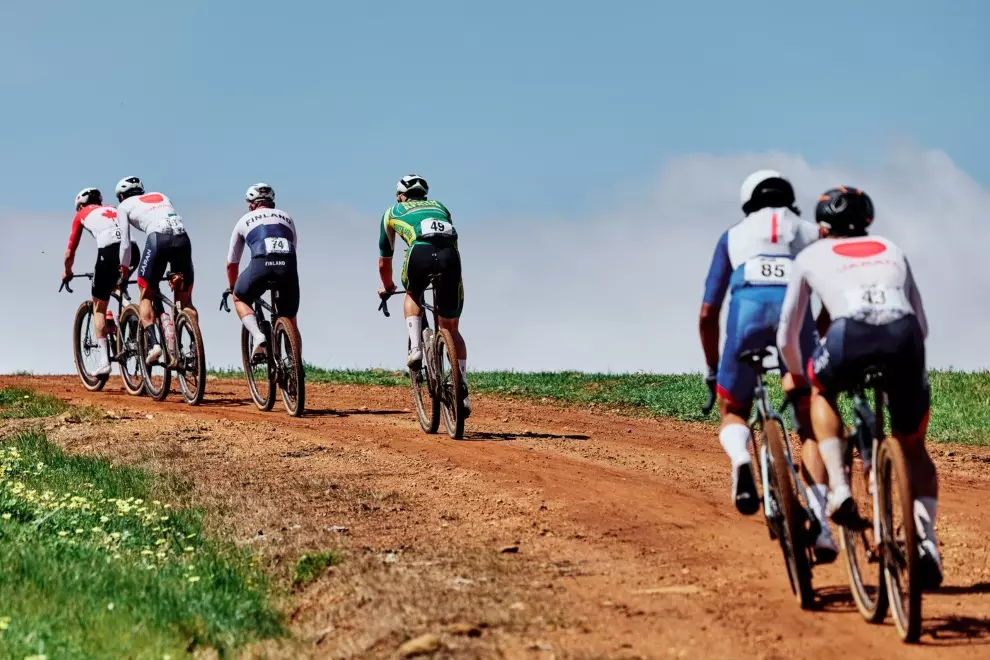
There was a time when gravel cycling was less about winning a world title and more about seeing where a dirt road might take you. You needed a bike that could handle a bit of rough stuff, a sense of adventure, and ideally the ability to fix a puncture somewhere without mobile reception. There were no team cars, no carefully choreographed race strategies and certainly no expectation that every ride needed a performance metric.
Things have changed.
Last weekend, the gravel world’s attention turned to Nannup, a small town in Western Australia’s Blackwood Valley, where riders from around the world gathered to compete for the coveted rainbow jerseys at the UCI Gravel World Championships. For the first time, the event took place outside Europe, bringing the discipline’s biggest annual race to a landscape of forests, farmland, rolling hills and demanding gravel roads.
The racing delivered. Marianne Vos became the first rider to win the women’s gravel world title twice, while Denmark’s Magnus Bak Klaris took the men’s crown in a four-rider sprint. But beyond the results, Nannup represented the graduation of a discipline that began as an alternative to conventional road racing is now firmly established on cycling’s international calendar.
Gravel has grown up. Now it’s time to ask what happens next.
From back roads to the world stage
Gravel’s rise feels remarkably fast, even if its roots run much deeper. Cyclists have always ridden unpaved roads; what changed in the 2000s was the emergence of organised events built around that experience. In the United States, races such as Unbound Gravel helped turn long stretches of rural dirt road into a destination for riders seeking something different from traditional road racing.
The appeal was never particularly complicated. Gravel offered a way to get away from traffic, discover unfamiliar places and ride for the pleasure of riding. Events could be competitive without feeling exclusive to professional athletes. You might share the route with an elite racer, a bikepacking enthusiast, or someone who simply decided that riding 160 kilometres through the countryside sounded like a good idea. And to this day, that mix remains one of the discipline’s greatest strengths.
It also helps explain the extraordinary growth of the gravel calendar. The 2026 UCI Gravel World Series features 45 events across multiple continents, with races providing qualification opportunities for the World Championships. Meanwhile, specialist bikes, wider tyres, off-road equipment and dedicated gravel teams have helped transform the discipline from a loosely defined cycling niche into a substantial part of the industry.
None of this is inherently bad. More events mean more opportunities to race, better equipment can make long days on rough roads more comfortable, and a world championship gives riders a chance to compete for something tangible, rather than simply comparing their finishing times at events around the world.
But growth inevitably brings change, and that is showing up in some questionable ways for a sport that has always been particularly proud of its independence.
A world championship with a distinctly gravel character
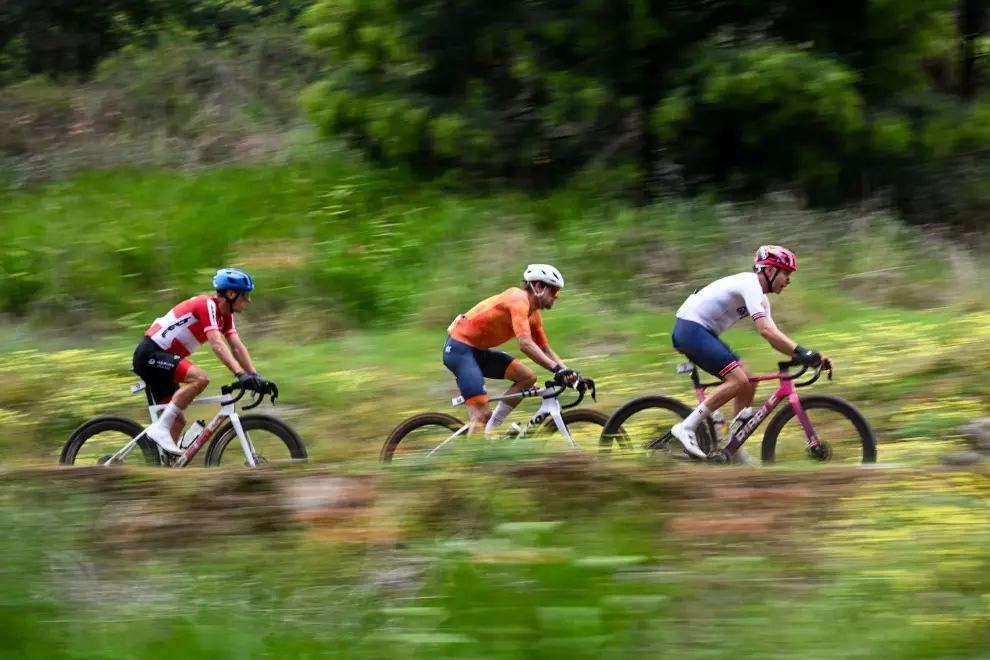
If you wanted evidence that gravel racing has become a serious competitive discipline, Nannup provided plenty. The women’s race covered 125.6 kilometres, with the course’s climbs, technical sections and slippery conditions demanding far more than a big engine and a well-managed power output. The decisive moves came late, when positioning, confidence and the ability to handle unpredictable terrain mattered as much as raw strength.
Tiffany Cromwell, racing on home soil, animated the contest with an ambitious solo attack. But the Australian’s move was eventually reeled in, leaving a select group to fight for the title.
Rosa Klöser, the German gravel specialist and former Unbound Gravel 200 winner, emerged as Vos’s principal rival. The pair went clear, with Klöser repeatedly testing the Dutchwoman on the climbs. Vos held firm before attacking in the closing kilometres. Klöser crashed on a slippery section while trying to respond, recovering to finish second, 27 seconds behind.
Vos crossed the line in 4:30:04, securing her second gravel world title and another remarkable addition to an already extraordinary palmarès. Larissa Hartog finished third on the podium.
The men’s race offered a different kind of finale. Magnus Bak Klaris beat defending champion Florian Vermeersch, Britain’s Connor Swift and teammate Mads Würtz Schmidt in a four-way sprint for the title. It was a victory for a rider with a strong gravel pedigree, rather than simply another road star adding a new discipline to his résumé.
This is worth dwelling on, because although gravel has attracted plenty of established road and mountain bike names, it is also developing its own specialists. These are riders whose experience on loose surfaces and ability to manage long, unpredictable races are central to their success.
And that, indeed, remains part of the appeal. Gravel has become professional without becoming completely controllable.
The uncomfortable side of going global
Hosting the World Championships in Australia was another important step. Nannup became the first location outside Europe to stage the event, giving the championship a genuinely international setting and bringing global attention to a part of Western Australia that many cycling fans may never have considered visiting.
The town, which has a population of around 1,000, welcomed thousands of cyclists and spectators. Local businesses reported a substantial increase in activity, while organisers and community leaders hoped the event would introduce more visitors to the region’s riding opportunities.
Yet the journey also exposed a less glamorous side of gravel’s international ambitions. For many riders, getting to Australia was a major financial undertaking. Cycling Weekly reported that British competitors received no financial or operational support from British Cycling for the championship, as gravel is not an Olympic discipline. Some riders relied on team assistance, while others covered their own costs.
There is an obvious irony here. Gravel has become big enough to stage a world championship on the other side of the planet, yet some of the people representing their countries must largely fund the privilege themselves.
It is a reminder that professionalisation does not happen evenly. Sponsorship, media attention and commercial opportunities may be increasing, but that does not automatically translate into support for every athlete.
Can gravel keep its rebellious streak?
The question is not whether gravel should have rules, championships or professional athletes. It already has all three, and the racing is better for it.
The more interesting question is whether the discipline can accommodate elite competition without allowing it to define the entire culture.
Road cycling has a relatively clear hierarchy—professional teams, a structured international calendar, and races that sit at the top of the sport. Gravel is less straightforward. Its world championship exists alongside mass-participation events, ultra-distance challenges, local races, bikepacking adventures and weekend rides that never involve a timing chip.
These experiences overlap, but they are not interchangeable.
For some riders, gravel means lining up against the best in the world. For others, it means riding 80 kilometres with friends, stopping for coffee and taking a turn down a road simply because it looks interesting. Both are legitimate expressions of the discipline.
The danger comes when the professional version becomes the default measure of success. If every new development is judged by how fast riders can go, how much equipment they can buy or how closely events resemble established road racing, gravel risks losing some of the qualities that made it attractive in the first place.
We have already seen how quickly a sport can become entangled with equipment expectations. Gravel bikes are more capable than ever, but an increasingly specialised market for frames, wheels, tyres, clothing, nutrition and technology also exists. None of that needs to be rejected. Innovation is part of cycling. Still, a discipline that sells itself on freedom should be careful not to make riders feel that they need an entirely new wardrobe and a five-figure bike to participate.
Indeed, as the UCI itself noted ahead of this year’s championships, gravel’s appeal lies partly in the fact that riders of different levels can share the same routes at mass-participation events. World champion Kasia Niewiadoma-Phinney has also spoken about how unexpectedly hard gravel racing can be, challenging the assumption that it is simply a more relaxed alternative to road racing.
That combination of accessibility and genuine difficulty is worth protecting.
What should gravel’s next chapter look like?
First, it should be more inclusive in practice, not just in marketing. That means looking at the cost of racing, access to equipment, travel expenses and the support available to developing riders. It also means ensuring that the growth of elite racing does not come at the expense of the local events and communities that sustain the wider scene.
Second, the sport should resist the temptation to standardise every experience. One of gravel’s strengths is its variety. A fast, technical European race, a long American dirt-road classic and a remote Australian adventure do not need to look or feel the same. The World Championships can establish a common competitive benchmark without becoming the blueprint for every gravel event.
Third, the industry should remember that participation is not merely a pipeline for producing elite racers. Some riders will move from local events to international competition, and others will never want to.
Finally, gravel needs to make sure its international ambitions are matched by meaningful support for the people who race it. A global calendar and a rainbow jersey are impressive milestones. So are affordable entry fees, accessible events, well-supported athletes and thriving local cycling communities.
The road ahead is still unpaved
The 2026 World Championships were a landmark for gravel. Vos’s historic victory, Bak Klaris’s sprint win and the sight of a global field racing through Western Australia’s countryside all showed how far the discipline has come.
But the most important thing about Nannup may not be who won. It may be what the event represents: gravel is no longer a small alternative hiding at the edges of cycling. It is a sport with international ambitions, established champions and a growing commercial ecosystem.
The next chapter should not be about choosing between racing and adventure, or between professional ambition and grassroots participation. Gravel is big enough to make room for both. Its challenge is to build structures that let elite competition thrive without squeezing out the spontaneity, accessibility, and sense of discovery that helped it grow.
After all, the best thing about a gravel road has never been the promise that it will take you somewhere faster. It is the possibility that it might take you somewhere unexpected.