Whether this is your first year tackling the cold on two wheels or you’re a seasoned four-season cyclist, you’re surely already aware that cold temperatures, wet roads, grit, and the occasional icy surprise all change how your bike behaves beneath you. The right winter tyre won’t magically turn February into July, but it will give you more grip, more confidence, and fewer heart-in-mouth moments when you hit a damp corner or roll through a patch of road salt.
So whether you’re commuting, training, gravel riding, or simply trying to keep some momentum through the darker months, here’s how to think about winter tyres, and which ones are actually worth fitting.
Why winter tyres matter
You might already know that rubber gets harder when it’s cold. But what that really means on the road is less grip when you need it most. Winter-specific tyres use softer rubber compounds that remain pliable at lower temperatures, giving you better traction on wet or cold roads than a summer race tyre ever could. Wider profiles and deeper tread patterns help channel water and slush out from under your wheels, while more rigid casings resist punctures from hidden debris, a common winter hazard.
Of course, winter tyres also come in degrees, from all-weather options that bring better grip and durability, to hardcore studded tyres that bite into ice and compacted snow. Choosing one depends entirely on where you’re riding and how often you hold the brakes going into a corner.
Winter road & commuter tyres — wet roads, better grip
For most everyday riders in cold but not full-ice conditions (think wet, frosty mornings and slippery paint), you’ll want a tyre that stays supple, sheds water well, and gives you confidence without feeling like you’re dragging a brick.
All-weather & winter-focused choices
Continental Top Contact Winter II Tyre — A winter-ready classic with a flexible compound that stays grippy even well below freezing. Ideal for regular winter commuting and training rides.
Schwalbe Winter Wire Bead Tire Active / Schwalbe Winter Wire Bead tyre Active — A versatile, reliable winter tread for riders who want a balance of traction and durability without going fully studded.
Schwalbe Winter 26×1.75-inch K-Guard Wired Tire — A great middle ground for riders on hybrid or trekking bikes who want dependable performance across slush and rain.
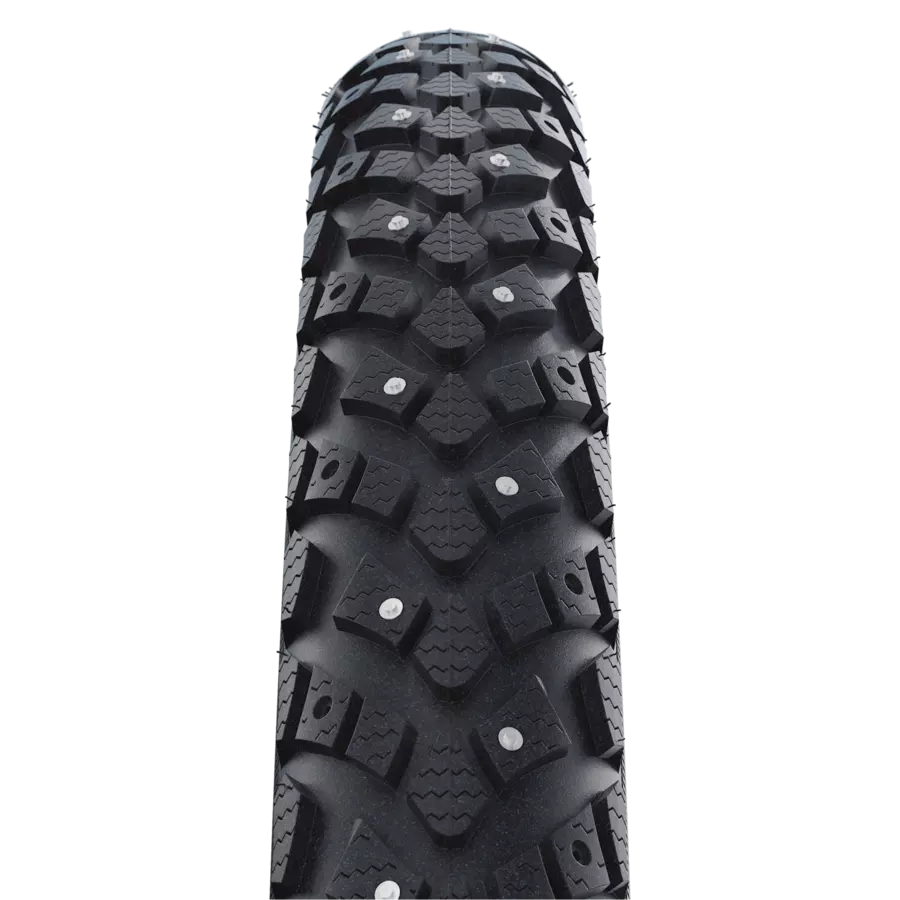
Another good all-rounder is the Michelin Stargrip, which has quietly built a reputation for impressive wet-weather grip at a very accessible price point. For riders easing into winter tyre upgrades, it’s a sensible place to start.
These all-weather tyres follow the same logic that modern guides recommend: softer rubber, puncture protection, and tread patterns tailored to wet roads rather than dry speed. Other solid options include the Pirelli Cinturato Evo TLR and Continental GP5000 All Season, both praised for their winter-friendly compounds and puncture resistance.
Studded b tyres: For icy conditions
If your winter rides involve ice, hard-packed snow, or regular freezing rain, studded tyres are the only way to get real mechanical traction rather than just tread grip. Unlike regular tyres, they embed small metal studs into the tread that bite into icy surfaces.
Schwalbe Ice Spiker Pro — Hardly subtle, but seriously effective on ice and snow. Many riders swear by this tyre for winter commuting in climates where ice patches are routine.
Continental Contact Spike 240 Spike Wire Tyre and Continental Contact Spike 120 Winter Wire Bead tyre — Strong performers with a good balance of studs and tread design for everyday icy riding.
Suomi Tyres WXC Piikkisika W384 Studded tyre — A premium studded choice with a reputation for solid performance in harsh Northern European conditions.
Studded tyres aren’t for everyone, they ride slower on bare asphalt, can be noisy, and should ideally be swapped back once icy conditions subside. But if your route regularly sees black ice or packed snow, they can make the difference between riding and walking.
Gravel & MTB in winter: Grip on snow, slush, and mud
Winter off-road riding is a whole other ballgame. Trails that are soft with slush or covered in frozen detritus demand tyres with open tread patterns and larger, more aggressive knobs. Tubeless setups become especially appealing here: they let you run lower pressures without risking pinch flats, which dramatically increases grip in slippery conditions.
Michelin Wild XC Performance Line Folding Tire — A rugged, well-reviewed tyre that performs admirably across mixed terrain, including winter gravel.
45NRTH Gravdal Winter Wired tyre — A stronger commuter-to-gravel crossover with winter-focused tread that many Northern riders appreciate for mixed conditions.
For riders who spend winter chasing trails rather than tarmac, options like the Pirelli Scorpion Race Enduro show how modern winter MTB tyres deliver serious traction even when mud and snow mix.
Winter tyre buying & setup tips
Tubeless vs tubed: Winter riding amplifies every flaw in your setup. Tubeless with sealant can be magical, it seals many small punctures automatically, but make sure your sealant formula is rated for low temperatures so it doesn’t turn into glue. Expert winter cyclists often note that specific cold-weather sealants really matter in sub-zero conditions.
Width matters: Wider tyres improve grip and comfort, especially at lower pressures. If your frame and forks can take 32mm–40mm tyres or wider, ride them. More rubber on the road equals more confidence when it’s greasy or slushy.
Studs when needed: Most riders find that running studded tyres on the front and a high-grip, wide non-studded tyre on the rear gives a great mix of traction and efficiency. Regularly check studs for wear — studs inevitably wear down over a season of mixed conditions.
Don’t let winter conditions hold you back
Winter cycling doesn’t need to feel like a constant negotiation between caution and enjoyment. The right tyres will make corners feel more predictable, braking instinctive, and there will be no need to second-guess every dark patch of road.
Let go of chasing speed for a few months and prioritise grip, comfort, and consistency instead. Do that, and winter stops feeling like something to endure, and starts feeling like its own distinct (and surprisingly satisfying) riding season.