The good news is that indoor cycling scales well. You can spend relatively little and still get going or you can invest more and dramatically improve how enjoyable and sustainable indoor riding feels. Below are two setups: one that shows what a nice, well-rounded indoor setup looks like, and a budget one that highlights how much of that is optional.
A nice indoor cycling setup (~€1,700)
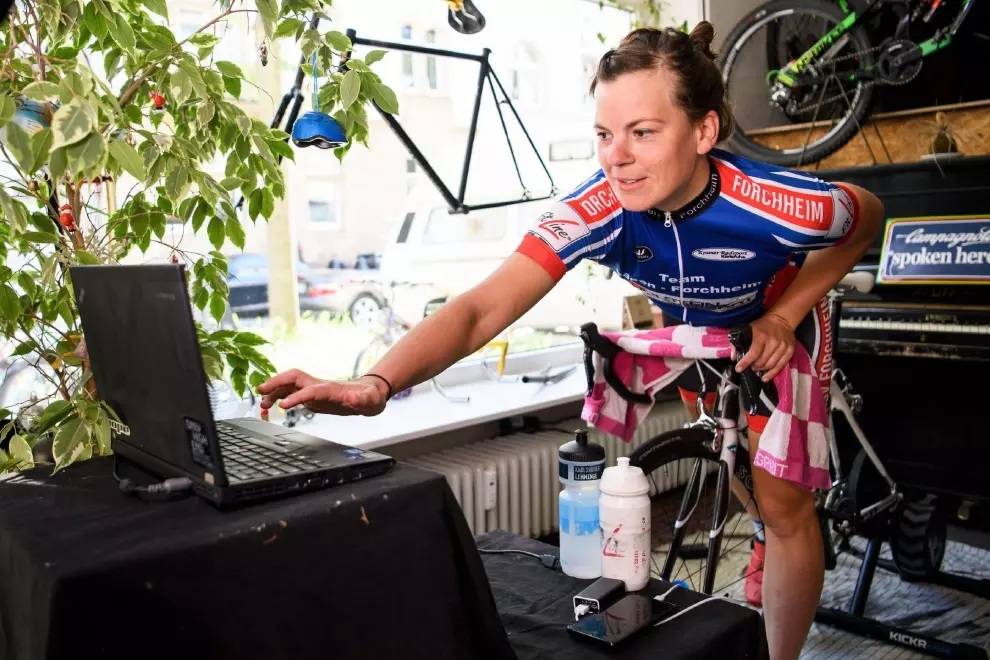
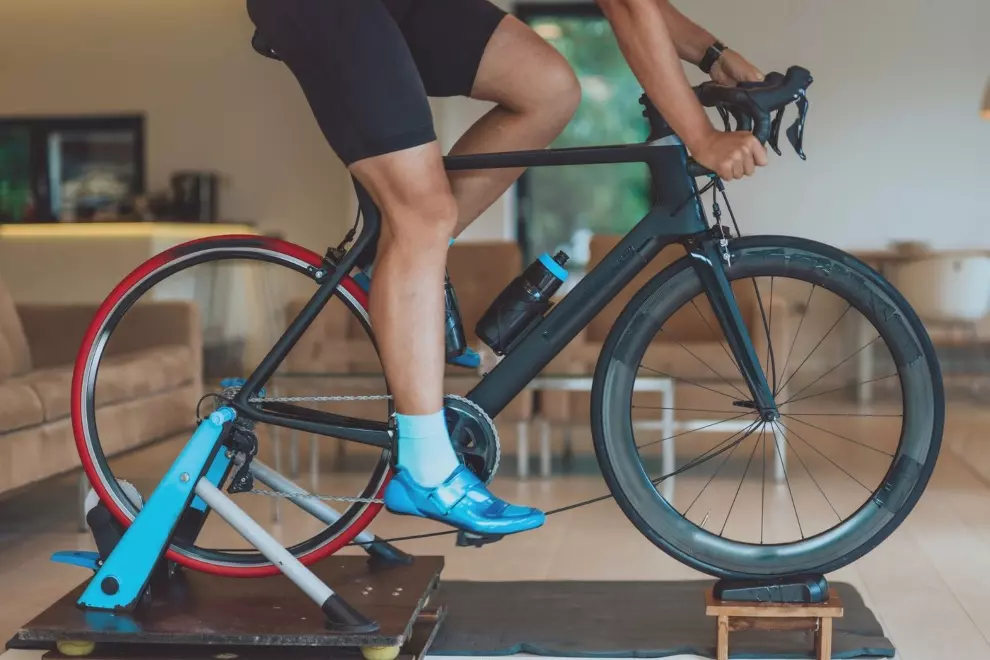
This is the kind of setup that makes indoor riding feel like a proper alternative to outdoor cycling, not a compromise. It’s aimed at riders who expect to use their trainer regularly through winter and want comfort, realism, and low friction. Here is what you would be expected to buy.
The smart trainer €900–€1,100
This is where most of the budget goes, and for good reason. Trainers in this range are quieter, smoother, more accurate, and feel more realistic under power.
Good examples include:
- Wahoo KICKR V6
- Garmin Tacx Neo 2T
- Elite Justo
All are direct-drive trainers with strong resistance control, good road feel and reliable connectivity. None is anoverkill, but all are good enough that the trainer itself won’t be the limiting factor in your indoor experience.
The platform ~€200 per year
Most riders pair a trainer like this with a Zwift or Rouvy, which are paid platforms. As you know from the previous article, this is money well spent. Platforms turn indoor riding from a silent pain cave into something structured, motivating and varied.
Cooling and comfort €200–€250
This is the category many first-timers underestimate. None of these improve your fitness directly, but all of them make you more likely to finish sessions and come back the next day.
- Two decent fans rather than one
- A proper trainer mat to reduce vibration and protect the floor
- A sweat guard to protect the bike
- A front wheel riser block for a natural riding position
Spending somewhere around €1,700 for this whole setup gets you a quiet, smooth, and realistic ride feel, reliable power data and resistance control, comfortable long sessions, and a setup that feels worth using regularly.
A budget indoor cycling setup (~€600)
Now for the other end of the spectrum. This setup shows how little you actually need to start indoor cycling if you’re curious and don’t want to go all in right away.
The smart trainer ~€450–€550
Trainers at this level still offer automatic resistance and app connectivity, but you may have to accept some downsides. For example, they can’t simulate climbs above 15%, they give slightly less accurate power data, and the ride feel is less realistic.
Good examples include:
- Van Rysel D500
- Elite Rivo
- Wahoo KICKR Core 2
The platform €0 per year
You can start with a free platform like MyWhoosh and spend nothing. Sure, it doesn’t offer amazing photorealistic routes like Rouvy, and there isn’t a vibrant community and races like on Zwift, but it does the basics and gets you moving.
Cooling and setup ~€50
This is where compromises are made. It works. It’s just less pleasant.
- One basic household fan
- A towel instead of a sweat guard
- No mat, no riser block
Overall, for about €600, you get a basic functional setup. But you have to expect more noise and vibration, less smooth resistance, and a setup that’s tolerable rather than inviting.
Is indoor training worth the money?
As you can see, even a basic indoor setup represents a noticeable investment. But paired with a good platform, it also unlocks a lot. If you’ve ever been curious about your watts but struggled to justify the cost of a power meter, this is one of the easiest entry points. Even budget smart trainers provide reliable power data and cost roughly the same as pedal- or crank-based power meters, while also opening the door to structured workouts and virtual riding.
Spend more, and the experience changes again. Quieter trainers, better cooling and a more polished setup don’t just add comfort – they make indoor cycling something you’re more likely to stick with. For riders planning to train indoors regularly, that shift alone can make the higher price feel reasonable.
But before choosing any setup, the most important question isn’t how fast I want to go, it’s how often I realistically see myself riding indoors. If indoor cycling is mainly a backup plan for bad weather, the budget setup is more than enough. If it’s going to be a meaningful part of your winter routine, the nicer setup quickly starts to justify itself.
And of course, there’s always the third option: riding outside when the weather allows, and spending the rest of winter running, swimming, skiing or doing something entirely different. Indoor cycling offers a lot, but it’s just one of several perfectly valid ways to stay fit until spring returns.