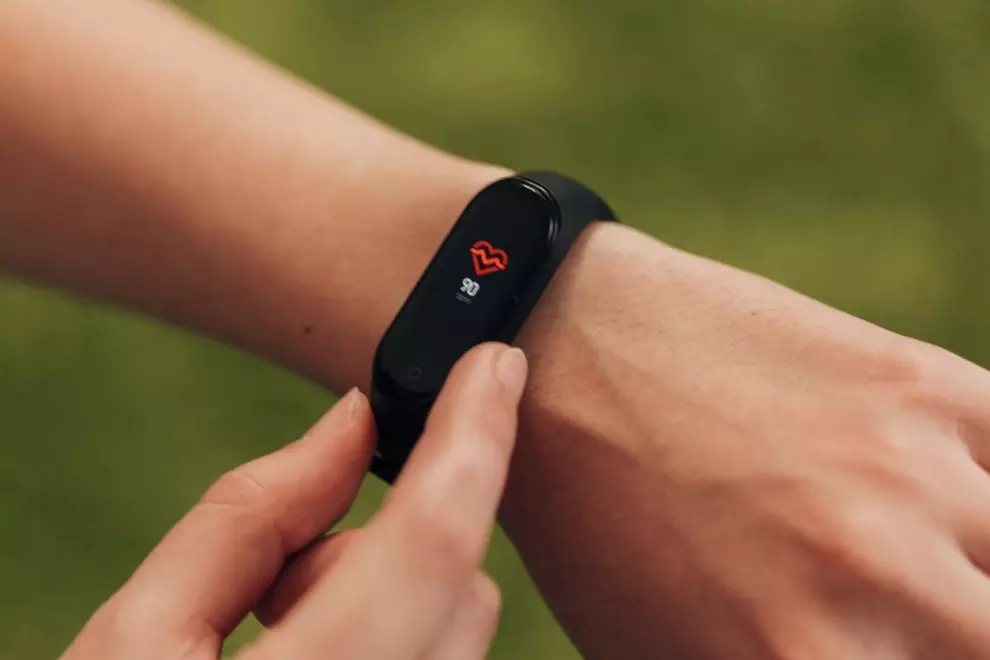
Most platforms still use the old formula
If you’ve never adjusted your heart rate settings, there is a good chance your max HR still comes from the “220 minus age” estimate. Garmin starts you off with that value by default, even though some devices can later update it automatically based on training data. Strava also bases your zones on the same formula unless you enter your own numbers. Samsung Health, Apple Health, and most other well-known platforms appear to do it that way. There are very few exceptions, like TrainingPeaks, that avoid it and encourage you to input your own tested values.
This means that for many riders, the very first set of heart rate zones they ever use is based on a rough population average rather than anything specific to their physiology. And, unfortunately, this estimate is wrong almost as often as it is right.
Why the defaults fall short
The core problem with the formula is that it does not represent how individual hearts behave. It was based on old population data and was never intended to be a precise tool for performance training. A review of 43 different formulas for predicting maximum heart rate found none of them reliable enough for accurate training guidance. And a more recent study showed that the 220-minus-age formula has a standard error of 10-12 bpm, and it overestimates for younger people and underestimates for older ones.

Why is this a problem?
Given the inaccuracy of the default formula and the fact that athletes tend to have lower maximum heart rates than less-fit people of the same age, there is a lot of room for error. This means your max HR can be overshot by 5 to 15 beats. If your device thinks your HR max is 185, but your real value is closer to 173, every zone shifts upwards. Zone 2 suddenly feels like tempo, recovery rides are harder than they should be, and interval sessions become unrealistic.
How to test your maximum heart rate as a cyclist
The most accurate approach is still to determine your HR max yourself. A proper field test is not as intimidating as it sounds, but it must be progressive, controlled and performed when you feel rested. You have two options on the bike.
Time-trial: After your warm-up, do a 10-minute maximum time-trial effort on your indoor trainer or outdoors (only if you can do it without any stops or slow-downs). During the last minute, go all out, as hard as you can push while seated. Then sprint out of the saddle in the final 30 seconds, or as long as you can before your legs give out. Those final 20 seconds or so should give you your maximum heart rate.
Hill-climb: After your warm-up, head towards a hill that takes around 3 minutes to climb with a steep grade near the top. Ride the hill as hard and fast as you can. Recover fully, and then repeat the climb at least two more times at maximum effort, pushing everything you have on the steep section near the top. That last push will reveal your maximum HR.
If you’ve never tested your max HR before this way, repeat the test about a week later, after fully recovered again, to be confident in the results. And you should also retest every few months if you are training consistently. HR max does not fluctuate dramatically in adulthood, but small shifts can occur with improved fitness or changes in training focus.
A practical takeaway for cyclists
If you want your training zones to work for you rather than against you, it is worth taking a few minutes to make sure your HR max reflects reality. Consider the following steps:
- Check what your device or app is using now so you know whether it is based on a default estimate.
- Test your HR max using a safe, controlled method so your zones are grounded in real data.
- Enter your true HR max manually into your preferred platform.
- Retest a few times per year if you train regularly or are seeing improvements.
- Use heart rate alongside power, perceived effort and recovery trends rather than relying on it in isolation.