Gravel getaways aren’t new, but the winter appetite for them is exploding. Maybe it’s the promise of slower days and sun-baked dirt roads somewhere south of home. Perhaps it’s the community vibe that gravel naturally attracts. Or maybe it’s the simple fact that gravel riding offers the perfect blend of adventure, challenge, and ease, an antidote to icy bike lanes and four-hour trainer sessions.
In any case, there are plenty of reasons that gravel is becoming the feel-good winter migration of the cycling world. And here’s why.
1. Gravel destinations match the winter mood
Popular road destinations can feel a little high-pressure come the winter months. Everyone is trying to make the most of the limited time in warmer temps, and you’ll be faced with lots of fast groups, big climbs, and everyone staring at their power numbers. Gravel camps, by contrast, tend to lean into the “ride what you want, enjoy what you see” philosophy. Routes are flexible, expectations are looser, and the energy is less about performance and more about having a good time.
Winter-weary riders are drawn to places where they can exhale: the rolling pistas of Mallorca’s interior, the volcanic gravel of the Canary Islands, and the dusty orange-carpet routes of southern Portugal. These places feel warm without being too hot, adventurous without being intimidating, and social without being intense.
2. It’s the perfect season for slower miles
Winter is base-building season, and gravel is pretty much built for that. Long, steady rides that roll rather than spike your heart rate; opportunities to ride side-by-side and talk; and the kind of terrain that keeps things interesting without requiring laser focus.
Gravel mileage is satisfying in a way winter road riding often isn’t. You’re moving through landscapes that feel alive, olive groves, cork forests, and coastline cliffs, and the variety in surfaces keeps your legs working without cooking them. It’s fitness-building disguised as fun, which is precisely what many riders crave in the off-season.
3. It’s social… but not (so) competitive
Ask anyone who’s been to a winter gravel camp, and they’ll probably say something like, “Everyone there just wanted to have a good time.” Gravel attracts riders who still love pushing themselves but aren’t obsessed with numbers, and that energy shapes the entire experience.
Groups tend to be mixed ability, and no one cares. If winter is the season when cycling can start to feel lonely or a bit joyless, gravel getaways are the perfect remedy.
4. You don’t need top-end form to enjoy it
One of the biggest barriers to joining road training camps in winter is the fear of not being “fit enough.” Gravel removes that pressure. You can show up undertrained, overtrained, or simply tired, and the rides will still be enjoyable.
The beauty of gravel terrain is that it rewards curiosity more than watts. You can explore, stop for photos, or reroute without worrying about traffic or pace lines. Even better: mechanicals and mishaps are somehow more amusing on gravel, flat tyres and mis-shifts become stories instead of stressors.

5. Gravel riding is a great way to rekindle motivation
Something about riding on new surfaces in new places switches the brain back on. Riders often return from a winter gravel getaway feeling like they’ve rediscovered what they love about cycling in the first place. The rhythm of tyres on dirt, the quiet, the wildlife, the simplicity, gravel offers a pause from routine and a reset before spring training begins.
And because there’s not so much pressure to perform, gravel trips become a space where motivation rebuilds naturally. You leave wanting to ride, rather than feeling like you should ride.
6. Travel is easier (and cheaper) than a big road trip
Gravel hotspots tend to be tucked away in smaller towns, with lower costs than in major road-cycling hubs. You’re not fighting for space on Alpe d’Huez or queuing for coffee behind four pro teams. Instead, you’re exploring places that feel more authentic, rural bakeries, empty farm roads, family-run guesthouses, and local wine at dinner.
This also makes planning smoother: fewer crowds, more availability, and routes that start right outside your door rather than after a 40-minute transfer.
7. It bridges the gap between adventure and comfort
Some cyclists want a full-on bikepacking adventure; others want smooth tarmac and a swimming pool. Gravel sits right in the sweet spot. You get adventure, the dust, the views, the unknown, but you still come back to a warm shower and a decent meal. Winter gravel trips also often include optional skills sessions, mechanical workshops, or yoga for riders.
8. Gravel is just… fun
At the end of the day, gravel getaways are booming for the simplest reason: they’re really, really fun. You laugh more, stress less, and ride in places you’d never see from the road. Winter doesn’t feel like something to survive; it becomes something to look forward to.
Where riders are heading this winter
If you want to look beyond the classic road destinations, here are some great places to check out!
The Alentejo, Portugal
A true gravel paradise: endless rolling dirt roads, cattle trails, quiet villages, big skies, cork forests, and zero crowds. Cheaper than the Algarve and far more authentic.
Fuerteventura, Canary Islands
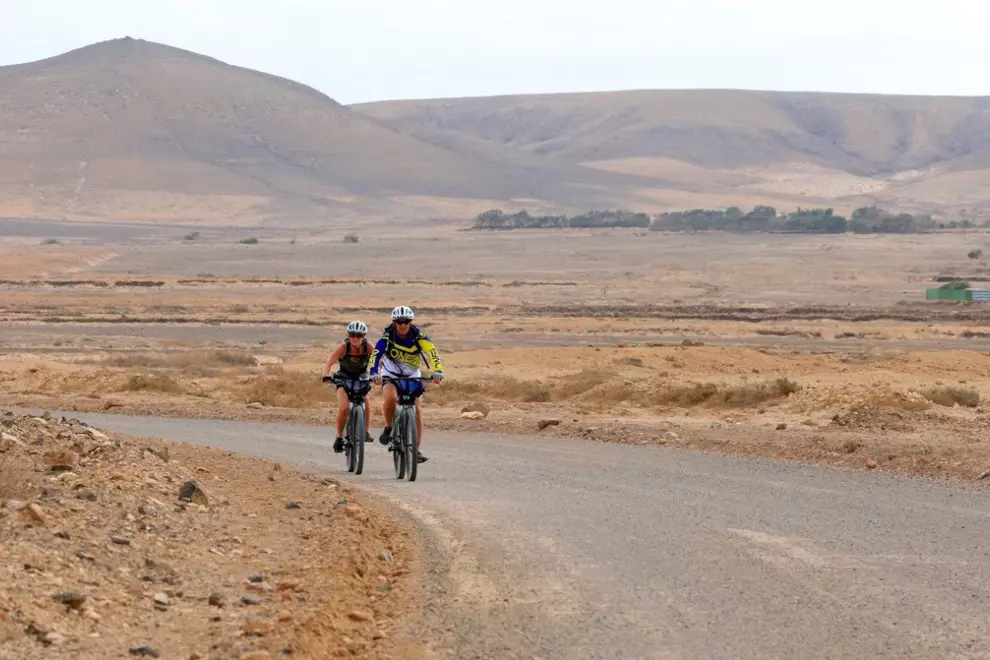
While road cyclists flock to Tenerife and Gran Canaria, gravel riders quietly claim Fuerteventura. The volcanic tracks, desert-like plains, and coastal dirt make it feel like a mini Baja California.
Southern Spain (Cádiz, Málaga Interior, Sierra de Grazalema)
Skip Calpe and go here instead. White villages, forested fire roads, old Roman routes, and a growing gravel culture. Winter sun is almost guaranteed.
Puglia and Basilicata, Italy
Smooth farm tracks, olive groves, stone-walled roads, and that dreamy southern light. Far less elevation than Tuscany, much better winter weather.
Cyprus (Troodos And Akamas)
Quiet, warm, and full of rugged doubletrack. The combination of mountain and coastal gravel is unmatched and and flights are inexpensive in winter.
Crete, Greece
Road cyclists rarely consider it, but Crete has some of the best gravel in Europe. High plateaus, deep valleys, tiny coffee-stop villages, and plenty of sunshine. Ideal base-building terrain.
Morocco (Atlas Foothills And Agadir Region)
For riders wanting something more adventurous but not full bikepacking. Smooth gravel, lush valleys, dramatic scenery, and culturally rich towns. Many European gravel camps now base winter trips here.
Madeira, Portugal
Not for beginners, big terrain, big views, big climbs, but stunning if you want drama. Gravel-adjacent, but unforgettable.
That said, just about anywhere warm-ish with a network of unpaved farm roads is a safe bet.