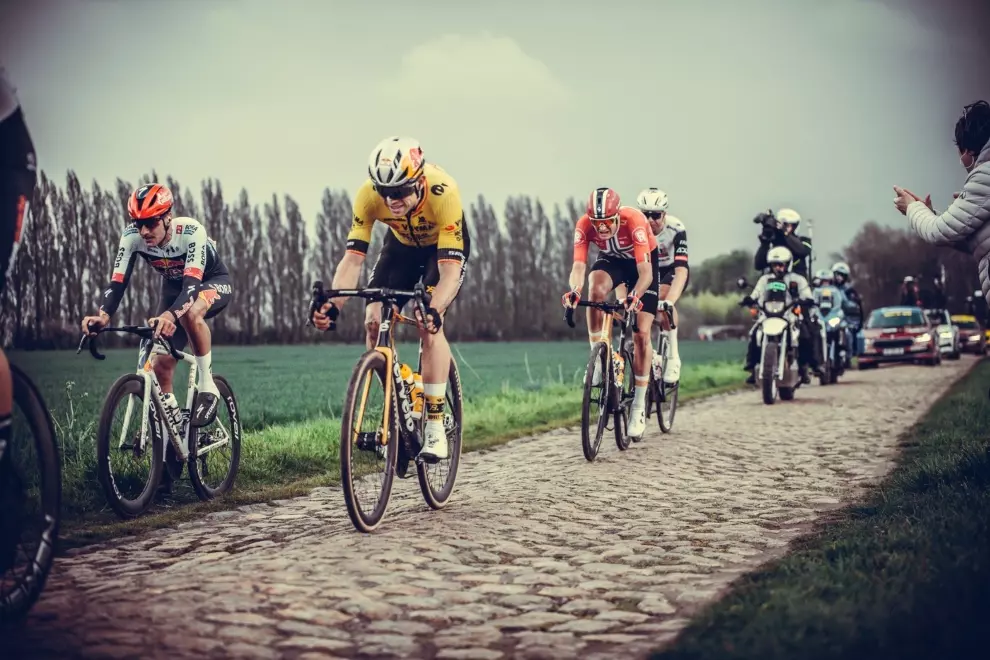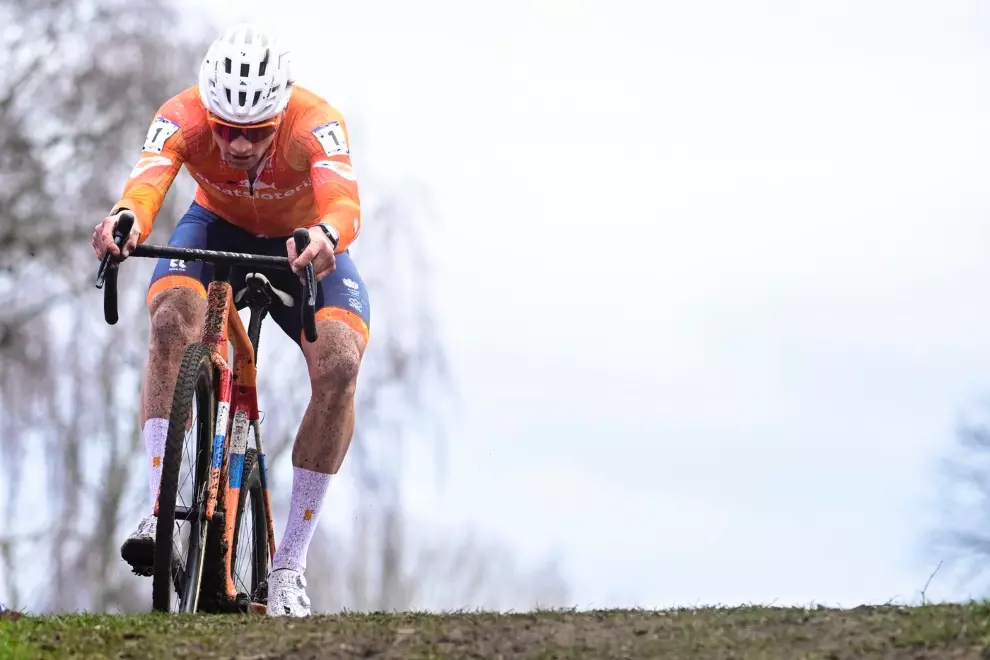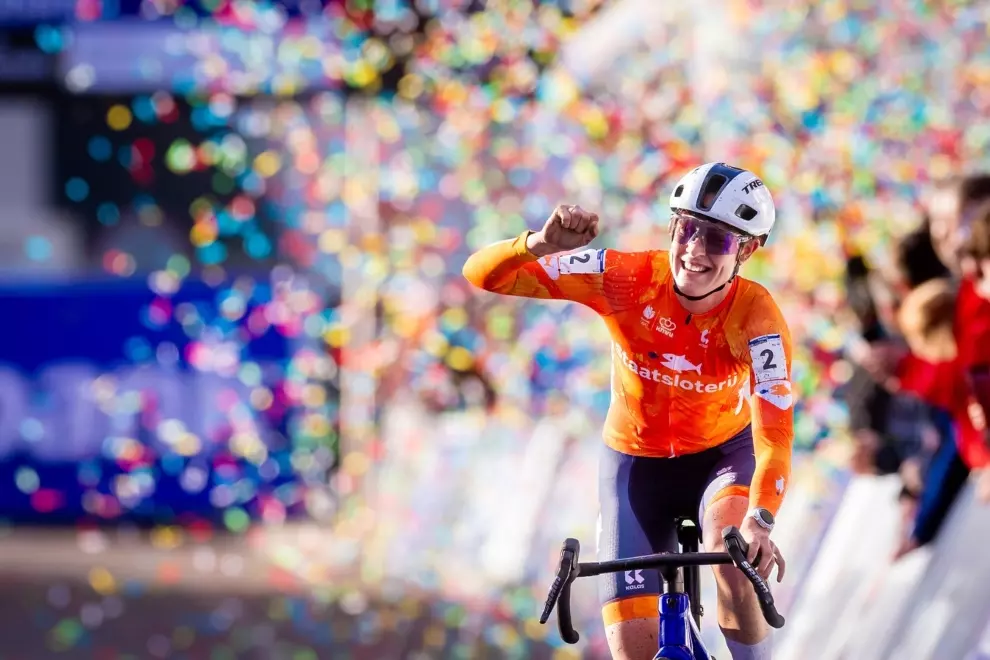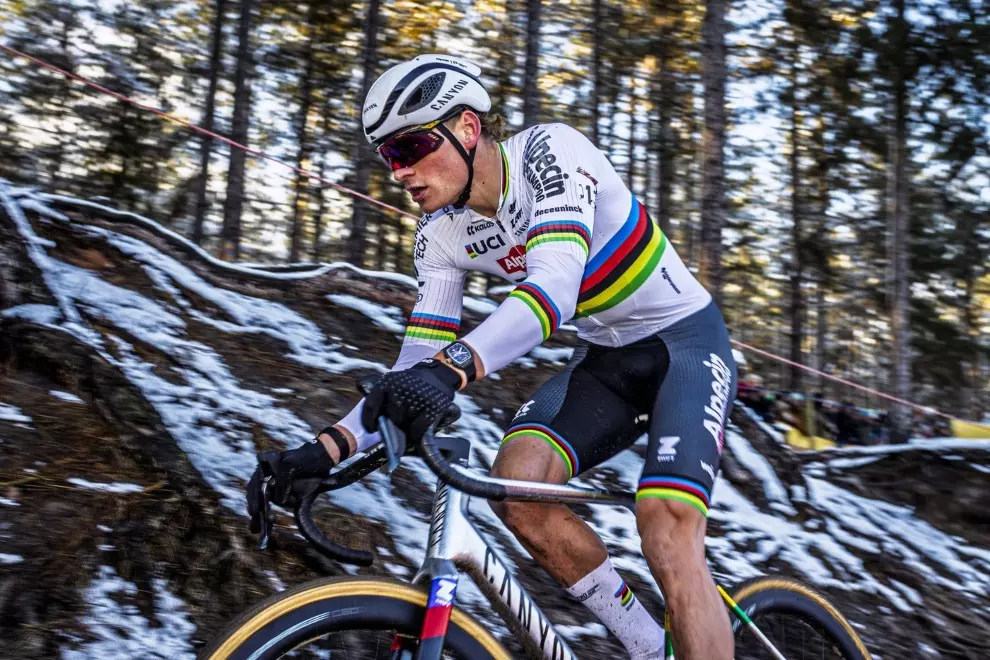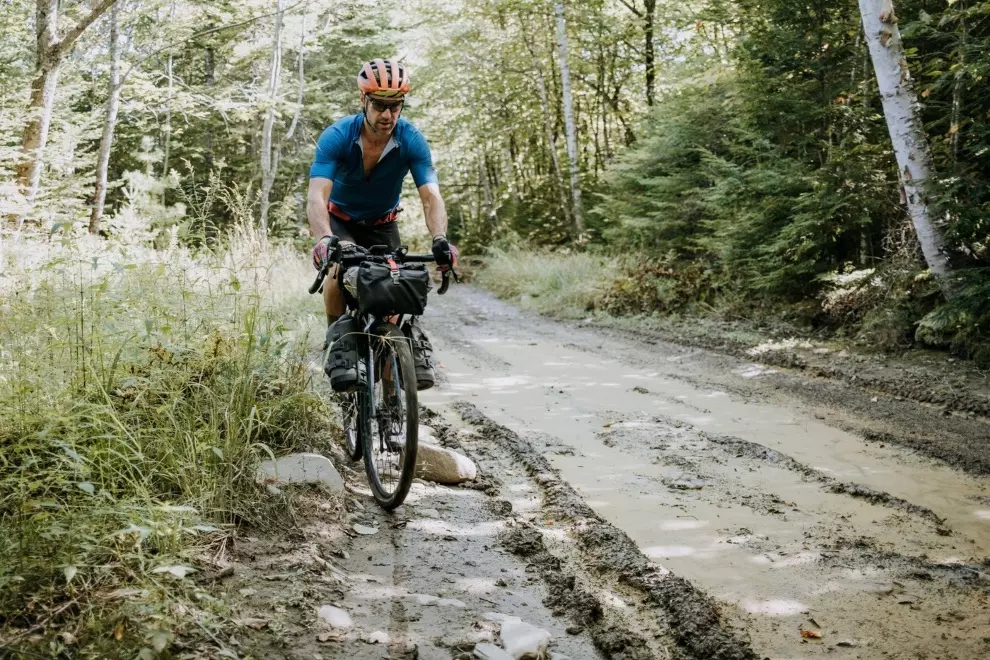
Mud changes the game completely. You can’t afford distractions and have to focus intensely on your riding, because even small mistakes on slippery terrain mean a fall. The overall riding experience becomes much more intense and immersive.
At the same time, riding in mud is probably the most ambivalent feeling any biker knows. We all get it: at first, you really don’t want to do it – not at all. We only hop on our bikes in rain and mud when we have to, usually for a race or to keep up with friends we don’t want to disappoint. Every raindrop annoys us, a wet backside drives us mad, but then comes a tipping point. Once you’re soaked head to toe and your shoes are sloshing with water, frustration and reluctance disappear. Instead, euphoria takes over; you stop avoiding puddles and head straight into them, you stop fearing the mud and start enjoying the slips and slides. Let the water splash!
While a small mud stain on your pants might make you feel embarrassed around others, being thoroughly covered in mud – as if you’d rolled in it – brings a royal sense of victory. That feeling probably comes from the fact that you didn’t give up. And remember: as the saying goes, there’s no bad weather, only bad clothing. Thanks to modern waterproof materials, this is truer now than ever before.
Mud separates the skilled riders from the clumsy. On dry ground, it’s harder to tell, but in the wet, the difference is clear as day. Skilled bikers glide through thanks to better coordination, balance, and the ability to use, or not use, their brakes wisely. Less experienced riders get scared, lose confidence, lose balance, and brake too hard or in the wrong way, dooming themselves to inevitable crashes. “If you get the chance, ride in the mud. It will take your riding skills up several levels,” advises pro rider and MTB coach Richard Gasperotti.
Zobrazit příspěvek na Instagramu
The fact that mud truly tests riders is evident even at World Cup races. On dry courses, time gaps between riders are often a matter of hundredths of a second; in muddy conditions, those gaps can stretch to whole seconds. Fans will never forget the legendary run of British rider Danny Hart at the 2011 Downhill World Championships in Champéry, Switzerland. After heavy rain made the course so slippery that nobody could even walk on it without slipping, Hart blasted down like a “soaped lightning bolt.” On one of the last jumps, he threw a shocking whip and beat France’s Damien Spagnolo by an astonishing 11 seconds.
That mud suits the Brits, trained by their rainy climate, is no coincidence. Incidentally, one of the toughest downhill races on the planet, Red Bull Hardline, takes place in North Wales, where devilishly slippery conditions are the norm. (And yes, Danny Hart won the inaugural race back in 2014.)
So what exactly causes that blissful feeling when you get muddy, best summed up by the famous line from the cartoon about the world’s most famous little pig, Peppa Pig: “We all love jumping in muddy puddles!” Mud contains a bacterium called Mycobacterium vaccae that may stimulate the release of serotonin, a neurotransmitter linked to happiness and well-being.
Contact with mud reduces tension and boosts focus. Paediatricians even recommend that parents don’t stop their kids from playing in mud, as it has been shown to strengthen immunity and reduce the risk of respiratory diseases or asthma. Since humans are about 60% water, it’s only natural that we’re subconsciously drawn to puddles from childhood – and strict upbringing can’t change that. This applies to both kids and bikers alike.
And here are five tips for handling a trail full of muddy puddles
Aim straight through the wettest part
Wildly dodging puddles and mud often leads to losing control or the front wheel slipping, causing a fall. Surprisingly, the safest way is usually to ride through the muddiest section where the mud is wet, offers the least resistance, and won’t trap your front wheel. Wet patches also quickly clean your tyre tread, restoring grip after rinsing off. When riding through a tricky spot, keep your eyes on the target and hold the handlebars straight.
Shift your weight back
Mud tends to “swallow” the front wheel and throw you over the handlebars. By slightly shifting your weight backwards, you lighten the front wheel and help it glide through the critical section. At the same time, you increase traction on the “driven” rear wheel, which will push you out of the mud.
Use the rear brake
If you’ve ever driven a car with ABS, you know the system tries to prevent wheel lockup at all costs. A locked wheel won’t roll and will instantly skid on slippery surfaces. On a bike, that usually means a crash. So, forget about the front brake in the mud – don’t even touch that lever, especially in corners. If you need to brake, use the rear brake only and very gently.
Shift into a harder gear
Not so hard that you can’t pedal, but an overly light gear makes it easy for the rear wheel to spin out in place, get stuck or cause a nasty slip into the mud.
Clean your bike as you go
Mud adds weight, reduces performance, and shortens the drivetrain’s lifespan. Take every chance to ride through wet sections that rinse your tyres and frame. When you stop, lean your bike and use a stick (or your hand) to scrape off mud buildup – especially around the derailleur and where the wheels spin inside the fork or rear triangle.