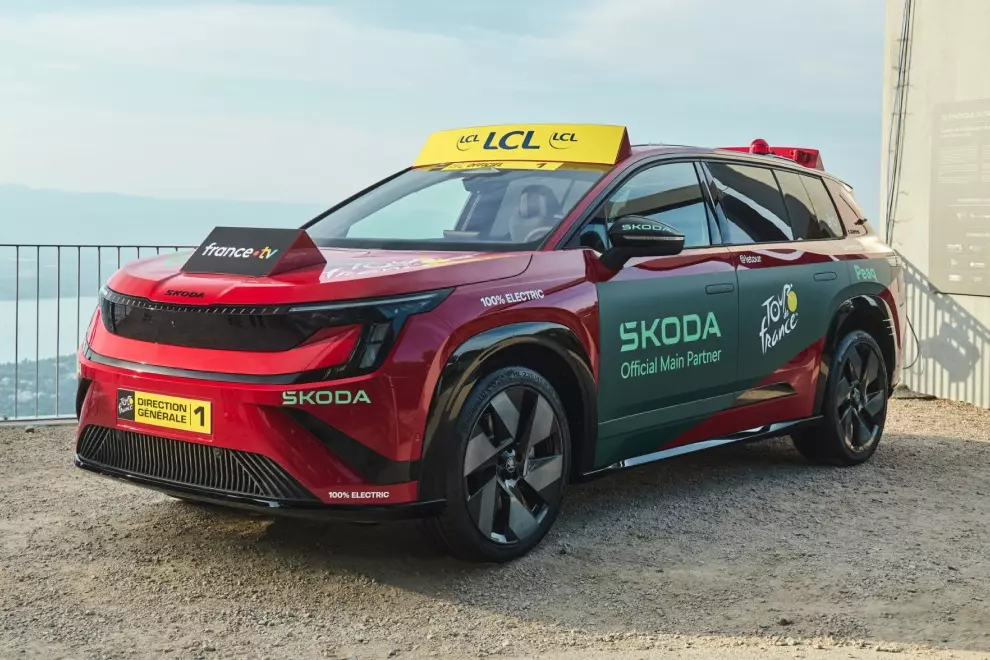
The new electric Škoda Epiq and Peaq approach those needs at different scales. We spoke to David and Kryštof, who spent a month driving both models during the Tour de France, using them on motorway transfers, Alpine roads, narrow village streets, and journeys between hospitality locations.
It was a more varied test than a conventional drive around a dealership.
A month on the road
David primarily drove the Epiq, while Kryštof spent most of his time with the Peaq. Both also had opportunities to try the other model.
Their work involved moving between Tour locations, preparing the vehicles, transporting event equipment, and presenting the cars during hosted passenger rides. Routes and schedules could change quickly because of road closures and the movement of the race.
“The demanding part was being ready to adapt,” Kryštof says. “Everyone had a main role, but you also helped the rest of the team wherever needed.”
The environment allowed them to experience the cars fully loaded, over long distances, in heavy traffic, and on roads ranging from French motorways to mountain switchbacks.
Epiq: an urban car ready for cycling weekends
At 4.17 metres long, the Epiq is designed as a compact electric crossover. The Epiq 55 offers approximately 440 kilometres of range, while charging from 10 to 80 per cent should take around 24 minutes at a suitable fast charger.
After a month behind the wheel, David felt the car offered more space and maturity than its exterior dimensions suggested.
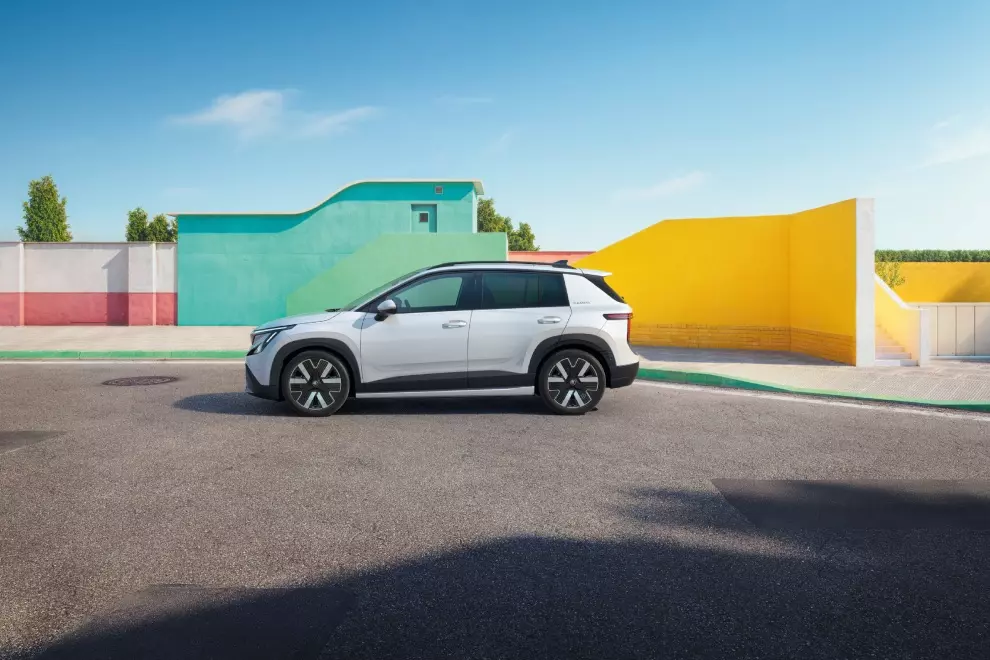
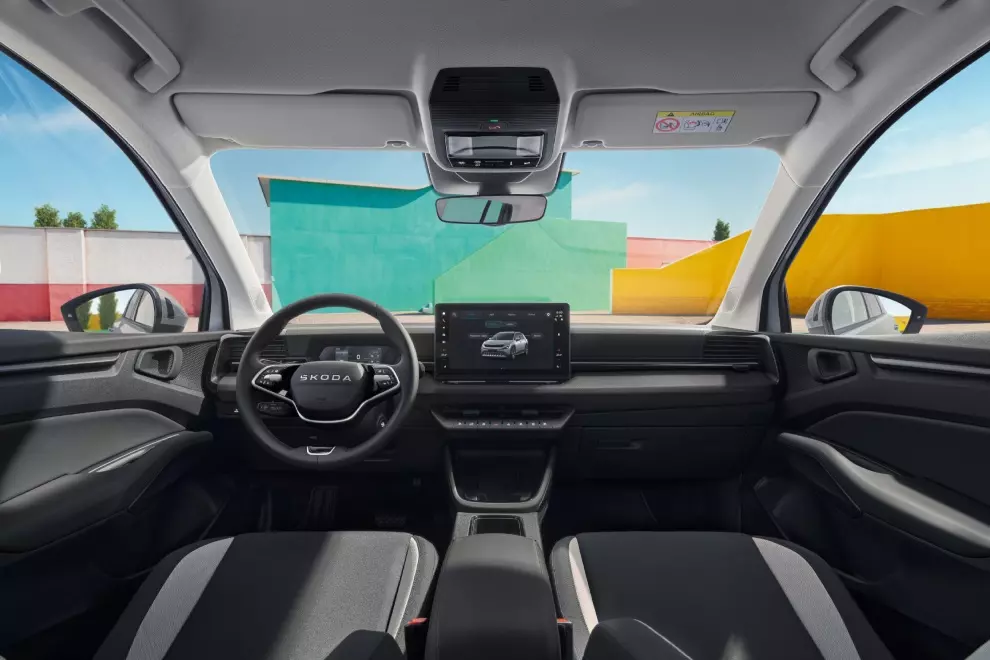
“It feels like a realistic car for couples, smaller families, or someone entering electric mobility for the first time,” he says. “It is practical and easy to drive, but it still has the smooth acceleration you expect from an electric car.”
Its size was particularly useful in old French towns, narrow mountain villages, and crowded city centres.
“On the motorway, it felt completely comfortable,” David says. “Then, when you reached a city, it was in its natural environment.”
The manoeuvrability and available 360-degree camera also made parking around busy hotels and in central Paris considerably easier.
That combination is relevant for cyclists who spend most of the week in an urban environment. The Epiq does not require the space of a large SUV during everyday use, but its interior can still be adapted for rides outside the city.
A practical setup for one or two riders
The Epiq offers 475 litres of luggage space. During the Tour, it was regularly used for large suitcases, backpacks, promotional materials, and equipment that could not fit into other vehicles.
“There is a surprising amount of room inside,” David says.
For a cycling trip, his preferred setup would be to fold the rear seats and remove the front wheels from the bikes. Helmets, shoes, tools, a pump, and smaller accessories could be stored beneath the adjustable boot floor, leaving the main area for bicycle frames and luggage.
“When you arrive, you take the bikes out first and then retrieve the rest of the equipment from below,” he explains.
For riders who want to keep the rear seats or more of the luggage compartment available, bikes can instead be carried on the roof.
This makes the Epiq particularly relevant to individual cyclists and couples who need a convenient city car during the week but regularly head out for a day ride or a weekend away.
Peaq: a mobile base for bigger trips
The Peaq serves riders whose plans involve more passengers, more bikes, or more equipment.
It can offer seven seats and up to 935 litres of luggage capacity in the five-seat configuration, with additional storage beneath the front bonnet. Kryštof used it to transport boxes, event flags, personal luggage, and a full-size bicycle travel case, with room still remaining.
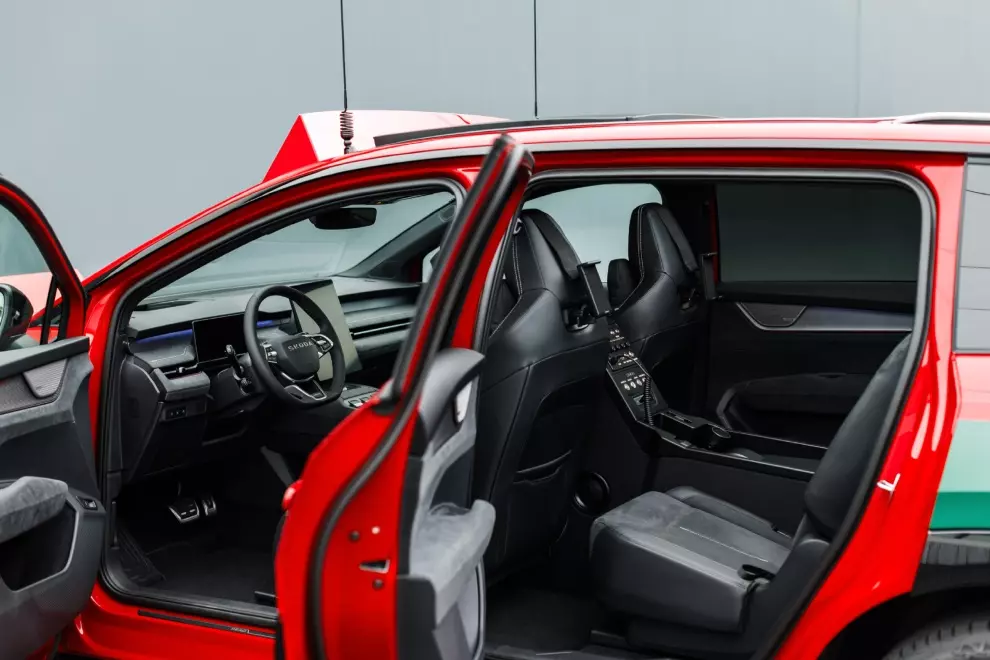
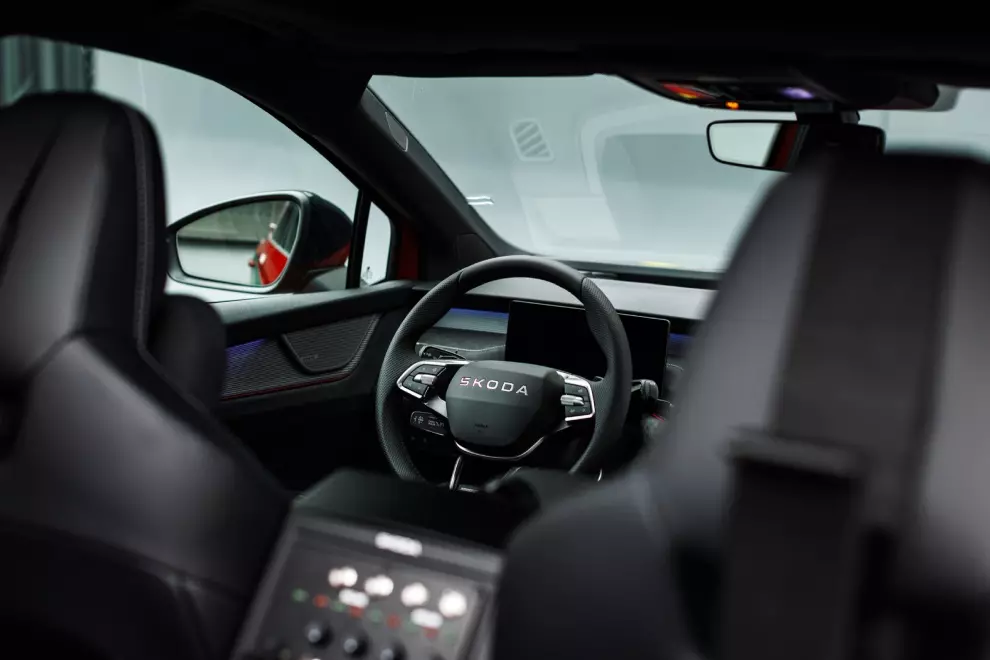
“Once you fold the second row, it is almost like a van,” he says. “The floor is flat, and there is a huge amount of usable space.”
Several bikes could therefore be carried inside, protected from weather and unwanted attention during stops. Alternatively, the bikes can be placed on the roof or a rear carrier, leaving the cabin for passengers, children’s equipment, luggage, or camping gear.
This flexibility makes the Peaq relevant to families, groups of friends, cycling clubs, or riders travelling with valuable equipment.
Space, range, and longer adventures
The Peaq offers more than 640 kilometres of estimated range in its longest-range version, with rear-wheel-drive and all-wheel-drive configurations available. Selected variants can tow a braked trailer weighing up to two tonnes.
Those features support several different cycling scenarios: a family holiday with bikes on a rear carrier, a mountain-bike trip with extensive equipment, a road-cycling training camp, or a multi-day journey involving several riders.
Zobrazit příspěvek na Instagramu
“I think it works for almost every type of cycling,” Kryštof says. “You can put the family inside, carry bikes on the roof or behind the car, and drive to the mountains.”
The Peaq’s larger body naturally requires more attention in narrow streets, but it also provides a higher seating position, more passenger room, and a cabin designed for longer journeys.
David compared the experience to travelling in a Superb.
“You are properly settled into the car,” he says. “On the motorway, you hardly notice how quickly you are travelling.”
Two interpretations of long-distance comfort
The clearest difference between the cars was the amount of space and comfort available rather than the basic quality of the experience.
The Epiq concentrates the essentials into a smaller vehicle. The Peaq adds more passenger room and a cabin better suited to long journeys with several people.
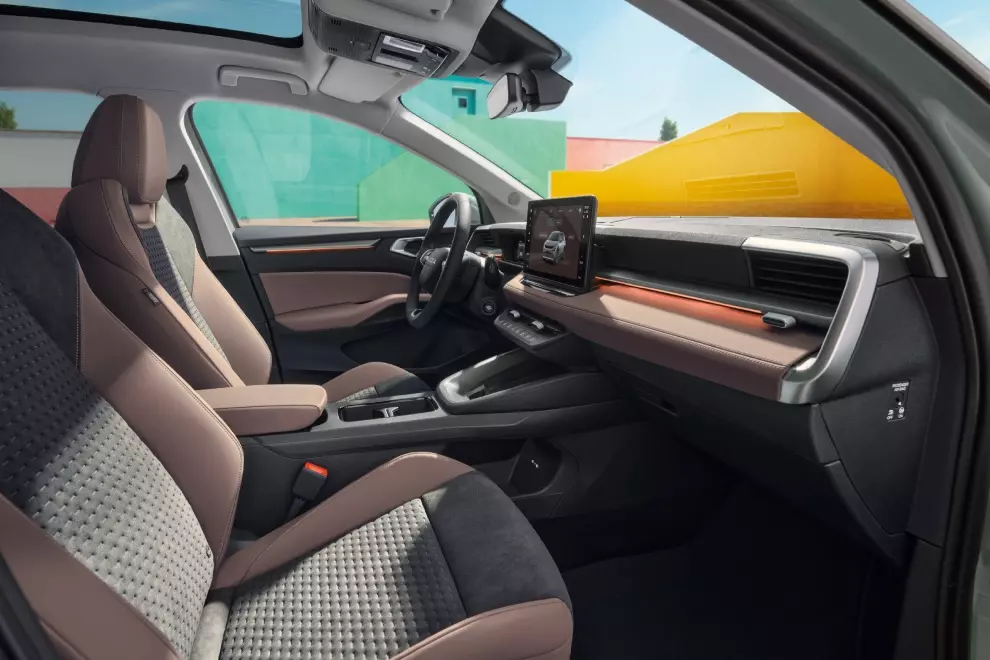
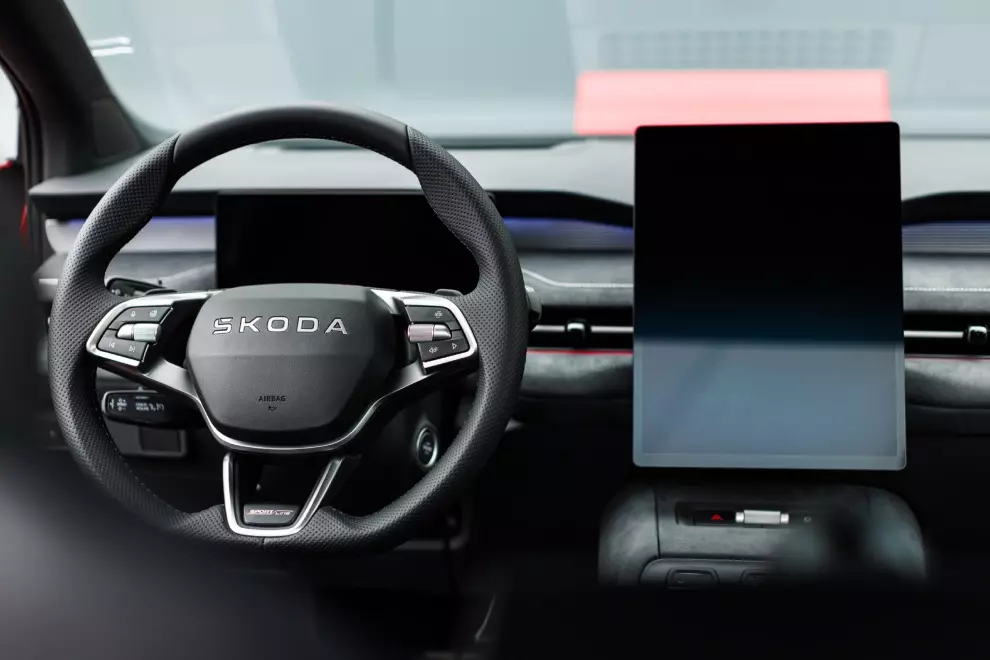
David particularly appreciated the Peaq’s combination of a large infotainment display and physical controls for frequently used functions.
“You can see that Škoda thought about how people use the interior,” he says.
He found the physical volume control and climate switches more convenient than relying entirely on touch-sensitive menus. In the Epiq, the infotainment remained responsive and suitably sized for the more compact cabin.
Charging during the Tour
The month-long programme involved frequent motorway driving and tight schedules, so charging had to be planned around the working day.
Most stops took place after the afternoon programme or during transfers to the next location. The main objective was to have enough energy available before the cars were needed again.
“At first, we planned the charging quite carefully,” David says. “Later, it became routine.”
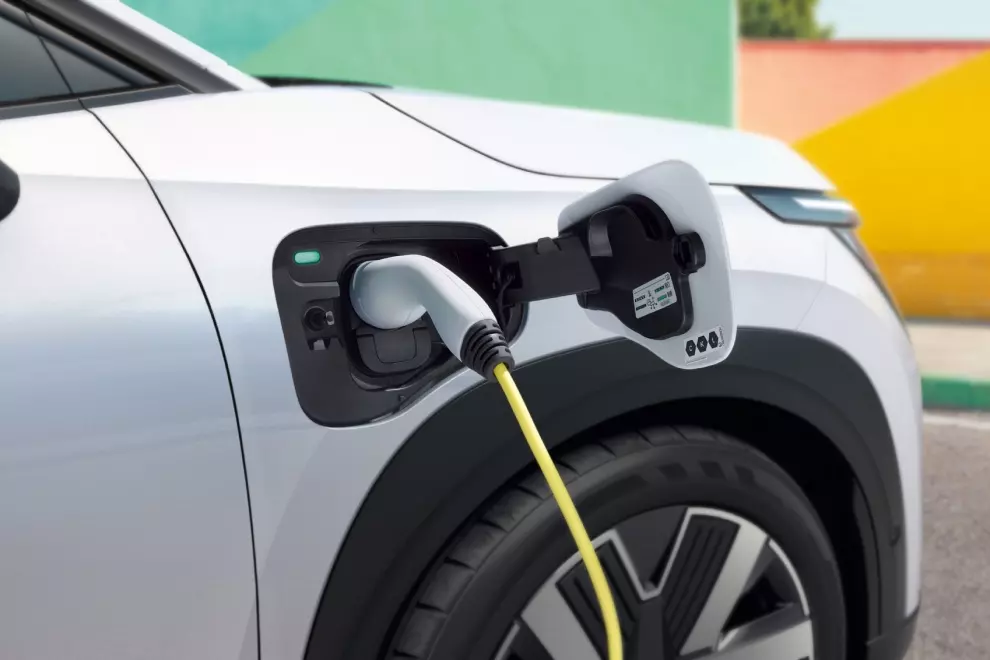
French motorway services offered regular access to fast chargers, meaning that stops could generally be combined with food, coffee, or an ordinary travel break.
“The charging experience was very positive,” David says. “By the time you use the facilities and get something to eat, much of the stop has already passed.”
The Epiq’s approximately 24-minute fast-charging time fits naturally into a normal break. The Peaq’s larger battery and longer range reduce how often stops are required on extended trips.
Power for cycling equipment
Both vehicles can also supply energy to external devices.
For phones, cameras, lights, and cycling computers, the internal USB-C connections should usually be sufficient. David sees the greater potential in equipment with larger batteries, particularly e-bikes.
“If you discover that the e-bike battery is almost empty before a full day of riding, you will be very glad the car can help,” he says.
The same capability could support campsite lighting, tools, a compressor, or other equipment at a remote trailhead. It may not be required on every journey, but it becomes useful when ordinary power is unavailable.
Recuperation on Alpine descents
The mountain roads around the Tour gave both drivers the opportunity to experience energy recuperation during long descents.
After climbing approximately 1,100 to 1,200 vertical metres to one hotel, Kryštof used the Peaq’s steering-wheel paddles to adjust the level of recuperation on the way back down.
“You could see part of the energy returning to the battery,” he says. “I started using the recuperation almost instead of the brakes. Now I miss it when I drive another car.”
David preferred a more conventional driving style, particularly on motorway journeys. He appreciated the recuperation but did not fully adopt one-pedal driving.
Their experiences show that the technology can become an active part of the drive without requiring everyone to change their habits.
Sharing the road
The quietness of an electric drivetrain makes journeys more relaxing, but cyclists may notice an approaching car later than they would a combustion vehicle.
David, himself a cyclist, preferred to remain behind riders until there was enough space for a calm and safe overtake.
“I always try to drive the way I would want someone to overtake me,” he says.
For him, patience, distance, and anticipation remained more important than any particular vehicle feature.
Different cars for different cycling routines
The Epiq suits cyclists who want a compact everyday car with enough flexibility for one or two riders and their weekend equipment. Its dimensions make sense in cities, while the folding rear seats, 475-litre boot, underfloor storage, and roof-carrier option support regular rides outside town.
The Peaq is aimed at cyclists who travel with more people, bikes, or luggage. Seven-seat availability, a large flat load space, long range, all-wheel-drive options, and towing capability allow it to function as a family tourer or a mobile base for longer cycling adventures.
Kryštof summarises the distinction simply:
“The Epiq is a great city car that can go much further whenever you need it to. The Peaq is ideal for loading the bikes, bringing the people you want with you, and travelling somewhere beautiful.”
After a month at the Tour de France, both showed how electric mobility can support different cycling routines. The Epiq connects urban everyday use with regular escapes beyond the city. The Peaq creates room for bigger groups, more equipment, and longer journeys.