
Van Aert pulls out
The most recent setback was the news that Wout van Aert, the soul of the team and an invaluable support rider, would not be riding in the Tour because of an infected elbow. As the team announced on Wednesday, van Aert had crashed in training before the start of the Tour Auvergne–Rhône-Alpes and injured his elbow. The wound became infected during the race and forced him to abandon the day after he easily won a stage in a bunch sprint finish.
“This is, of course, a big disappointment. The Tour de France is one of my main goals every year,” van Aert was quoted as saying in the press release. Like Vingegaard, the 31-year-old Belgian was back to his best form after two years marked by injury and illness, and he had achieved one of his main goals this spring in winning Paris-Roubaix, outsprinting none other than Pogačar in the finale.
That Tour Auvergne victory suggested that van Aert would have gone for sprint wins in the Tour and perhaps try to repeat his green jersey triumph from 2022. But he would have been an important engine on the flat sections of the race, chasing down breakaways, and as a satellite rider helping the Dane in later phases of a stage. His replacement will be named on June 23, when Visma presents its Tour de France squad.
The exodus
Van Aert’s withdrawal from the Tour came on the heels of a series of departures that have shaken up the team and which include the surprise retirement of last year’s Giro winner, Simon Yates, at the beginning of the year. With his climbing ability, Yates would have been a big help on the mountains of the Tour.
Far more important was the departure of Visma’s Head of Racing, Grischa Niermann, who left the team abruptly earlier this month to become Chief Sports Officer of rival team Lidl-Trek. The reason? “I felt it was time for a new challenge,” he said at the time. “The move to Lidl-Trek is a special opportunity for me personally, because it allows me to work on one of the most ambitious projects in professional cycling, which is closely linked to my home country [Germany].”
The departure of a founding staff member and the mastermind of many of Vingegaard’s biggest triumphs was surely a blow, but the team seems not to have been affected so far. Perhaps this was because his replacement, Marc Reef, had been sports director and race coach within the Visma system for more than four years and hit the ground running. He served as the lead director at the race during Vingegaard’s dominant Giro campaign, in which he won five stages, and the team performed flawlessly. Reef will formally be named Head of Racing in September.
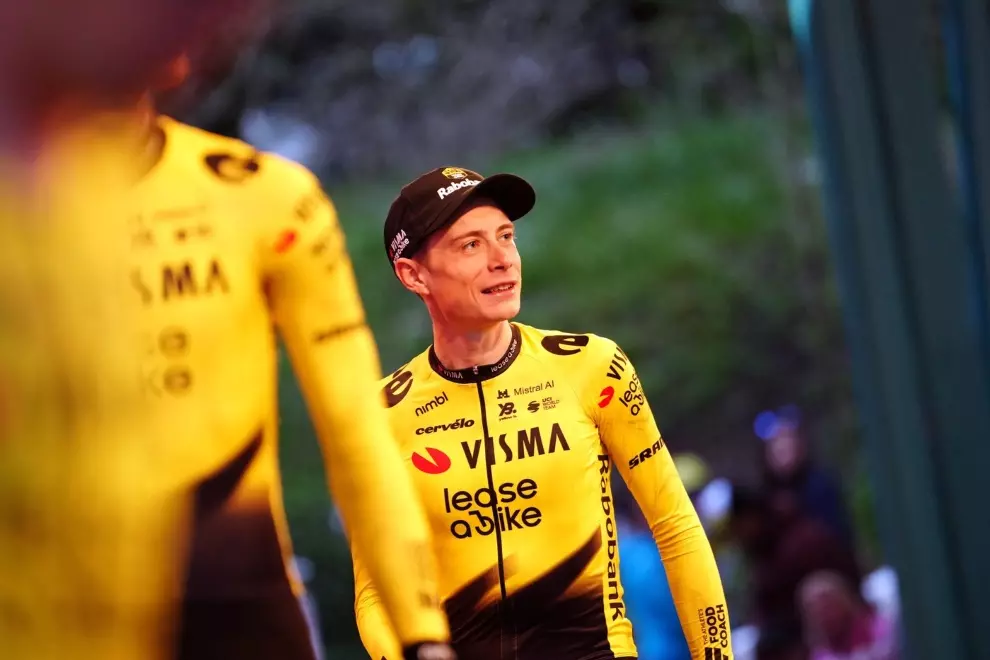
The sudden departure of performance coach Tim Heemskerk in February had threatened to be more disruptive because he had been a cornerstone of the team’s training staff for eight years, and was known as the personal coach and trainer behind Vingegaard’s back-to-back Tour victories in 2022 and 2023. Heemskerk also went to another direct GC rival team, Red Bull–BORA–hansgrohe, which has invested much in the Tour success of its new superstar, Remco Evenepoel.
Heemskerk said that he left because, over his final two to three months with the squad, “creativity and passion have had too little room in my daily work.” But reports suggested that his sudden exit just as the season started was due to internal friction or a breakdown in the coaching dynamic. Head of Performance Mathieu Heijboer has taken over personal coaching duties for Vingegaard.
Will it matter?
These departures mean that Vingegaard has lost both his primary tactician and his long-time trainer within a few months, in a season meant to be a comeback after the long recovery from his disastrous crash in the 2024 Itzulia Basque Country. However, not only did Vingegaard demonstrate a return to his best form, but his Giro support team – without van Aert – were also in peak form.
And the team seems to have found a replacement for the long-serving mountain domestique Sepp Kuss when he retires. Young Davide Piganzoli had a splendid Giro, killing the legs of Vingegaard’s rivals with powerful climbs and providing a platform for the Dane’s five winning attacks. Kuss was less noteworthy in the Giro, though I assume that he was saving his legs for the Tour.
Vingegaard was by far the best rider in the race, and anything but a victory would have been disastrous for his Tour ambitions. That he won five stages, more or less easily, and his gap in the GC over the second-place Felix Gall (Decathlon CMA CGM was 5:22), suggests that he just might give Pogačar a good run for his money this year. That makes the issue of replacing van Aert more pressing, at least in the short term, than the coaching turnover.
Vingegaard and Visma have so far weathered the coaching disruptions well. The question is what impact, if any, losing a rider of van Aert’s quality on the road and influence on the bus will have on the squad’s performance in the Tour. But it will probably come down to a mano a mano between the principal riders – though this year it will be a mano a mano a mano a mano as Evenepoel and 19-year-old near-superstar Paul Seixas (Decathlon CMA CGM) join the group of potential yellow jersey winners. I’m looking forward to three weeks of exceptional racing.