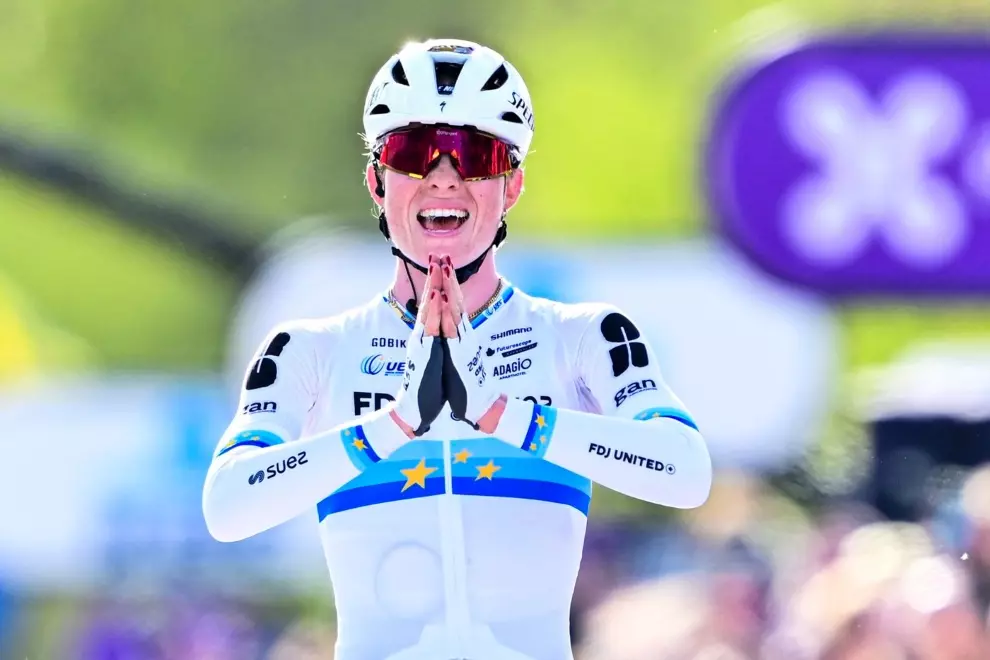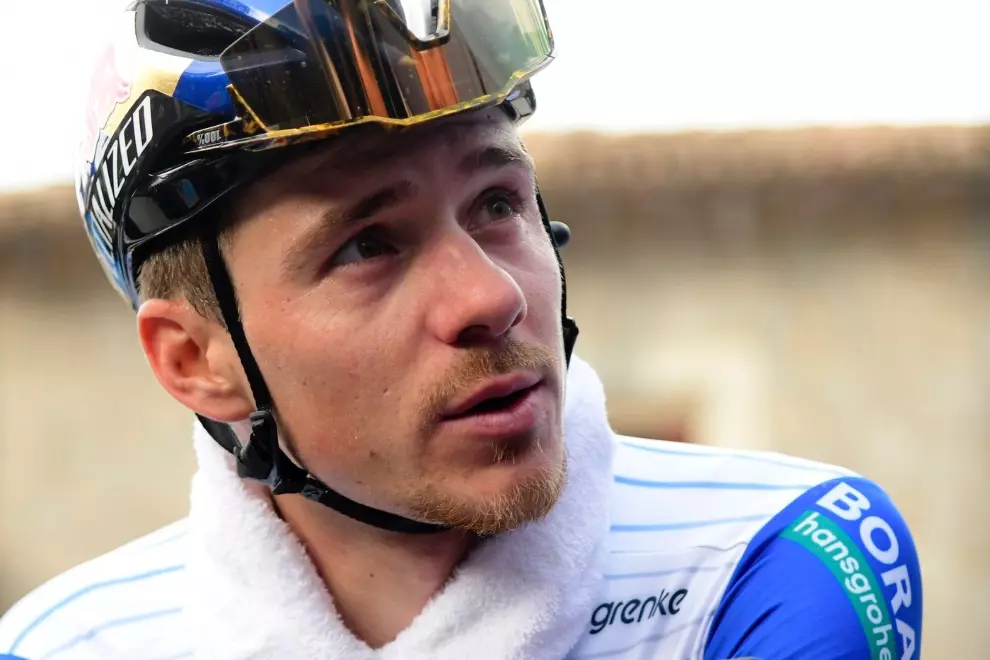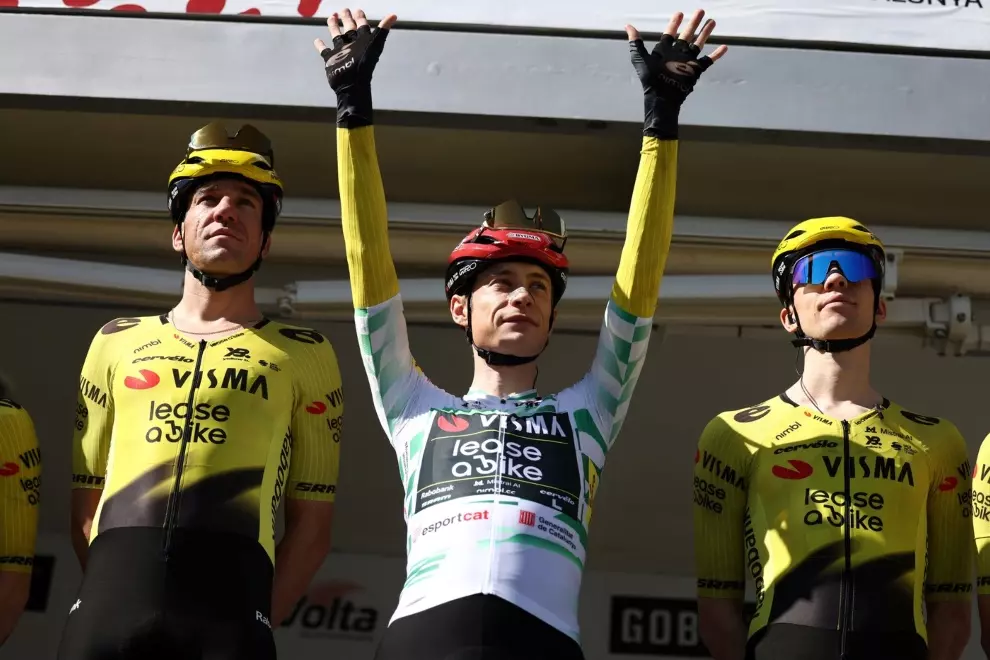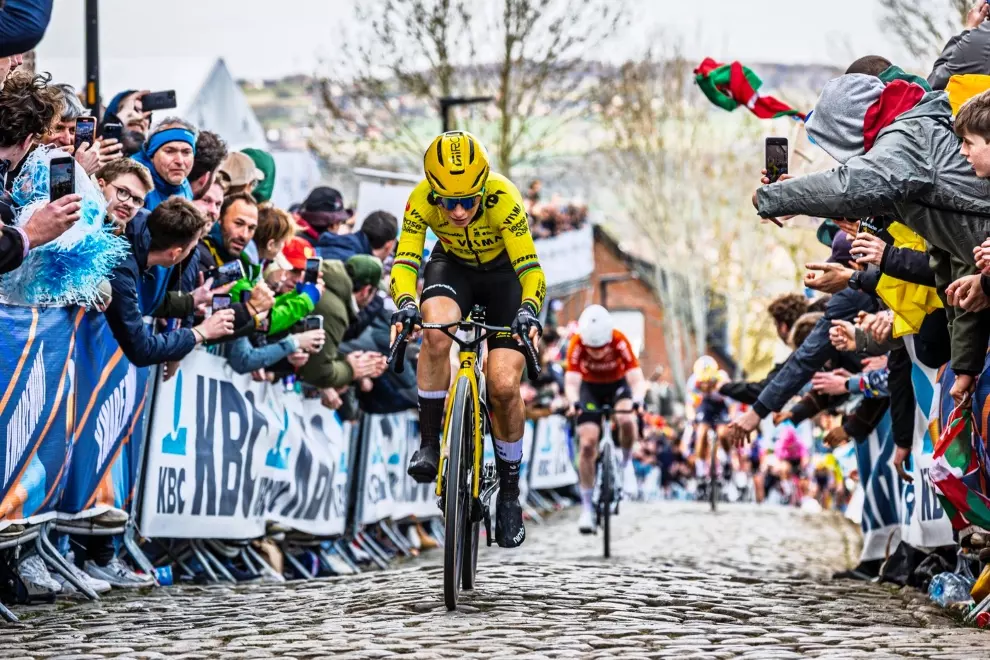
The ever-reliable Team SD Worx-Protime, with Lotte Kopecky and Lorena Wiebes, is also looking particularly precise in its approach. It’s a season that hasn’t settled yet, and where momentum feels fluid heading into the defining tests of the Tour of Flanders Women and Paris-Roubaix Femmes.
And indeed, the abundance of cobbles allows us to see that there’s a particular kind of rider who comes alive when the road falls apart. Cobbled racing is often romanticized as chaos: dust, crashes, punctures, the lottery of positioning. But look closer, and there’s a pattern to who thrives, built over years through physiology, psychology, and a kind of technical fluency that only reveals itself when the road turns rough.
The physiology of absorbing the road
At first glance, you might assume cobbled racing is just about raw power. And yes, power matters, especially on sectors like the Oude Kwaremont or Carrefour de l’Arbre, where the resistance is at an all-time high.
But what separates the best is not just how much power they can produce, but how efficiently they can use it when the surface fights back.
If you’ve ever ridden on cobbles, you already know that every vibration works to disrupt pedaling efficiency and accelerating fatigue. As such, riders who excel tend to have exceptional core stability and upper-body strength. Watch someone like Lotte Kopecky or Elisa Longo Borghini, and you’ll notice their upper bodies are composed, while the bike bounces beneath them.
There’s also the question of muscle fiber recruitment. Cobbled sectors demand repeated, stochastic efforts, short surges to maintain momentum, micro-adjustments in cadence, constant torque rather than smooth circular pedaling. It’s less about peak numbers and more about durability: the ability to produce near-threshold efforts again and again, without technical breakdown.
The art of riding what shouldn’t be ridden
On cobbles, bike handling becomes a whole different language. Cobbles reward the ability to read terrain at speed and make split-second decisions about line choice. The smoothest part is rarely straight, as it might be a narrow strip along the gutter, a crown in the middle, or a constantly shifting compromise between the two. And then there’s the counterintuitive part: sometimes, going faster makes it easier.
At higher speeds, the bike “floats” more over the cobbles, reducing the depth of each impact. But speed also raises the stakes. Choosing to carry momentum into a sector requires not just skill but commitment, because hesitation is often a cause of crashes.

Riders who come from cyclocross backgrounds often have an advantage here. The technical instincts developed in mud, sand, and off-camber turns translate well to cobbles. You can see it in the fluidity of someone like Marianne Vos, whose ability to adapt to unstable terrain feels almost reflexive.
Positioning: The invisible effort
Positioning in the run-in to key sectors is one of the most decisive and least visible skills in cobbled racing. Entering in the top ten wheels versus the top fifty can be the difference between contesting the race and chasing it.
This demands a different kind of effort: repeated anaerobic bursts to move up, spatial awareness in a tightly packed peloton, and a willingness to fight for space long before the decisive moments. Riders like Kasia Niewiadoma have built reputations on this kind of racing intelligence, anticipating bottlenecks, surfing wheels, and arriving at the front by design.
It’s exhausting work, and often underappreciated. But on narrow Belgian roads, it’s essential. The cobbles don’t forgive hesitation or poor placement.
The psychology of discomfort
There’s a mental shift that happens on cobbles, and not everyone can make it. The discomfort is constant and non-negotiable. There’s no smooth section to reset, no rhythm to fall back into. Your hands ache, your vision blurs slightly from the vibration, and every instinct tells you to ease off.
The riders who thrive are the ones who reinterpret that discomfort not as a signal that the race is on. Some even seem to seek it out. Alison Jackson, winner of the 2023 Paris-Roubaix Femmes, has spoken about embracing the race’s chaos, unpredictability, and absurdity. That mindset matters. When things inevitably go wrong, a missed shift, a puncture nearby, a rider sliding out, the ability to stay mentally flexible is as important as any physical trait.
There’s also a certain emotional resilience required, as cobbled races rarely unfold cleanly and plans inevitably dissolve. The riders who succeed are often those who can detach from expectation and respond to what’s actually happening in the moment.
Do cobbles reward experience?
It’s a tempting narrative: that cobbled racing favors older, more experienced riders. And there’s some truth to it.
Experience sharpens many of the skills that matter most here: positioning, line choice, energy conservation, and tactical patience. It also builds familiarity with the courses themselves. Knowing when a sector narrows, where the worst stones lie, and how the wind typically behaves on an exposed stretch are details that can’t be fully learned from recon rides alone.
You see it in the palmarès. Riders often reach their peak in these races later than in more explosive disciplines.
But that doesn’t mean youth is excluded.
Younger riders are arriving with increasingly sophisticated technical backgrounds, often shaped by cyclocross or gravel racing. They’re also benefiting from better equipment, data, and preparation than ever before. What they may lack in experience, they can sometimes offset with fearlessness, a willingness to take risks that more seasoned riders might avoid.
What’s striking, year after year, is how consistent the cast of contenders becomes. The same names reappear at the front, because they’ve built themselves for this kind of racing. They’ve learned how to absorb the road, how to move through the chaos, how to stay composed when everything is shaking.
And maybe that’s why it’s so compelling.