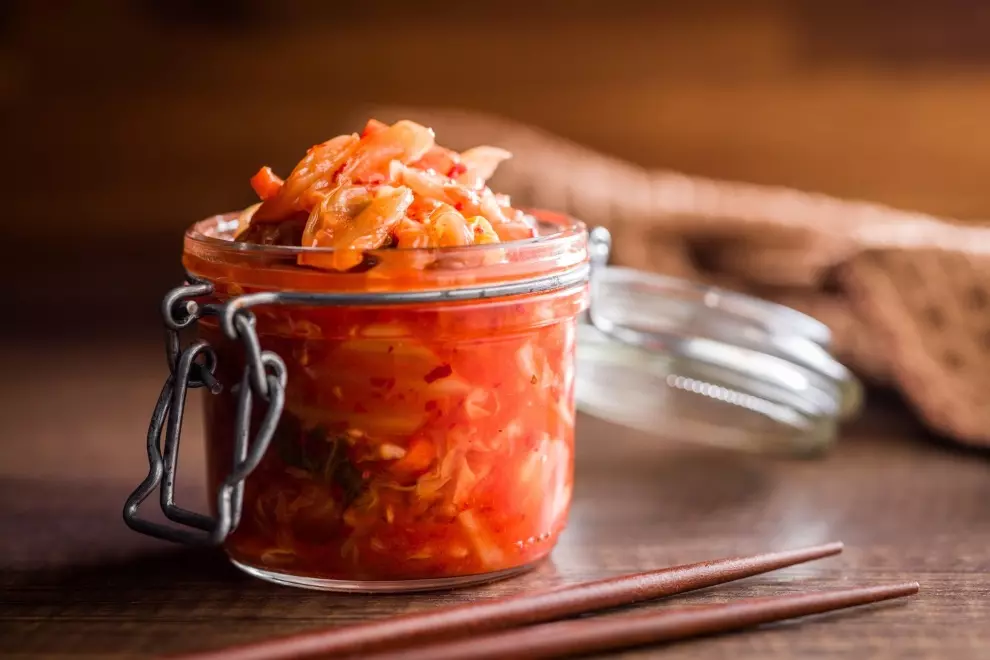
Kimchi as an immune regulator
A study published in Science of food used advanced single-cell genetic analysis to show that regular kimchi consumption helps immune cells respond more effectively to threats while preventing overreactions. This is the first research to demonstrate kimchi’s immune benefits at such a detailed, cellular level.
The study included 39 overweight adults who were divided into 3 groups. For 12 weeks, one group ate a placebo, another ate naturally fermented kimchi powder, and the third ate kimchi powder made with a starter culture. Both kimchi groups showed improved immune cell communication and stronger antigen recognition, but the starter-fermented kimchi had the most pronounced effects. How does kimchi produce such benefits?
Antigen-presenting cells (APCs): These cells act like your body’s security system, detecting bacteria and viruses and alerting other immune cells. Kimchi boosts their activity, making your immune response faster and more precise.
Balanced T cells: Kimchi helps T cells develop into both protective and regulatory types, ensuring your immune system stays strong but doesn’t overreact (which can lead to inflammation or allergies).
Fermentation matters: The study found that kimchi made with a starter culture (a controlled fermentation process) had even stronger immune benefits than naturally fermented kimchi.
Dr. Woo Jae Lee who led the study, said: “Our research has proven for the first time in the world that kimchi has two different simultaneous effects: activating defence cells and suppressing excessive response.”
How to add kimchi to your diet?
Make sure to start small. If you’re new to kimchi, begin with 1-2 tablespoons per day to let your gut adjust. Too much too soon can cause bloating or digestive discomfort.
Kimchi is best when paired with other foods, here are a few suggestions:
Breakfast: Add kimchi to scrambled eggs or avocado toast for a probiotic kick.
Lunch/Dinner: Mix it into grain bowls, wraps, or salads. It’s also a great side for lean proteins like grilled chicken or fish.
Post-ride snack: Try kimchi with rice cakes or whole-grain crackers for a quick, immune-boosting bite.
Look for kimchi in the refrigerated section (not shelf-stable) of the supermarket to ensure it’s alive with probiotics. Check the label for minimal additives. If you’re adventurous, you can ferment your own! Basic kimchi requires napa cabbage, radish, garlic, ginger, red pepper flakes, and salt. Ferment at room temperature for 1–5 days, then refrigerate.
While kimchi is generally safe, some people may experience bloating or gas initially. Gradual introduction typically helps overcome that and the health benefits are worth the effort. But if kimchi isn’t your thing, other fermented foods like sauerkraut, kefir, miso, and kombucha also support gut and immune health and are worth trying.