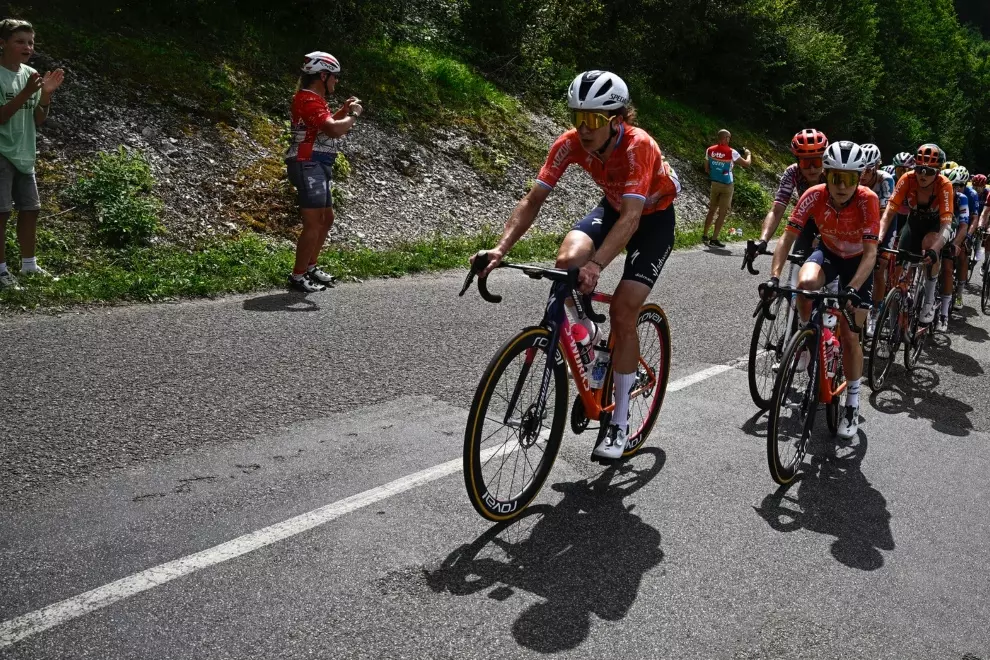
In cycling, they are called domestiques, and some of the most respected riders in the women’s peloton have built their reputations in this role. Riders like Christine Majerus spent years guiding teammates through chaotic finales and pacing the peloton for leaders. Marlen Reusser has delivered devastating tempo on climbs and time trial sections to set up victories for her team. Even all-around talents (and recent big-time winners) such as Elise Chabbey have built a reputation for controlling races and supporting teammates deep into decisive moments.
The word “domestique” comes from the French term for servant, and it describes riders whose role is to support a team leader rather than pursue their own results. A domestique might spend hours riding at the front of the peloton to control the race, chase down dangerous breakaways, protect a teammate from the wind, or drop back to the team car to collect bottles and bring them forward. If a leader has a mechanical problem, the domestique may even give up their bike.
These riders often cross the finish line far from the spotlight, sometimes well outside the television coverage. Yet their effort frequently determines who wins.
In 2026, the role of the domestique, particularly in the women’s peloton, has become more professional, more strategic, and in many ways more respected than ever before.
Understanding modern cycling means understanding the riders who spend their races making someone else’s success possible.
The hidden work that shapes a race
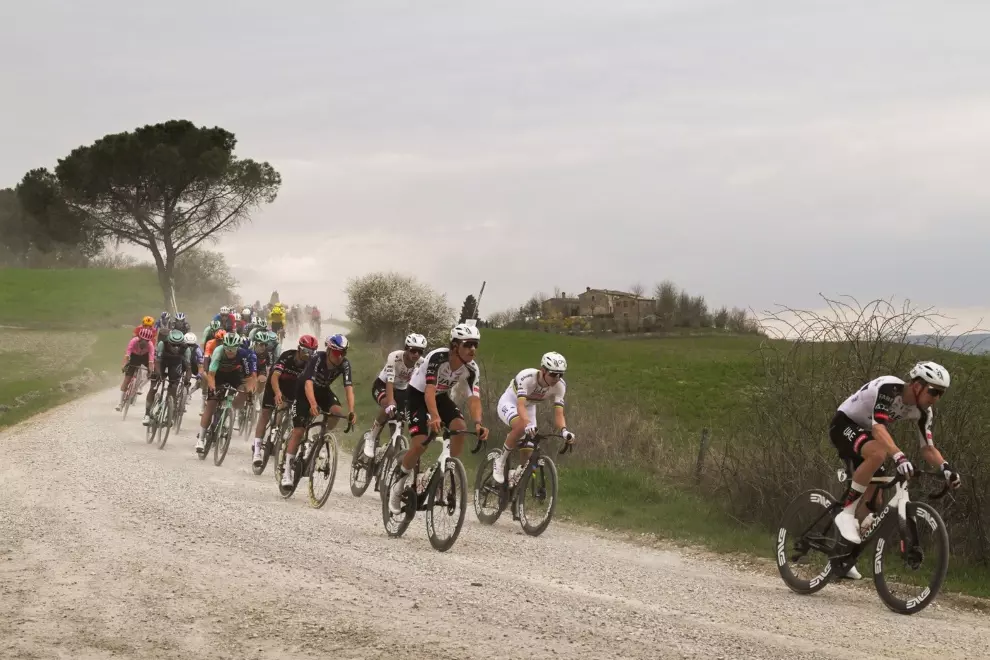
A domestique might spend an hour setting a relentless tempo on the front of the peloton to bring back a breakaway. Another might pace a climb so hard that rival teams begin to crack. Others are responsible for positioning their team leader in the chaos before a narrow road or cobbled sector.
It is exhausting work that requires strength, tactical awareness, and perfect timing.
Luxembourg rider Christine Majerus, who spent many seasons supporting teammates at the highest level, once explained that the success of a team leader is inseparable from the work of the riders around her. A leader can only perform at her best when she has teammates who are willing to sacrifice their own ambitions for the team’s goal.
In a sport where victory margins are often measured in seconds, those sacrifices can decide the outcome of a race.
Racing with a different definition of success
For many professional athletes, the idea of racing without aiming for personal victory sounds almost impossible. Domestiques enter races with a different mindset. Their success is directly tied to a teammate’s performance.
That does not mean domestiques lack ambition or competitive drive. In fact, the role demands immense confidence. A rider has to believe that their effort is contributing to something meaningful and that the team will recognise the work they have done.
The strongest teams cultivate a culture where those contributions are acknowledged. Inside the team bus, riders and staff know exactly who closed the gap to a breakaway, who kept the leader safe in the crosswinds, and who rode themselves to exhaustion before the decisive moment.
When a leader wins, the celebration belongs to the entire team. That sense of collective achievement is one of the defining features of professional cycling.
How the Women’s WorldTour changed the role
The structure of women’s cycling has evolved dramatically over the past decade, and that transformation has changed what it means to be a domestique.
The creation of the UCI Women’s WorldTour in 2016 marked an important step toward greater professionalisation of the sport. The series brought more consistent race calendars, higher organisational standards, and increasing investment from teams and sponsors.
As teams grew more sophisticated, so did race tactics. In earlier eras of women’s racing, the peloton was often smaller and less structured. Strong riders frequently won through individual attacks rather than carefully coordinated team strategies.
Today, the dynamics look very different. Teams analyse race routes in detail, designate leaders for specific races, and assign domestiques specialised tasks. Some riders focus on protecting a general classification contender in stage races. Others act as climbing domestiques in the mountains or part of a lead-out train for sprinters.
The result is a more tactical, complex peloton in which teamwork often determines the outcome.
Learning the peloton from the inside
Many of the biggest stars in cycling began their careers in support roles. Working as a domestique can be one of the most valuable learning experiences for a young rider entering the professional peloton. It teaches race positioning, tactical awareness, and the subtle dynamics that shape the flow of a race.
Before becoming one of the most dominant riders of her generation, Anna van der Breggen spent part of her early career supporting teammates such as Marianne Vos. Those years allowed her to learn how races unfold and how teams manage strategy across different terrains and race situations.
This type of apprenticeship remains common in the modern peloton.
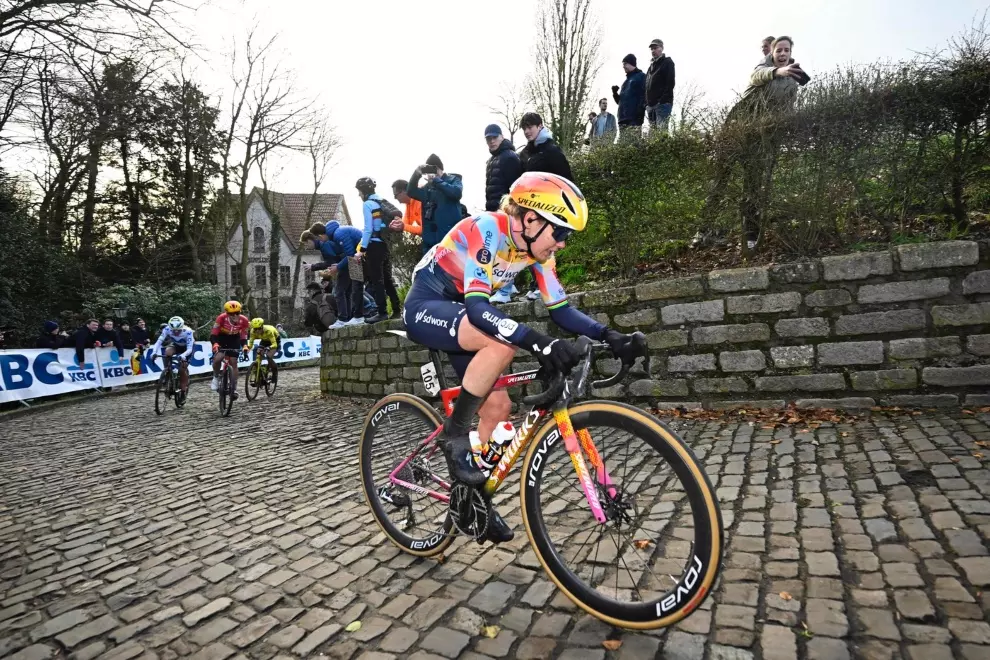
Young riders often join a WorldTour team with the understanding that they will spend their first seasons working for others. Over time, they gain experience, earn their teammates’ trust, and sometimes grow into leadership roles themselves.
Some riders eventually become team leaders. Others discover that they thrive in the domestique role and choose to continue specialising in it. Both paths are essential to the functioning of a successful team.
The modern domestique as a specialist
The level of performance in the women’s peloton has risen rapidly in recent years, and the demands placed on domestiques have increased along with it.
These riders must be incredibly versatile. A domestique may need to spend hours controlling the pace of a race, navigate technical descents in a tightly packed peloton, and then climb at near threshold to support a team leader deep into the finale.
In stage races, the workload can stretch across an entire week. Domestiques manage their effort carefully so they can continue supporting their leader day after day.
Their role also requires constant awareness of race tactics. A domestique has to know when to chase an attack, when to let another team take responsibility, and when to sacrifice everything to deliver their leader into the decisive moment of the race.
These decisions happen in seconds, often while riding at speeds above forty kilometres per hour. It is a level of complexity that many fans do not see at first glance.
Notable domestiques in the modern peloton
While the role rarely brings headlines, several riders in the women’s peloton have become widely respected for the way they shape races from inside the team structure. One of the clearest examples is Christine Majerus, who spent many seasons as one of the most reliable riders in the powerhouse teams that dominated the Women’s WorldTour. She could control the pace of a race for hours, guide teammates safely through nervous finales, and still deliver leaders such as Anna van der Breggen or Lotte Kopecky into the decisive kilometres in perfect position. Within the peloton, she became known as the kind of rider every team hopes to have when the race becomes chaotic.
Other domestiques bring their value through sheer power. Swiss rider Marlen Reusser is widely recognised as one of the strongest time trialists in the sport. Still, her ability to ride sustained, punishing tempo has also made her a formidable teammate in road races. When Reusser settles into a long pull on the front of the peloton, breakaways often disappear, and the field quickly thins. Riders like Ellen van Dijk have built similar reputations over the years. Known for her world championship time trial titles, van Dijk has also spent countless races shaping the outcome through long, powerful efforts that control the peloton and set up team strategies.
A newer generation of riders illustrates how the domestique role continues to evolve. Climbers such as Niamh Fisher-Black have become crucial support riders in the mountains, setting fierce tempo in stage races and helping leaders survive the hardest moments of the race. Others, like Pauliena Rooijakkers, have quietly built reputations as dependable climbers who can ride deep into decisive stages while managing attacks from rival teams. Meanwhile, riders such as Silvia Persico demonstrate how versatile the role has become. Even while taking major results of her own, Persico frequently contributes to the team’s strategy across a wide range of terrain, helping to control races and position teammates before key moments.
Why teamwork matters more than ever
As women’s cycling continues to grow, teamwork is becoming even more important.
The peloton is deeper and more competitive than it was a decade ago. Strong riders now come from a wide range of national programs and development pathways, and many teams have the resources to support multiple contenders in major races.
In this environment, even the strongest rider rarely wins alone. Victories are built through coordinated effort. Domestiques control the pace of the race, neutralise dangerous attacks, and position their leaders perfectly before the decisive moments.
Cycling may celebrate individual winners, but the reality of the sport remains profoundly collective.