But once I started paying attention to the women I was actually riding with, that story fell apart quickly.
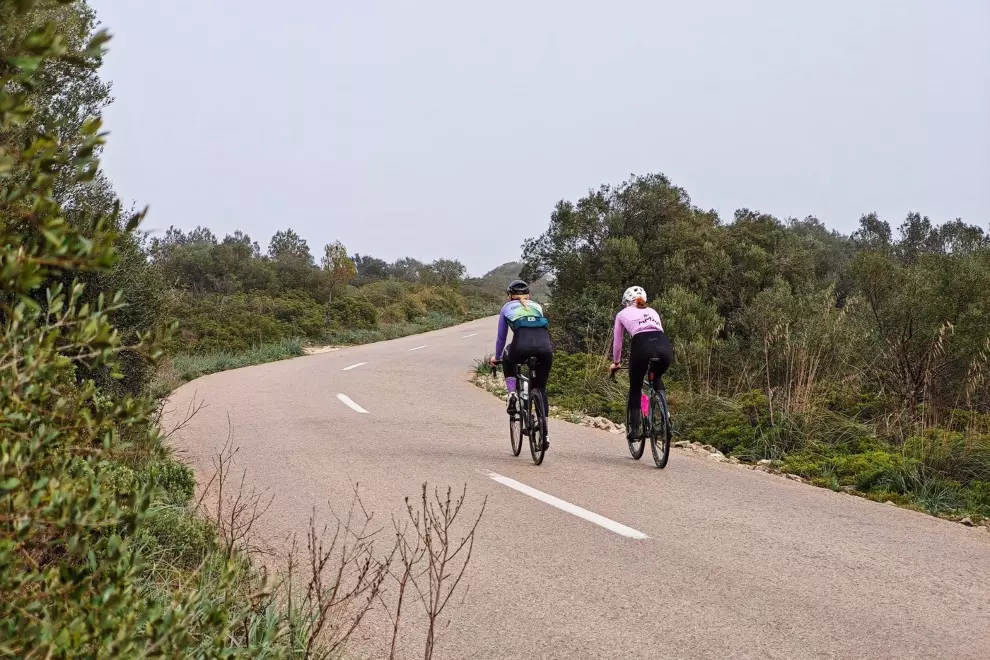
Most of them hadn’t grown up cycling. They hadn’t “returned” to the sport after a long break. They’d discovered it, often in their 30s or 40s, through commuting, curiosity, a friend’s spare bike or a nagging fitness intrigue towards something physical that didn’t feel punishing.
This isn’t just anecdotal, either. Participation data across Europe and North America show women are more likely than men to take up cycling in adulthood rather than adolescence. In recent years, one of the fastest-growing segments of new riders has been women over 30. The so-called “late bloomers” are no longer the exception; in a lot of cycling communities, they’re the norm.
Why many women didn’t start earlier
Girls’ participation in organised sport drops sharply during adolescence. The reasons are familiar: early specialisation, performance pressure, body scrutiny, and sporting environments that reward confidence over curiosity. If you weren’t already good (or comfortable being watched), you often opted out.
Cycling wasn’t exactly waiting with open arms, either. For a long time, it projected an image that was technical, expensive, and male by default. Road cycling in particular leaned heavily on suffering, seriousness, and unspoken rules.
So, for many women, discovering cycling in adulthood isn’t about rediscovering a lost identity but about finding a form of movement that finally feels compatible with their bodies, schedules, and expectations. You can start alone, go at it slowly, and you don’t have to announce yourself as an athlete. That simplicity turns out to be a big deal.
Why cycling works later – physically
There’s a persistent belief that athletic potential peaks in your late 20s and declines steadily after that. That idea mostly comes from sports that rely heavily on explosive power and speed. Cycling, especially endurance-focused disciplines, plays by different rules.
Research on endurance athletes shows that peak endurance performance is generally maintained through the mid-30s, and then declines only gradually through the 40s and 50s before more substantial decreases later in life, a trend seen across running, cycling, and other endurance sports. Significant drop-offs tend to occur much later. While sprinting and track events are more affected by age-related changes in muscle density and lung capacity, aerobic endurance holds up remarkably well.
There is also ongoing research into how women’s hormones might offer an advantage later in life. While hormonal changes across the lifespan do affect physiology, the relationship between hormones and peak athletic performance is complex and not yet fully understood; factors such as training history, experience, and endurance adaptations appear to play a significant role in why many women perform strongly later in life.

The evidence has been hiding in plain sight
When we take a close look, we can see that elite cycling has been reinforcing this reality for years.
In 2008, French cycling legend Jeannie Longo finished fourth in the Olympic time trial just months shy of turning 50. The winner of that race was Kristin Armstrong, who went on to win the same event at the next two Olympic Games. When Armstrong crossed the line in Rio in 2016, she was a day shy of 43. She won anyway.
These results weren’t treated as a broader signal at the time, but they should have been. Cycling allows women not only to remain competitive later, but also to start later.
Ayesha McGowan discovered cycling while commuting to college and work in New York City. She didn’t grow up in the sport or enter through traditional pathways. Over time, she worked her way through the ranks and in 2021 became the first Black woman to race on a professional road cycling team.
Evelyn Stevens didn’t start cycling until her late 20s. Within a few years, she was winning national titles, breaking the women’s hour record, and doing it after taking time out to have a child. Linda Jackson took up cycling in her 30s, podiumed at national championships within three years, then retired before going on to own and manage a professional team.
More recently, Kristen Faulkner – who found cycling after college while living in New York – won Olympic gold in the road race after leaving a corporate job to race full-time. Her victory marked the first Olympic road race medal won by an American woman in 40 years.
These stories aren’t meant to suggest that everyone who starts cycling at 35 will end up on a podium. They illustrate a more relevant point: in cycling, starting later does not automatically limit potential.
The “accidental athlete” pathway
In many cases, the bike is never seen as a means of competition, anyway. Plenty of riders don’t take it up as a sport; they do so because it’s practical. From commuting and school drop-offs to avoiding traffic or squeezing in some movement when the day is already full, cycling just makes sense. And this counts for women who don’t otherwise identify as “sporty”, too.
A study of working adults found that engaging in at least 150 minutes per week of active commuting, including cycling, was associated with significantly higher overall moderate-to-vigorous physical activity (MVPA) among women, contributing about nine additional minutes of daily MVPA compared with women who did not actively commute.
It follows an organic process; fitness appears gradually, and confidence follows. At some point, the bike stops being a tool and becomes something you choose even when you don’t have to.
Motherhood, burnout, and choosing effort on your own terms
It becomes a reinforcing habit. There’s strong evidence that regular aerobic exercise, like cycling, can improve mood, reduce stress and anxiety, and strengthen emotional regulation, benefits linked not just to movement itself but to the psychological experience of choosing and sustaining activity on your own terms.
Likewise, research grounded in self-determination theory shows that when people feel autonomous and intrinsically motivated in their exercise, they’re more likely to maintain it and experience positive mental health outcomes. This may help explain why we’re seeing more women racing for the first time in their 30s and 40s.
What does this mean if you’re starting now
If you’re just discovering the joy of two wheels, it’s important to remember that starting cycling later doesn’t put you behind. In many ways, it gives you advantages.
You’re more likely to train consistently rather than impulsively, more likely to prioritise recovery, and less likely to confuse suffering with progress. You understand your body better, and you’re more willing to adapt rather than force it. Cycling rewards exactly those traits.
So perhaps discovering cycling in your 30s or 40s isn’t about being late. Maybe it’s about arriving at the sport when it finally aligns with your physiology, your priorities, and your sense of self. Remember, your bike doesn’t ask when you started riding, it just asks that you keep showing up!