That’s where heated socks and heated insoles come in. Once the preserve of ski touring and mountaineering, battery-powered foot warmth has become one of winter cycling’s best-kept secrets. The tech has improved, batteries are smaller, and, crucially, many systems now work well inside cycling shoes.
The question is no longer whether they work, but which option makes sense for your riding.
Heated socks vs heated insoles: What’s the difference?
Before diving into specific products, it’s worth understanding the trade-off.
Heated socks wrap warmth around your toes and the top of your foot. They tend to feel more immediately cosy and are great if you suffer from cold spots or poor circulation.
Heated insoles warm from the bottom, sitting inside your shoe like a standard insole. They’re often less bulky and easier to integrate into tight winter cycling shoes.
There’s no universal winner, just different solutions for different riders.
The best heated socks for cycling
Lenz Heat Sock 6.1 Cap Compression
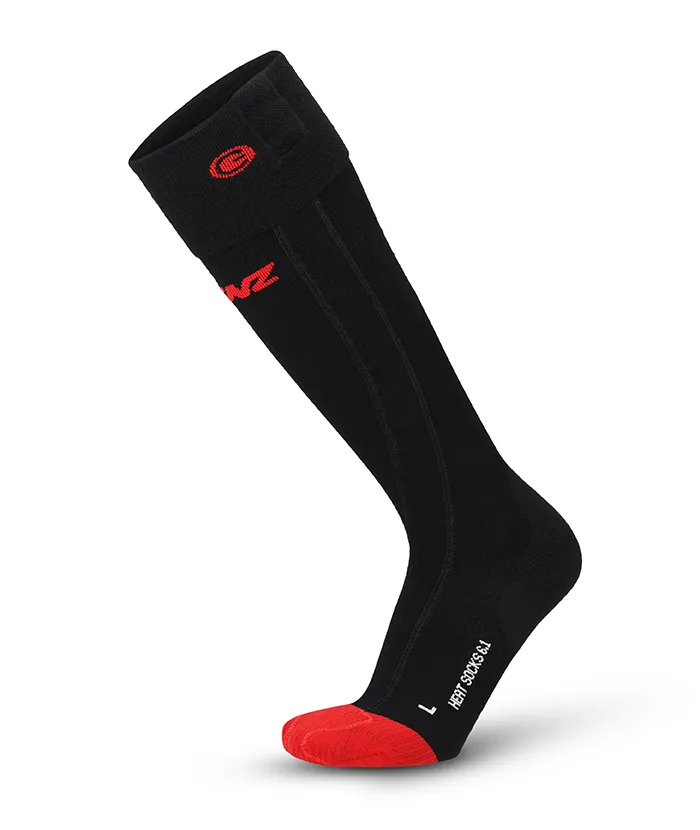
A favourite among endurance athletes for good reason. These socks combine compression, moisture control, and evenly distributed heating around the toes and forefoot. The batteries sit discreetly at the cuff and can be adjusted via button or app, depending on the setup.
They’re expensive, but the warmth is consistent rather than aggressive. These are ideal for long winter rides where you want steady comfort rather than bursts of heat.
Best for: Long rides, sensitive feet, and riders who prefer refined heat over maximum output.
Lenz Heat Sock 4.0 (with lithium pack)
A slightly more affordable entry into the Lenz ecosystem, and still a very solid option. The heating coverage is focused where cyclists tend to suffer most, toes and the front of the foot, and the battery life holds up well on medium settings.
These socks are less “technical” than the 6.1, but for most riders, that’s not a drawback.
Best for: Winter commuters and weekend riders who want reliability without top-tier pricing.
Day Wolf 7.4V Heated Socks
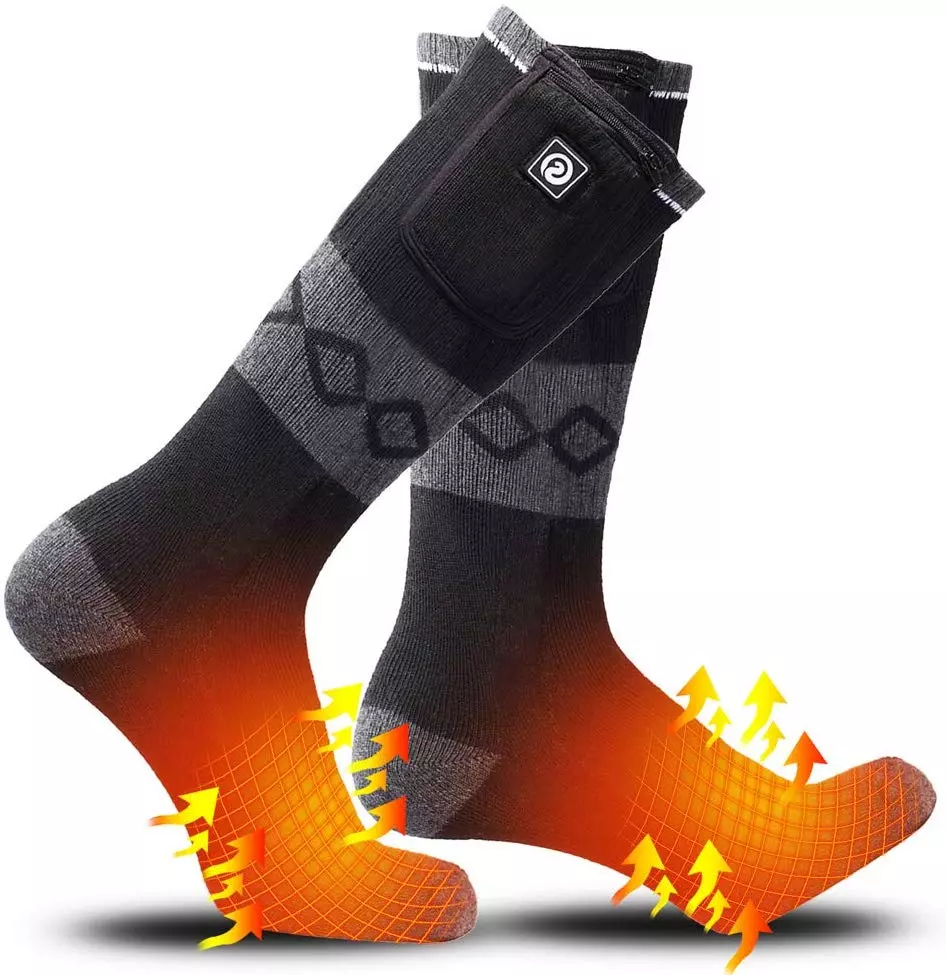
These are about power. The 7.4V system delivers noticeably more heat than many entry-level heated socks, making them appealing for truly cold conditions or for riders who struggle to stay warm regardless.
Day Wolf 7.4 are less refined in fit and fabric than premium brands, but they get the job done, and at a slightly lower price point.
Best for: Cold-natured riders and anyone riding in genuinely freezing conditions.
Glovii Heated Socks (with remote control)
The standout feature of Glovii heated socks here is the remote control, which lets you adjust heat without stopping, digging into layers, or fumbling with buttons. That’s a small thing, until you’re riding in gloves and realise how useful it is.
The warmth is even and responsive, though the socks are slightly thicker than others on this list.
Best for: Riders who like on-the-fly control and don’t mind a slightly bulkier sock.
The best heated insoles for cycling
Therm-ic Insole Heat Kit
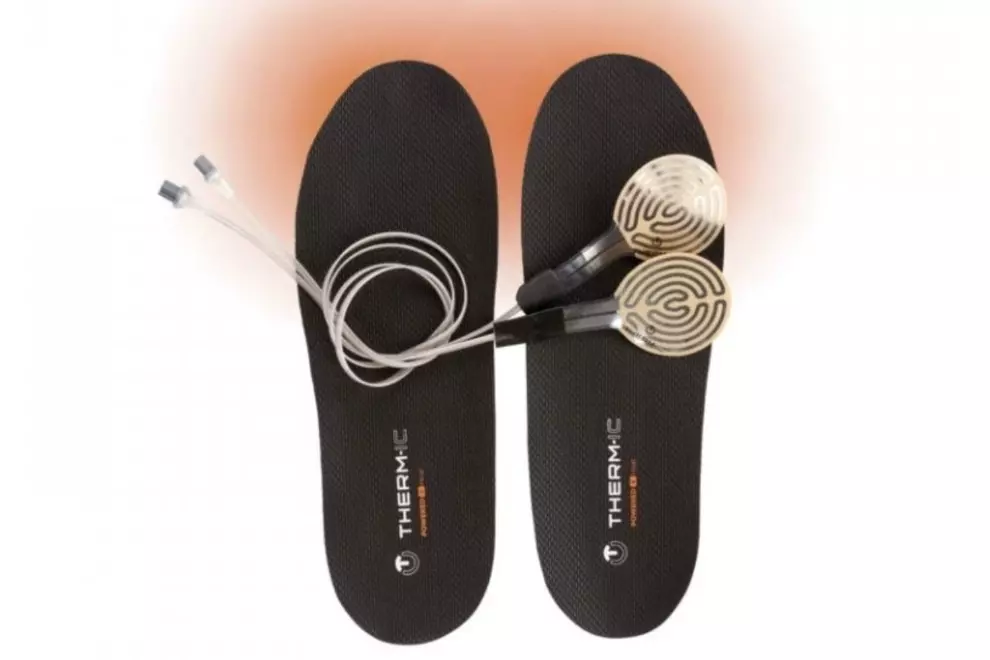
A strong entry point into heated insoles. Therm-ic insoles fit most winter cycling shoes without significantly increasing volume and deliver gentle, consistent warmth underfoot.
They’re not the most powerful option, but they’re simple, dependable, and easier to live with than heated socks for many riders.
Best for: Riders who already like their sock setup and want added warmth without changing fit.
Lenz Heat Sole 1.0
Minimalist and surprisingly effective. These insoles focus warmth under the toes and ball of the foot, where it matters most on the bike. They’re slim enough for tighter shoes and work well for riders who prefer a streamlined winter setup.
Battery life is modest, but for typical 1.5–3 hour rides, it’s more than sufficient.
Best for: Performance-oriented riders and snug-fitting winter shoes.
Alpenheat Wireless Hotsole
A premium rechargeable heated insole system with wireless control via a smartphone app and up to about 9.5 hours of heat, depending on your temperature setting. The heating elements are located in the forefoot, where cyclists tend to feel the cold most, and the batteries are integrated into the insole, helping keep the fit low-profile. These are excellent if you want app-based control and long endurance without bulky external battery packs.
Best for: tech-savvy riders and anyone who wants strong, smartphone-adjustable heat on long winter rides.
Nordic Heat Heated Insoles
If you’re after simple, versatile warmth without a complicated setup, Nordic Heat’s heated insoles are a solid mid-range pick. These battery-powered insoles are designed to be ultra-thin and lightweight, so you can cut them to size and fit them easily under your usual socks or winter cycling insoles. Instead of an integrated battery pack, they heat when connected to a 5 V power bank (sold separately), giving you flexibility over runtime and heat intensity. A 5,000 mAh power bank will keep them going for roughly 4–5 hours, while something like a 10,000 mAh unit can stretch up to around 8–10 hours of heat, depending on conditions.
That makes Nordic Heat a very adaptable choice for riders who want extra warmth without changing how their shoes fit or hauling additional bulky gear.
Best for: Cold-weather commuters and weekend riders who want straightforward heated insoles that work with many shoe setups.
Therm-ic Heat Kit + C-Pack 1300B
This is the premium end of the spectrum. Powerful batteries, long run times, and excellent heat distribution make this setup suitable for all-day cold exposure.
It’s arguably overkill for short rides, but for winter endurance events, ultra-distance riding, or frigid climates, it’s hard to beat.
Best for: Long winter days, extreme cold, and riders who refuse to cut rides short.
Which should cyclists choose?
If you’re torn between socks and insoles, here’s the simplest rule of thumb:
- Choose heated socks if your toes go numb quickly, you have circulation issues, or you ride at lower intensities where heat generation is limited.
- Choose heated insoles if your shoes are already snug, you race or ride harder, or you want warmth without changing your sock setup.
Some riders even own both, socks for deep winter, insoles for shoulder-season cold.
A few things to consider before buying
Battery placement matters.
For cycling, batteries mounted high on the calf or ankle are usually less intrusive than units that sit directly over the shoe closure system.
Don’t overtighten shoes.
Even the best heating system can’t fight restricted blood flow. If your winter shoes feel tight once everything is installed, sizing up or loosening slightly may make a bigger difference than more heat.
Use heat strategically.
Most systems last longest when you start on a low setting and increase only when needed. Blasting maximum heat from the start often shortens battery life — and can actually make feet sweat, which leads to more cold later.
Heated socks and insoles won’t magically make winter riding easy, but they can make it possible. And for many cyclists, that’s the difference between another month of quality training and a season cut short by frozen feet.
Whether you go for full-coverage heated socks or discreet insoles underfoot, modern systems are finally good enough to feel like a solution rather than a gimmick.
And once you’ve finished a freezing ride with warm toes still intact, it’s hard to imagine going back.