Tábor has long been one of cyclo-cross’s most honest stages. Its cambers, power drags, and awkward transitions reveal form without mercy. And on this crisp, fast, technically demanding track, riders wasted no time in showing who had done their homework over the summer, and who might still be ramping up.
A course that told the truth
Conditions in Tábor were firm and cool, leaning toward speed rather than slog, but the course still forced riders to think. The classic layout demanded constant decision-making: when to punch over small rises, when to float the off-cambers, when to switch lines, and when to burn a match to stay in the front group.
This middle-ground weather, neither deep mud nor pure grass crit, made for a compelling opener. It rewarded the riders who arrived with balanced preparation: technical sharpness, power gained from summer road miles, and the ability to make micro-corrections under pressure. Even among the frontrunners, the margins were tight enough that a single awkward foot dab or a moment of hesitation could decide a podium place.
Tábor is also a course that punishes indecision. Riders who hesitated in the early laps often found themselves drifting backwards, particularly in the middle-section transitions where flow mattered more than brute force. Those tiny, slippery, half-off-camber corners? They’re the kind that tell you everything about a rider’s early-season nerve.
Zobrazit příspěvek na Instagramu
Lucinda Brand reclaims the calm at the front
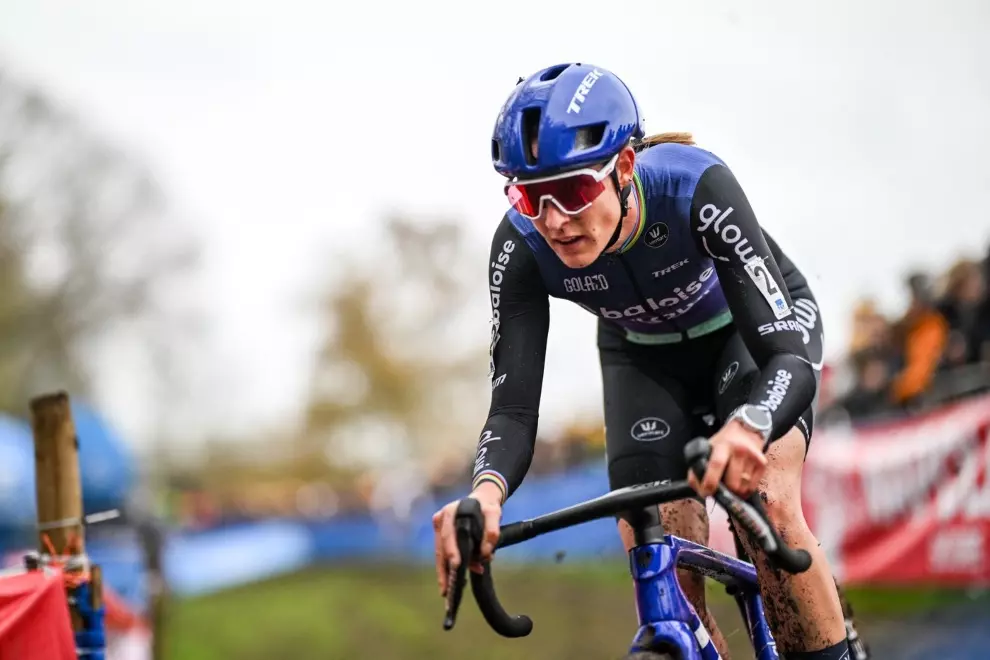
Lucinda Brand, long known for her combination of control, precision, and race sense, rode as though she’d flicked into a familiar, comfortable gear. She was consistent and slowly tightened her grip on the race, growing stronger as her rivals fought to keep pace.
Indeed, at her best, there is something about Brand that feels almost serene. She rarely rides frantically, even when the course gets awkward. In Tábor, that calm was back. Whether navigating the longer drags or skimming along the more technical sections, she looked like a rider who was fully aware of what kind of shape she was carrying into this season.
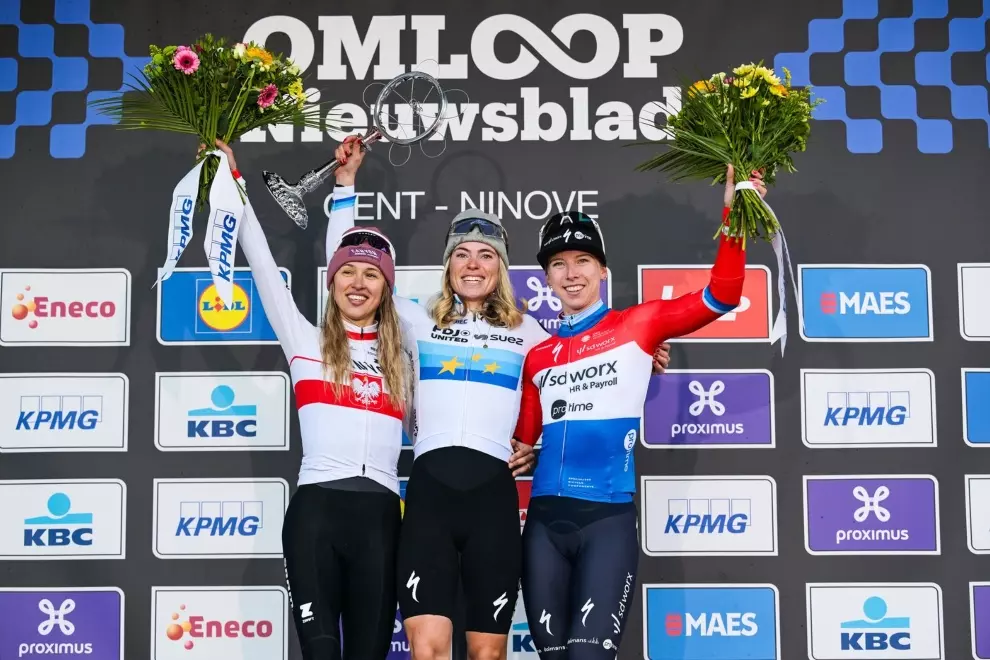
Sara Casasola put in one of the most mature rides of her World Cup career. If last season hinted she was becoming a podium regular, Tábor confirmed it. Her second place wasn’t a lucky hold; it was the product of intelligent pacing, confident technical execution, and the ability to keep her intensity high when Brand finally broke free.
Inge van der Heijden rounded out the podium with a measured, composed performance that suggests she could be one of the big consistency players this winter. She didn’t panic when gaps opened, nor did she waste energy chasing moves that didn’t matter. Instead, she built her race lap by lap, always a promising sign in round one.
For Brand, the win is significant. After a few seasons of fluctuating form due to injury and illness, beginning the World Cup with authority is both a statement and a reassurance. She has the experience to convert momentum into something much bigger, and Tábor may be the spark she needed.
Depth, drama, and the shape of what’s coming
One of the most prominent themes from Tábor was depth. The gaps between the top ten riders in both fields never felt insurmountable, and several big names finishing off the podium only add intrigue to the season ahead.
Early-season World Cups often have a hint of unpredictability; some riders arrive flying, others are still sharpening, but Tábor offered the sense that this year’s battles might be unusually tight. Pure power riders will get their moment in the fast rounds. Technical specialists will shine in the mud. All-rounders will have to be smart about picking their opportunities.
The upcoming rounds will also bring very different terrain. Belgium will offer the first true mud tests. Italy and France may bring speed again. Then the December intensity hits: multiple races in short succession, travel fatigue, cold conditions, and the annual question of who can maintain form during the holiday block.
A familiar beginning to what has the potential to be an extraordinary season
Tábor set an interested stage for the road ahead, with Nys taking early command and Brand is easing back to the front of the field. We also say a long list of riders, Casasola, Sweeck, van der Heijden, and Nieuwenhuis, already circling the podium with intent. I am not alone in feeling confident that this year’s World Cup may be one of the most tactically interesting in recent memory.
What comes next is the absolute joy of cyclo-cross: the mud, the cold, the crashes, the brilliant recoveries, the small heroics that define winter racing. If this opening round is any indicator, the 2025–26 season will be rich with all of it!