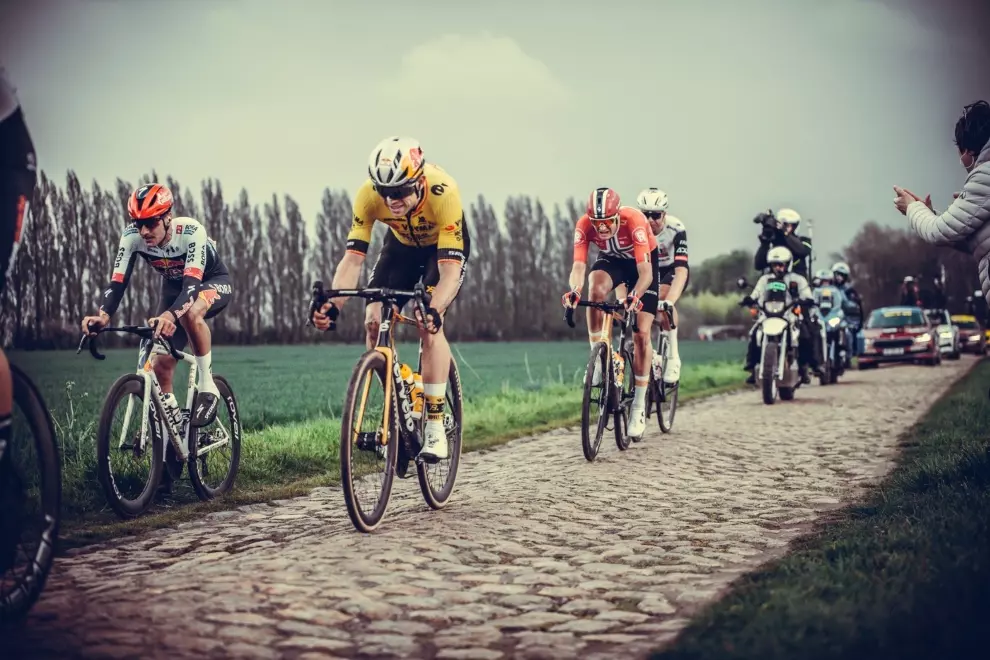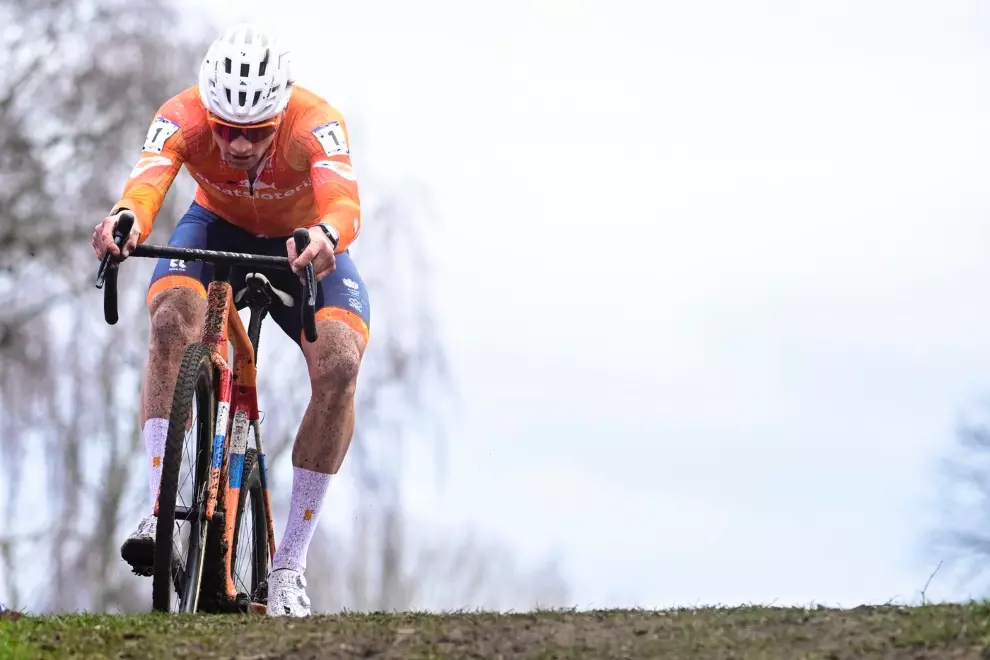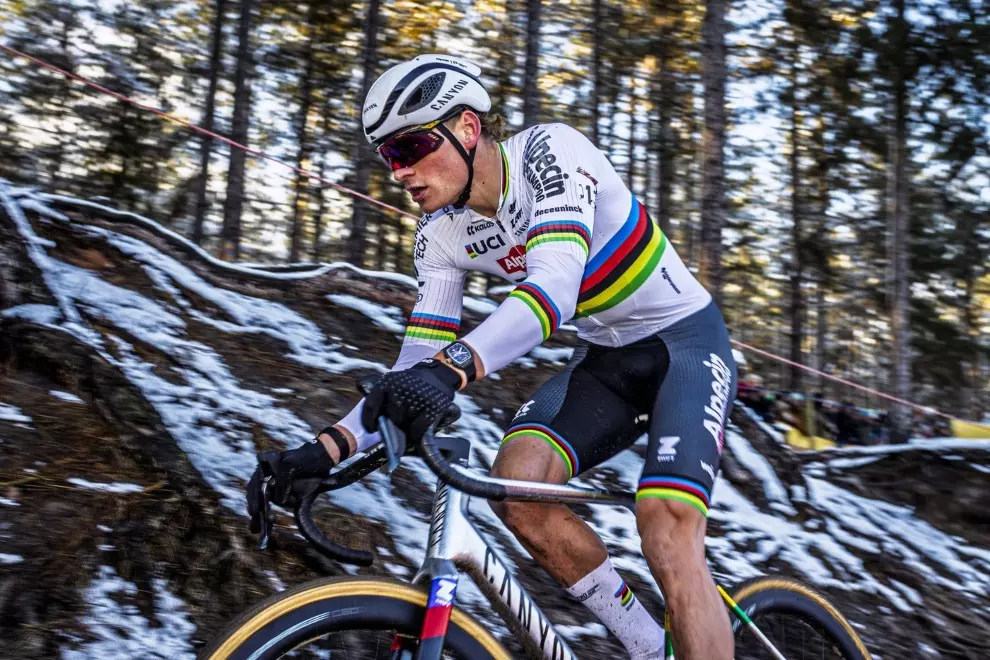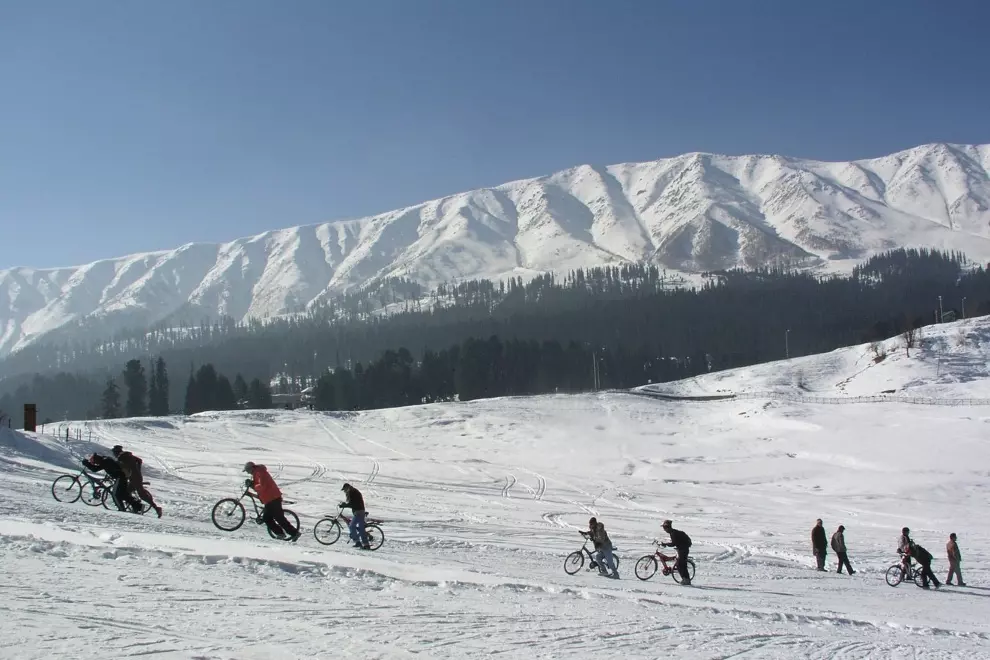
But you’ve brought your helmet, pads, winter tyres, and everything that makes your ride safe. Yeah, this is just the starter’s pack. It’s comforting to think equipment can save you from yourself. But it won’t. No amount of protection can save you once you’ve underestimated the otherwise welcoming white carpet that’s been slightly more tilted than you feel comfortable with on two wheels.
Your blind optimism that everything will be fine is heartwarming. Keep that. You’ll need it halfway down the slope, when rational thoughts punch through the adrenaline fog and remind you that you could’ve just stayed home and cleaned your drivetrain instead.
Still, that first moment before the descent always feels holy — the quiet, the smell of cold, the irrational optimism. Then comes the drop, the chaos, the involuntary dance between confidence and survival instinct. Control is overrated anyway.
But will any of this stop you from riding a ski slope? Of course not. So, instead of trying to talk you out of it, let’s focus on how to actually do it the smart way. The first step is choosing your slope.
Pick your slope carefully
If your first idea is to take your bike down a double black diamond, you obviously lack a survival instinct and should probably check with a professional. It’s less of a ride and more like a suicide attempt.
There’s a reason ski slopes come in levels. Bunny hills are there for beginners, and no, they’re not beneath you. They’re a safe place to learn how to survive your first mistake. Pride is cheaper than physical therapy and much easier to carry home afterward.
If you’re a decent downhill rider, you can try something a bit steeper. Just don’t overestimate your skills. Snow is not dirt. It slides, it shifts, and it’s faster at teaching humility than any rock garden you’ve ridden. Reality checks on snow come without warning and with excellent accuracy.
Make sure there are no kids around when you ride. Kids don’t ski; they just launch. They move like sugar-powered projectiles in neon jackets, and none of them have ever heard of looking before turning. One of them will appear out of nowhere, and it will be your fault, no matter what the laws of physics say.
Avoid rush hours. Ski slopes are for skiers, and this is their playground. You wouldn’t want to see a snowboarder flying down your summer trail, so don’t be that person on theirs. Go early, ride fast, and disappear before anyone decides to report you to the management.
See where you’re going. Blind spots on snow don’t just hide turns. They hide people, fences, and the occasional fence post that someone thought was “decorative.” Visibility is your best friend, and the only thing keeping you from becoming a YouTube short.
And for the love of everything precious to you (so, mainly your bike), stick to maintained slopes. Off-piste riding might sound like freedom, but it ends with someone explaining to rescuers why you thought it was a good idea. You won’t be the hero in that story… maybe just the headline.
Once you’ve found a slope that doesn’t require divine intervention, it’s time to worry about something equally important — namely, how much air you’ve left in your tyres.
Tyre pressure is everything
Everyone talks about tyre tread and rubber compounds, but none of it matters if you pump your tyres like you’re riding to the grocery store. Snow doesn’t care how aggressive your tread looks in Instagram photos. If your tyre pressure’s off, the slope will instantly swipe you left.
Overinflated tyres will make you look as if you’re casting for your local off-brand Disney-on-Ice knock-off. Each turn will be accompanied by terrified and adrenaline-pumped screams that might sound like enjoyment, but are unmistakably pure terror. On the other hand, every time you tap the brakes, the snow will politely remind you that friction is not in season at the moment. Too much pressure, and the tyres lose grip faster than your common sense.

Too little, and they start folding like a cheap tent in a windstorm. Somewhere between “float” and “flop” lies the sweet spot. Unfortunately, I can’t just tell you a number, as this depends on way too many factors, like your weight, tyre type and brand, as well as experience, and more. On snow, PSI is not a number. It’s a feeling. So test it out. Try, crash, let some air out, repeat.
Now, some riders will swear they have the perfect pressure number. On snow, that number is called “wrong”. It’s all up to you and how you feel about your bike. Finding that perfect pressure is part of the ritual, and honestly, part of the fun..
Once your tyres stop arguing with the snow, you’ll discover the next cruel lesson — steering has very little to do with handlebars.
Steer with your hips and don’t rely on brakes
On snow, handlebars are more of a suggestion than a control mechanism. You can turn them all you want; the bike won’t care. It will just keep going in the general direction it committed to three seconds ago, and there’s nothing you can do except hope it’s the same direction you had in mind.
Your bike doesn’t turn when you tell it to. It turns when it feels emotionally ready. The sooner you accept that, the smoother the ride becomes.
Handlebars lie. Hips tell the truth. The key to steering on snow is body control. Keep your upper body loose, your weight slightly back, and your movements deliberate but calm. Look where you want to go, not where you fear you’ll go. Initiate turns with your hips. Make them subtle, continuous shifts that guide the bike without forcing it. Oversteer, and you’ll dig your front wheel into a snowbank. Jerk the bars, and you’ll instantly learn what it feels like to audition for human curling.
Braking, meanwhile, is an act of faith. The moment you touch the levers, your tyres decide they’ve had enough of your leadership. Pull the rear brake too hard, and … you’re the sled now. Front brake? Don’t even think about it. You’ll stop, yes, but mostly with your face.
The trick is to manage speed with body positioning, not panic. Smooth, steady inputs. Subtle pressure. Let the bike move under you instead of fighting it. The snow rewards calm and punishes hesitation.
Even with perfect balance, you’ll run out of luck eventually, and when that happens, you know what’s next. So, you might as well take your time mastering the proper technique for hitting the ground.
Learn how to fall
The good news is that snow is softer than dirt. The bad news is that hitting it at speed still hurts. Still, you might want to use some of the snow’s physical attributes to your advantage whenever you inevitably fall.
Crashing on dirt is simple: you bail, roll, and hope the ground doesn’t introduce you to a rock you’ll remember forever. On snow, that logic doesn’t work. Jumping off the bike usually means you’ll keep sliding alone — faster, less stable, and with limbs positioned like a poorly folded tent. The safer move is usually to stay with the bike, lean back, and slide it out together.
Snow has a way of turning panic into ballet. Stay relaxed, keep your elbows in, and let the bike carry most of the momentum. It spreads the impact, slows the slide, and makes you look slightly less ridiculous while you wait for gravity to finish what it started.
Once you’ve mastered the art of falling, it’s time to learn how to spot the places where this may occur naturally.
Beware of melt and ice
Morning rides trick you into thinking snow can be trusted. You can’t. It’s a lying piece of… hardened water that unfortunately has three aggregate states. What was firm and fast at 9 a.m. becomes a milky soup by noon. The same slope that felt like a groomed miracle in the morning now grabs at your tyres like it wants to steal your bike.
Riding on afternoon slush feels like pedalling through half-melted ice cream. Every turn is slower, heavier, and somehow even more slippery. The snow softens just enough to trap your wheels, but not enough to cushion the landing when it inevitably goes wrong.
On the other side are the constantly shaded sections. Those spots never melt. They just wait. Hidden in the corners, under trees, or behind snow fences, they just wait to pull the rug under your wheels, as if you’re in a Buster Keaton movie remake. When the slope starts hissing under your tyres, it’s not cheering. That’s the warning.
By late afternoon, the whole mountain changes personality. The sunny parts are mush, the shaded parts are glass, and you’re left trying to guess which one you’ll meet next. If your bike suddenly feels fast again, congratulations! You’ve found the ice.
Once the night begins to fall, the slushy you’re riding in will instantly harden, transforming it into a reenactment of a First World War trench. Before the groomer smushes it all back together again early next morning, you’d better stay off this slope.
At this point, the snow has tried everything short of homicide. Now, if you still want to do this, you have to look it straight into its proverbial eyes and commit.
Don’t chicken out
Hesitation is the biggest threat on the snow. If you go down, commit. Half-hearted moves are what put people in casts. The moment you start doubting your line, your body locks up, your bike senses it, and the slope finishes the job.
Fear is fine. It keeps you alert. It means you still care about your bones. But hesitation? That’s the silent killer. It sneaks in between turns, right when you think you can still correct your mistake. Momentum doesn’t care about second thoughts. Once you’re in, you ride it out.
Confidence is optional. Commitment isn’t. The best riders aren’t fearless; they’re just too stubborn to hesitate. When you stop fighting the snow and start trusting your instincts, everything suddenly works — the balance, the slides, even the chaos.
Once you let go of the brakes, both physically and mentally, everything starts to make sense.
You don’t ride snow because it’s smart. You ride it because it’s fun.