A first for Africa
Cycling’s world championships had visited Europe, the Americas, Asia, and Oceania, but until now, Africa had been left out of the century-long story. Kigali changed that. Over eight days of competition, 108 nations sent riders to Rwanda, with 38 from Africa, the highest representation of any continent.
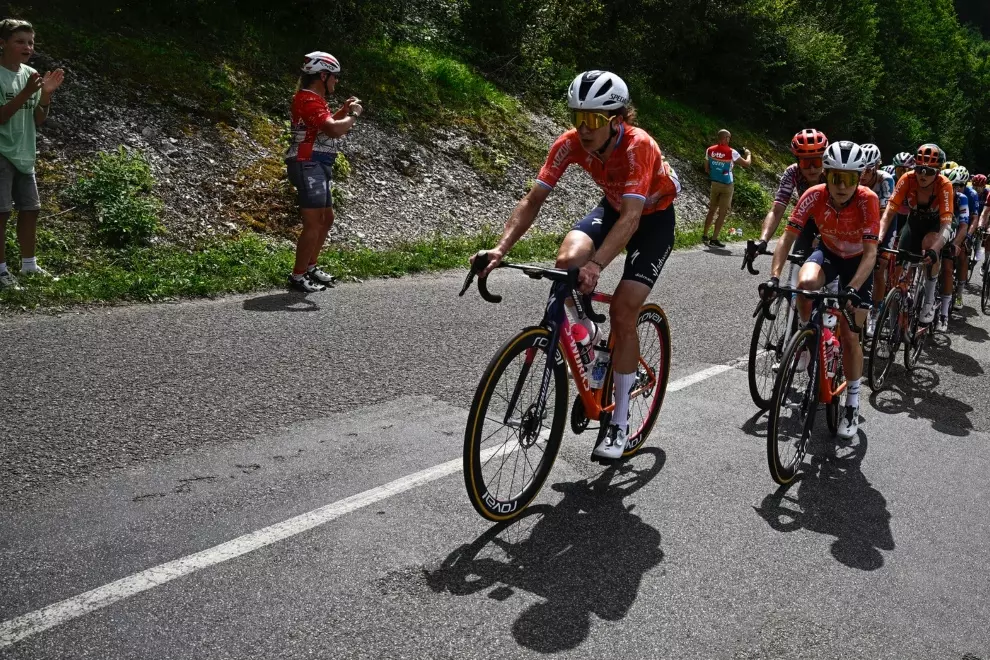
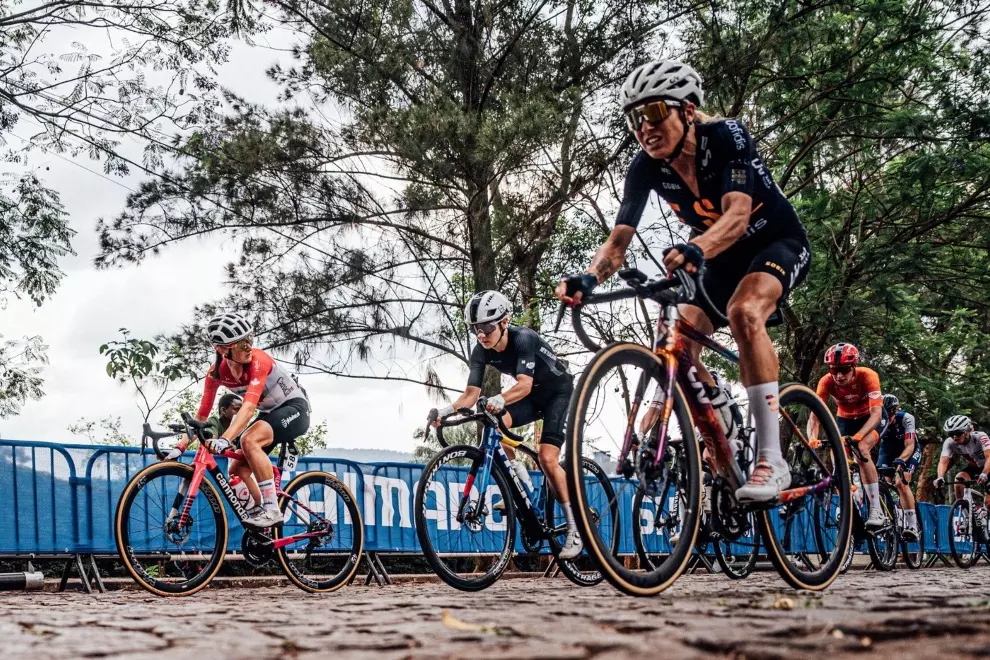
The city embraced the moment wholeheartedly. The streets were lined with thousands of fans, many of whom were attending their first international cycling event. Their cheers carried riders over punishing climbs and through sun-soaked circuits that tested every ounce of tactical brilliance and endurance.
The symbolism was powerful. Rwanda’s flagship stage race, the Tour du Rwanda, had already proven the nation’s passion for cycling. But this was something different: the sport’s crown jewel transplanted into Africa, and delivered with near-flawless organisation. The Kigali Worlds showed that major championships can, and should, extend beyond the traditional European heartlands.
Building the foundations
This championship was the culmination of decades of groundwork. Much of that credit goes to the UCI’s World Cycling Centre (WCC), which has quietly but consistently shaped opportunities for riders from emerging cycling nations.
Founded in 2002 in Aigle, Switzerland, the WCC has long been a hub for spotting and nurturing raw talent. Riders identified by their national federations, often in areas without structured racing infrastructure, have been awarded full scholarships that cover training, equipment, racing opportunities, and even lodging. Over the years, many of those alumni have graduated to the highest levels of the sport.
That commitment was on full display in Kigali. Ethiopia’s Tsige Kahsay Kiros, trained through the WCC satellite system, lit up the junior women’s road race, finishing seventh and earning the highest African placing at these Worlds. Canada’s Magdeleine Vallieres, who had trained at the WCC during her development years, went on to write her name into the record books with a breakthrough elite win.
The UCI doubled down on its development promises ahead of the championships by launching a new Regional Development Satellite in Rwanda itself, with facilities in Musanze, Bugesera, and Rwamagana. These centres are intended for training athletes, as well as developing mechanics, coaches, and event staff, creating the ecosystem that a sustainable cycling culture needs.
When you consider that Africa now hosts two of these WCC satellites (the other in Paarl, South Africa), alongside hubs in Canada, New Zealand, Portugal, and beyond, it’s clear the governing body is serious about its global vision. Kigali 2025 felt like proof that investing in long-term development pays off.
Zobrazit příspěvek na Instagramu
Racing that matched the moment
Of course, history and infrastructure are one thing, and racing is another. And Kigali delivered some of the most compelling contests we’ve seen in years.
The elite women’s road race turned into the defining story of the week. On the brutal final climb of the Kigali circuit, 24-year-old Magdeleine Vallieres launched a perfectly timed attack, holding off New Zealand’s Niamh Fisher-Black and Spain’s Mavi García to take an unforgettable victory.
For Vallieres, the win was more than just a personal triumph; it was a first for her country. No Canadian woman had ever won the elite road race world title until Kigali. Her ride was brave, strategic, and deeply emotional.
“The girls believed in me, so I believed in myself,” Vallieres said afterwards. “I prepared well. I knew I was in good form, so I just told myself I didn’t want to have any regrets.”
For Canada, her rainbow jersey felt like the culmination of years of development work. For Vallieres personally, it was the realisation of a dream. With next year’s Worlds set for Montreal, the timing could not be more perfect.
Women’s U23 finally gets its stage
If Vallieres’ win was the emotional headline, the introduction of standalone under-23 women’s events was the structural breakthrough. After years of lobbying and three seasons of awkward “races within races,” the Kigali Worlds finally gave U23 women their own road and time trial events.
The result? Two of the most dynamic, competitive races of the week.
In the time trial, Britain’s Zoe Bäckstedt showed once again why she’s one of the sport’s brightest stars. Already a multi-discipline world champion at just 20, she stormed to gold over the shorter, age-appropriate course designed specifically for this new category. It was a performance that validated the need for a separate U23 event, proof that riders at this stage of development deserve their own platform to shine.
The road race, meanwhile, delivered fireworks. France rode a tactically perfect race to set up Célia Gery, who launched her winning move in the closing kilometres to claim a historic title. The race was fast, aggressive, and thrilling to watch; precisely the kind of showcase the U23 women’s field needed.
Yes, some riders and coaches pointed out the category’s lack of depth in this first edition. But that’s to be expected. The important thing is that the foundation is now in place. The more federations support their U23 women, the stronger and deeper the fields will become. Kigali marked the beginning of that process, and the racing we saw suggests an exciting future.
For many observers, the U23 women’s debut in Rwanda was almost as historic as the championships’ arrival in Africa. It was a long-overdue recognition that development pathways for women need to be aligned with those for men. In Kigali, that vision finally became reality.
Junior racing: The future looks different
If the U23 races signalled a step forward, the junior competitions revealed just how much the sport has changed in recent years. Kigali made it clear that junior racing is no longer just the first rung on the ladder; it’s now a professional proving ground.
Many of the junior champions and medallists arrived in Rwanda with preparation that would have seemed unthinkable a decade ago. Several had already attended altitude camps, some trained with WorldTour-level equipment, and others even slept in altitude tents provided by their respective federations. These are 16- and 17-year-olds, preparing with the same seriousness as seasoned pros.
The results speak for themselves. The racing was sharp, aggressive, and international in scope. Riders like Megan Arens of the Netherlands and Paula Ostiz of Spain confirmed that junior racing is now where WorldTour teams go talent spotting. Increasingly, the transition to professional contracts occurs directly after the junior level, with the U23 category becoming less of a developmental step and more of a competitive option for those already on the WorldTour pathway. The change is underscored by the UCI’s decision to discontinue the Under-23 Nations’ Cup after this season.
For better or worse, the sport is evolving. The junior Worlds in Kigali showed that cycling’s future stars are being identified and developed faster than ever.
The atmosphere in Kigali
Anyone who has attended the Tour du Rwanda will know the country’s appetite for cycling is unlike almost anywhere else in the world. However, even seasoned observers were struck by the scale of enthusiasm during World Championship week.
For every race, the city’s roadsides were overflowing. From the first time trial to the grand finale of the road races, the sound was deafening, the energy contagious. The decisive 5.6-kilometre climb on the road circuit became a theatre of noise, with fans urging on every last rider, whether they were a global superstar or an underdog from a tiny federation.
Legacy beyond the podium
Kigali’s preparations have spurred improvements in infrastructure, from roads to sporting facilities, that will benefit local communities long after the peloton has departed. The international spotlight elevated Rwanda’s profile as a sports destination, aligning with its broader vision of becoming a hub for global events.
But perhaps the most important legacy is intangible. Children across Rwanda, and across Africa, watched riders from their continent compete shoulder to shoulder with the best in the world. They saw that cycling is not just a European pastime, but a sport where they, too, can aspire to wear the rainbow jersey.
Of course, the event wasn’t without its complexities. International advocacy groups rightly raised questions about Rwanda’s human rights record, and the UCI will continue to face scrutiny over whether hosting in countries with political controversies risks veering into sportswashing.
An optimistic forecast for what is to come
The 2025 Worlds weren’t perfect, but they were a significant step away from the norm in a sport that has always cherished its traditions. Kigali showed us that expanding those traditions doesn’t mean losing them. Rather, it’s an opportunity to bolster the existing framework by making space for new voices, new nations, and new champions. That is the true legacy of the 2025 Women’s World Championships.