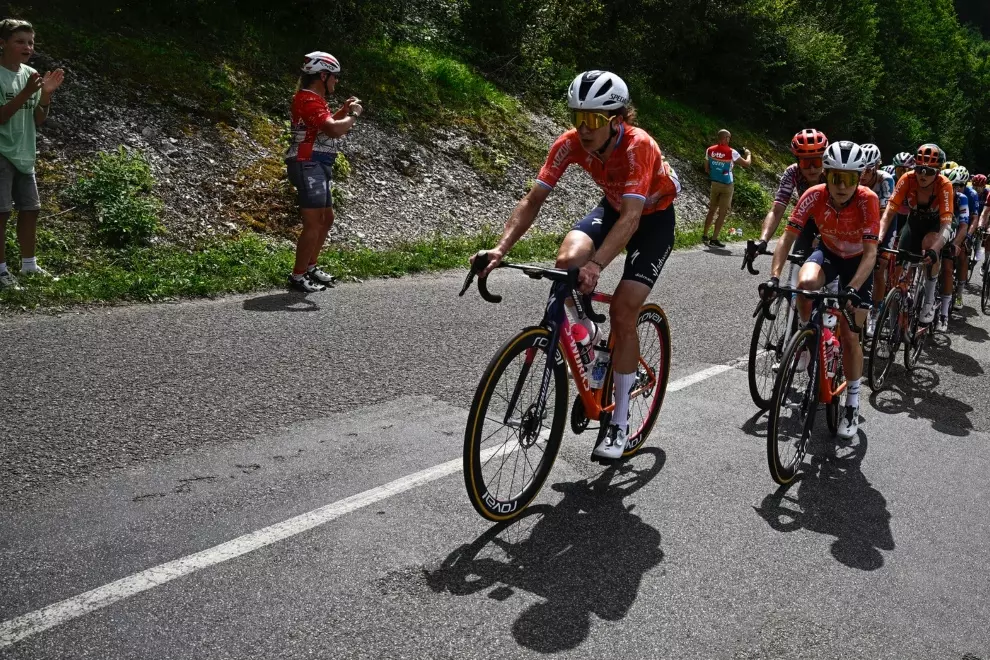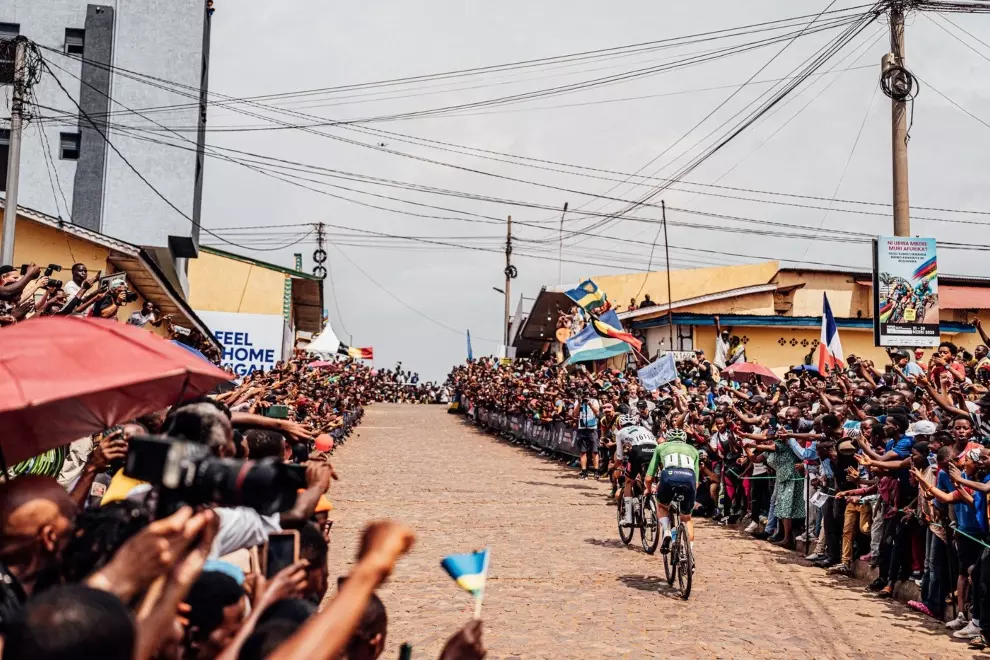
Anyone who saw that spectacle on Sunday, with tens of thousands of people cheering on the exhausted riders as they climbed Mont Kigali, must surely have been delighted and moved. A sporting event that can bring such joy to the population of people living in a troubled country has a value that transcends mere entertainment. And numerous riders told journalists that the drumming that accompanied the start of the time trials made it the best start to any race they had ever experienced. It was a definite win-win.
Yes, it wasn’t perfect. There was pollution and heat and humidity that affected riders on some of the toughest courses they had ever ridden, and a number of riders fell ill with a stomach bug late in the event. On the other hand, there were surprisingly few serious crashes, and the crowds were demonstrative but brilliantly self-controlled; there was none of the running along with the riders you see in European races that always seem to lead to imminent tragedy, but somehow never do. The Rwandans understood what Europeans don’t seem to get: cycling is not an interactive sport.
Riders who caught our eye
Sure, Tadej Pogačar and Remco Evenepoel were the big draws of the event and they lived up to the hype, as they always do. After being humbled by Evenepoel in the ITT, Pogačar again demonstrated, in Sunday’s brutal road race, that he is one of the greatest, if not the greatest, riders of all time. It’s not just his dominance that impresses, but also the elegance of his riding style; even when he’s suffering, hemakes your jaw drop to the floor.
As for Evenepoel, he won gold and silver and might have given Pogačar a run for his money if he hadn’t been forced to make two bike changes due to problems with his saddle. The way he rode after correcting the issue leads me to believe that Pogačar might have been fortunate to win. But you never know.
My favourite rider in these World Championships was the 18-year-old Slovak Viktória Chladoňová. After finishing second to the dominant Zoe Bäckstedt in Monday’s U23 ITT world championship, the youngest rider in the women’s U23 races came back three days later race to win another silver medal in Thursday’s U23 road race, finally running out of gas at the end of the race as the winner, another impressive teenager, 19-year-old Célia Gery of France, rode past her. Chladoňová lost by a scant 2 seconds. For me, she was the rider of the event because, hey, Remco and Pogi had a week’s rest between their two races and the Elite Women had six days. I’m going to repeat what I wrote at the time: Boy, am I looking forward to seeing Chladoňová ride on the WorldTour.
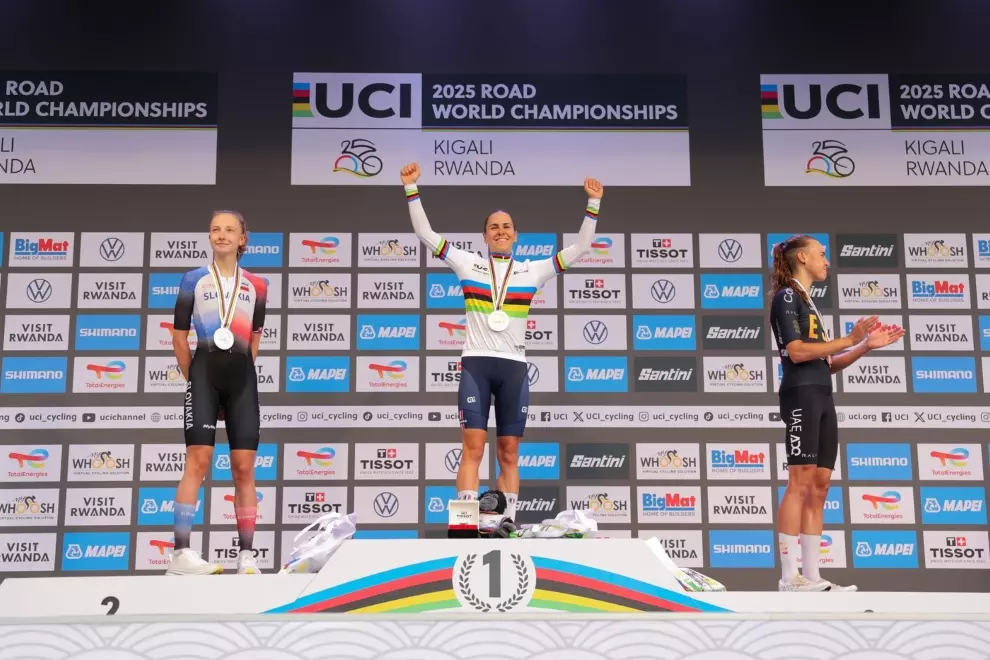
But, hey, silly me; I should have checked. She is already riding on the WorldTour, and for Visma–Lease a Bike, with the likes of Marianne Voss and Pauline Ferrand-Prévot. She won the Slovak national ITT and road race championships earlier in the year and rode in both the Giro d’Italia Women and the Vuelta España Femenina, no doubt as a domestique. She will be a star. The same goes for Gery, who rides for FDJ-Suez and won three stages and the green jersey at this year’s Tour de l’Avenir Femmes.
A big shout-out to another 18-year-old, Tsige Kiros of Ethiopia, who had the best performance at the event of any African rider not named Kim Le Court-Pienaar by finishing seventh in the Women’s Junior Road Race, only 3 seconds behind the winner, Paula Ostiz of Spain. Kiros might have won the race but for a mechanical issue, which forced her to expend energy in making up the gap to the peloton, and because of her aggressive attacking style, which also took a toll. But she rode hard and came close at the end. She is currently an apprentice rider, but some team will – or should – sign her before the end of the year.
Yet another 18-year-old, Harry Hudson of Britain, had an eye-popping performance in Kigali. He took off on the spur of the moment with 36 km left to ride in the Junior Men’s Road Race and was never really challenged, winning by 16 seconds over his two closest pursuers. Hudson is the first British rider to win the race and is also the British junior national hill-climb champion, in which he reportedly also beat the adult men. He has been announced as a Lidl-Trek Future Racing rider for next year. Hudson will have current Pogačar teammate Juan Ayuso as a teammate next year, as the Spaniard signed a five-year contract with the team last week.
The course
The road race course, especially for the Elite Men and Women, but also in general, was too hard for most African riders and most riders from second-tier cycling nations. In combination with the heat and humidity, it was downright brutal. Tom Pidcock called it “the most unenjoyable race of the year,” and an astonishing 135 of 165 riders in the Elite Men’s road race did not make it to the finish line – that’s 82%! In addition, most of the laps of the road races were uneventful because riders were saving their legs for the end of the race, or at least the final two or three laps – except, of course, Pogačar and the Pogi-like Harry Hudson.
Having said all that, those final few laps were dynamite; most of the finishes were breath-taking and suspenseful and almost always the best rider won – or, in the case of Elite Women’s Road Race winner Magdeleine Vallieres, the best and the brightest. Having the unyielding Côte de Kimihurura and its bone-rattling cobblestones very close to the finish line of the races was genius. It was the final test of a testing championship and often had us on the edge of our seats. The event was a watershed in more ways than one, and I had a great time watching it.