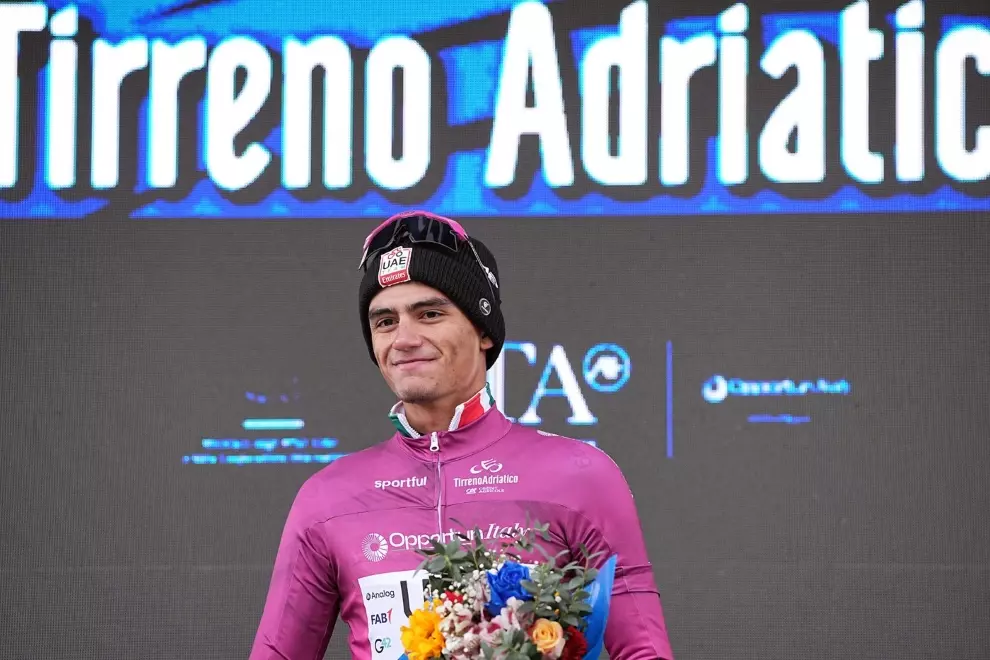
Nearly half of Columbia-HTC’s total of wins were accounted for by the sprinters Mark Cavendish (23) and André Greipel (20). UAE’s haul of wins were registered by 20 different riders, led by the indomitable Pogačar, with 16. This is a team stacked with winners from top to bottom – and not everybody likes it. For example, the team’s strategy in this Vuelta, to go for the wins record at the expense of winning the race for its leader, Almeida, has been repeatedly savaged by the great Sean Kelly in his role as TNT Sports commentator.
And Almeida himself has often looked frustrated after riding without domestiques up some of the toughest climbs in the world, such as the Angliru. Asked about it repeatedly on TNT Sports, his response has been a laconic, “It is what it is.” That at this point in the race he is still within striking distance of the race leader, Jonas Vingegaard (Visma–Lease a Bike), is mostly due to his formidable climbing ability. Surely, the team will support him, rather than harvest more victories, in the final week of the race, with the outcome still in the balance. But more than one commentator has suggested that Almeida would be wise to follow in the footsteps of teammate Juan Ayuso and look for a team that would treat him the way UAE treats Pogačar.
But there have also been grumblings from many sides that the team’s dominance is bad for the sport because it highlights the importance of money in success. According to Reuters, UAE’s budget for 2025 is about $65 million (€55.5 million). The next highest budget is that of Red Bull–BORA–hansgrohe, at an estimated €50 million, according to cyclingsonar.com. But a more relevant comparison would be to a “small” team, such as EF Education–EasyPost, which Reuters estimates has a budget of $25 million (€21.4 million). Note that these figures are all estimates, rather than proven facts.
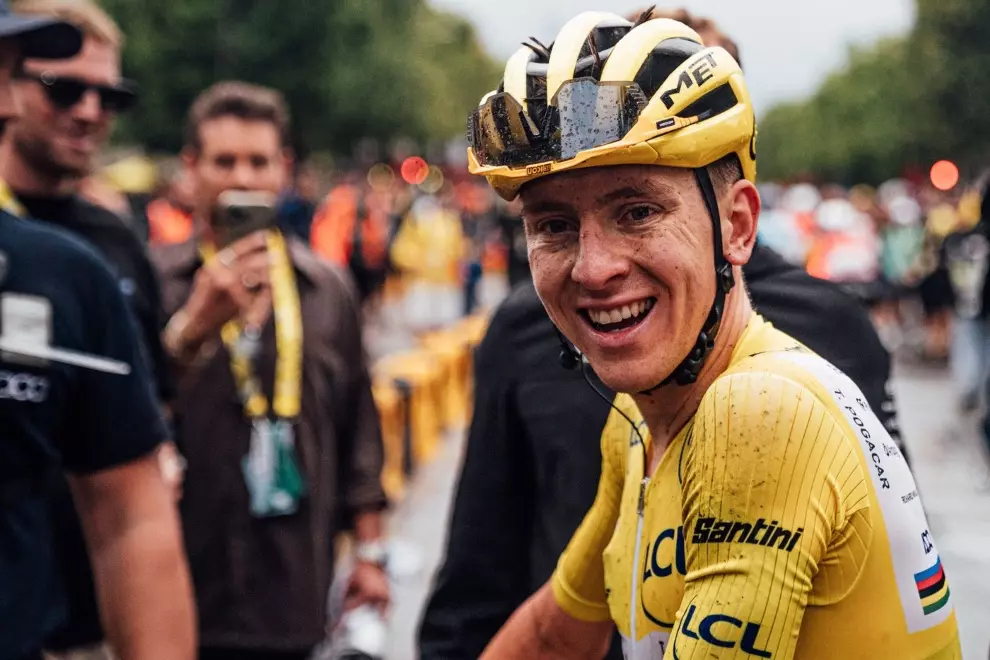
This discrepancy has led to frustration in the peloton, as the big money guzzlers naturally dominate the more economical teams. “Professional cycling is one of the few high-level professional sports left in the world that does not have some sort of financial fairness regulation,” EF Education–EasyPost boss Jonathan Vaughters told Reuters. “And that makes it exceptionally difficult for the middle or the smaller teams to exist.” It also makes the racing less enjoyable because, for example, when Pogačar is riding in a Grand Tour, the question is not who will win but by how much he will win. In this Vuelta, whenever a UAE rider joined a sizable breakaway, I just assumed that he would win the stage – and he usually did.
And it’s not just the Grand Tours. During this Vuelta and in this year’s Tour de France, while Pogačar and UAE riders were gobbling up wins, other team riders won other races, such as the Tour of Poland and the Tour of Austria. Money talks and money wins. But according to the highly respected Cycling Weekly news editor Adam Becket, “It’s too much. This isn’t about a generational talent like Pogačar winning too much, this is one team dominating like almost never before, hoovering up everything. The issue is money.”
Becket believes that something must be done to level the playing field. “The answer is legislation, and some kind of system for financial equity,” he wrote. “Not a salary cap, but perhaps a budget cap. Here is how much money a team is allowed to spend up to, and it’s up to the team to work out how to divide that up; want to spend half of it on one big name? Fine. Want to try and Moneyball the system? Also fine. A salary cap is too hard and fast, but one which covers all outgoings allows for more autonomy. The UCI needs to act.”
It’s a good idea for an ideal world, but we live in this world and there’s a catch: How will the megacompanies and wealthy nation states that are bankrolling the top teams react when they no longer have the financial freedom to buy that young superstar in the window? Sponsors see their sponsoring as an investment that will bring a big return in name recognition and general PR, especially for nations such as the UAE, which have a human rights problem. They might just get out of cycling altogether and look for a sport that welcomes the big bucks and doesn’t give a fig about fairness, as cycling does now.
And there’s this. Since cycling has become the big global sport it is now, more high rollers have put their money into cycling teams, such as the drinks giant Red Bull, the world’s largest sporting goods retailer Decathlon and the multinational discount grocery store chain Lidl. I expect this trend to continue, which will more or eve n things out at the top of the food chain but drive smaller teams out of the sport. They might be replaced by more big players, so that eventually you could have mostly rich teams battling it out on more or less equal terms. Unless of course a team like UAE Team Emirates–XRG escalates and raises its budget to €100 million, which is likely to happen.
It’s a difficult problem to solve, and I expect the UCI to do nothing that could halt the money coming into the sport, because money is partly fueling cycling’s global expansion. Just think of what Pogačar’s appearance at the World Championships in Rwanda will do for the sport in that country and on the entire continent. Kids from Algeria to South Africa will pick up bikes and dream of becoming the next Pogi. And maybe one of them will.