At first glance, the UCI took the same approach to the 2025 UCI Mountain Bike World Championships. They could have picked one venue and played it safe. Instead, they went for eight. Eight different locations scattered across Valais, each with its own weather, terrain, and logistical headaches. It sounds like the race-organising version of hitting a feature blind and hoping your line is right.
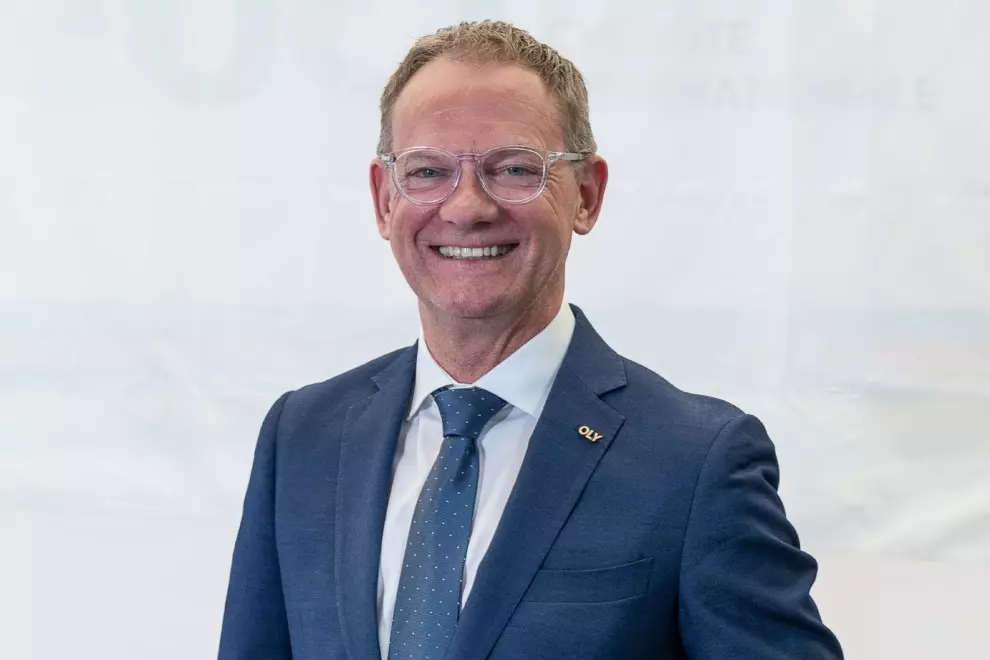
The difference is, this line has been walked, measured, and marked well before anyone rolls in. Peter van den Abeele, the UCI’s Director of Sports, sat down with us to share the planning behind the chaos, the unseen hurdles, and what fans can expect when the biggest MTB event in history takes over the Swiss Alps.
What makes Valais 2025 different from previous editions of the UCI MTB World Championships?
Valais 2025 will be the biggest edition of the UCI Mountain Bike World Championships to date, with 27 UCI world titles awarded across eight disciplines and eight host destinations spread across the canton. It’s a hugely ambitious project that involves not only the sporting aspect, but also cultural and social dimensions throughout the region. What really sets this edition apart is its strong emphasis on legacy. It’s not just about hosting races, it’s about investing in the future of the sport. We have concrete programmes in place to support young riders, encourage women’s participation, and develop local talent.
The commitment to sustainability and inclusion is also very real, with each destination actively contributing. We’re also lucky to have inspiring ambassadors like Jolanda Neff and Camille Balanche, who help raise awareness about these goals. And let’s not forget that this edition celebrates the 35th anniversary of the UCI Mountain Bike World Championships, taking place just a stone’s throw from UCI headquarters in Aigle. It’s also important to mention the Castle Ride BCVs on 30 August in Sion, which offered an immersive and festive experience for the public. The event is led by a strong Local Organising Committee, chaired by Julien Hess and former professional rider Steve Morabito, a team that brings both strategic vision and deep sporting insight.
What’s the biggest logistical hurdle the team has faced so far in planning Valais 2025?
Without a doubt, the biggest logistical challenge has been coordinating across the eight host destinations. Each location has its own terrain, infrastructure, local teams, and expectations. We’re dealing with a mix of mountain resorts, remote alpine areas, and more urban settings, which means the needs vary significantly, sometimes even within the same discipline. Some venues may look close on a map, but travelling between them involves descending and climbing again through valleys, which adds time and complexity. Bringing all this together into one coherent, high-level event takes meticulous planning, adaptability, and constant communication between all stakeholders. It’s a beautiful puzzle, but one that requires a lot of effort and teamwork.
Are there any unexpected terrain features or environmental challenges that riders or fans should know about?
Valais is known for its stunning but demanding alpine geography. Riders should be prepared for significant altitude changes, especially in destinations like Verbier, Zermatt, and Aletsch. The terrain brings sudden weather shifts, steep climbs, technical descents, and intense physical demands. From the fans’ perspective, some mountain venues, like the Downhill in Champéry or the Enduro in Aletsch, may require a bit of logistical planning to access. Still, the breathtaking views and electric atmosphere make it well worth the effort. We’re working hard to ensure accessibility wherever possible. It’s also crucial to highlight environmental responsibility. We’re operating in pristine natural landscapes, and we ask everyone (riders, teams, fans) to treat these environments with care and respect. Zermatt, with the Matterhorn as a backdrop, is one of the most iconic and fragile venues we’ve ever had.
Is there a particular section of the course (a climb, a drop, a feature) that you personally can’t wait to see in action?
It’s difficult to name a specific feature due to the multiple courses that are delivered at this special edition of the UCI MTB World Championships in Valais. That said, what I do know is that each destination is working incredibly hard to deliver something memorable and to showcase the spectacular landscapes of Valais. One moment I’m particularly looking forward to is the Cross-country Short Track race at the foot of the iconic Matterhorn. That promises to be absolutely breathtaking, both for the riders and for spectators. It’s going to offer incredible photo opportunities and a stunning visual backdrop that perfectly illustrates how sport and nature can come together to create something truly special.
Zobrazit příspěvek na Instagramu
Which discipline do you think is growing the fastest in terms of audience and participation? Why do you think it has been so successful?
Cross-country Olympic still leads the way in terms of global appeal and audience size, largely thanks to its presence at the Olympic Games. It draws huge TV numbers, especially with our partner Warner Bros. Discovery. That said, Short Track has grown rapidly thanks to its compact, action-packed format. It lasts about 25 minutes, is easy to follow, and offers constant excitement. Downhill draws up very good TV numbers as well, less compared to Cross-country Olympics, but slightly more compared to short track. Downhill remains a very solid, spectacular format within mountain biking.
Enduro is also expanding steadily, and we’re seeing new momentum around the cross-country Marathon discipline too. In fact, we launched the Hero UCI Mountain Bike Marathon World Cup this year, bringing the format back in-house and partnering with a private organiser. It’s brought a new energy and identity to long-distance mountain bike racing. The mountain bike is doing great!
For you, personally, what’s the most underrated discipline at the UCI World Champs?
I’d say there are two. First, the Cross-Country Olympic has often been underestimated in terms of the effort it requires. But with riders like Pauline Ferrand-Prévot, Tom Pidcock, Mathieu van der Poel, and Puck Pieterse, people are starting to realise the level of skill and endurance needed to succeed. The discipline was dominated for multiple years by the Swiss legend Nino Schurter, and people might have thought it was easy; well, it’s not easy. Nino is the greatest mountain bike rider in history. These athletes prove that if you’re strong in mountain biking, you can also perform on the road, and vice versa.
The second is Downhill. What you see on TV doesn’t do justice to how steep, fast, and technical those tracks really are. The jumps are huge, the conditions can change in seconds, and the riders’ skill level is off the charts. It’s a discipline that deserves more recognition.
For fans attending in person, what’s one “don’t miss” moment or location outside of the racing itself in your opinion?
The opening weekend in Sion is definitely a highlight, not just because it marks the start of the event but also because it celebrates everything that makes Valais special: its culture, people, and passion for cycling. There’ll be music, local food, and a real festive atmosphere in the heart of the canton. But if I had to name one experience, it would be the Marathon route from Verbier to Grimentz. It’s not just a race, it’s a breathtaking journey through some of the most iconic landscapes in the Alps. As a spectator, walking alongside the course really gives you a sense of the challenge riders face. I’d also encourage fans to explore the venues, bring a backpack, and take the opportunity to connect with the landscape.
Tour de France has L’Étape to give amateurs a taste of the professional experience. Have you considered a UCI Mountain Bike World Championship’s version of L’Étape?
It’s hard to replicate something like L’Étape in mountain biking because the courses are shorter and more technical than road stages. But we’ve developed similar experiences. One initiative is the “Ride to the Champs”, which brings people together ahead of the event (this year even featuring a Guinness World Record attempt). Through Cross-country Marathon, our mass participation MTB format, we can provide the biggest similarity as l’Étape du Tour, for instance the Grand Raid, one of the biggest mountain bike events on the UCI calendar, their course will serve this year as the UCI Mountain Bike Marathon World Championships, where amateurs can also compete next to the elite riders.
Zobrazit příspěvek na Instagramu
Is there a tradition or behind-the-scenes ritual at the UCI Mountain Bike World Championships that fans or media never get to see?
There are two moments that always strike me. One is the backstage scene after the finish and before the podium: newly crowned UCI World Champions walking in, emotional, exhausted, overwhelmed. It’s a deeply human moment you never forget. The other is the pressure we face during extreme weather. Especially in Downhill, if gondolas stop or safety is compromised, we need to act fast. Rescheduling, managing broadcasters, ensuring safety: all of that happens behind the curtain, often under intense pressure.
Among the disciplines, which is the most demanding to organize logistically?
We have to plan carefully for everything: access routes, transport logistics, medical coverage, communications, and close coordination with local authorities to ensure the safety and fluidity at each venue. It’s a beautiful challenge, but one that requires a lot of anticipation and teamwork. Every discipline brings its own specific demands. Downhill is extremely technical, both in terms of the course itself and the safety infrastructure around it. The course requires meticulous preparation and constant monitoring to ensure safety for the riders.
I remember the UCI Mountain Bike World Championships in Champéry in 2011. It rained heavily, and the course became challenging to manage. We learned a lot from that edition. The cross-country Olympic in Crans-Montana is shaping up to be one of the biggest draws for spectators and media. Managing that kind of crowd in a mountain setting takes precise organisation. Ensuring smooth spectator flow, emergency access, media coverage, and coordination with local authorities requires precision and a lot of workforce.
Do you ever find yourself geeking out over a rider’s performance or a piece of new tech?
Absolutely! As a former pro, I’m constantly amazed by the speed and skills of today’s riders, especially the women, who have reached an incredibly high level. The sport has evolved tremendously. I’m also fascinated by innovation. We often refer to mountain biking as the laboratory of cycling. With fewer restrictions than the road, it allows brands to experiment, push boundaries, and apply new tech more freely. It’s part of what keeps the sport evolving so fast.
What’s the one question about your job you never get asked, but you wish we would?
People rarely ask about passion, and yet it’s everything in this job. You need a deep and lasting love for cycling to navigate the pressure, the intense travel, the long days, and the constant demands. Without that fire inside, it’s impossible to keep going. After more than 25 years in the sport, what still drives me is exactly that: passion. It’s the fuel that gets the job done, the energy that keeps me engaged, motivated, and committed, even when things get tough. The day I wake up and no longer feel that spark, I’ll know it’s time to step aside. But until then, I’m here because I genuinely love what I do.
The fans tend to get a bit crazy at this kind of race. Any interesting stories or encounters you would like to share?
The one moment that really stands out for me is Les Gets in Haute-Savoie, during the 2022 UCI Mountain Bike World Championships, during the Downhill races. After the French clean sweep, the crowd was absolutely electric. Standing in the finish area, surrounded by that sea of people, the emotion was overwhelming. It was one of those unforgettable scenes that gives you goosebumps, the kind of moment that stays with you forever.
Another that comes to mind is Pauline Ferrand-Prévot’s Olympic gold in Paris. Watching her win in front of a home crowd was incredibly powerful. The atmosphere during both the women’s and men’s races was amazing, but Pauline’s victory carried a special emotional weight. It was a moment of national pride and pure joy. And if we zoom out a bit, both Paris 2024 and Glasgow 2023 were major milestones for cycling. They brought people together and created lasting memories across all disciplines. That’s precisely the kind of emotion and unity we hope to recreate in Valais 2025.