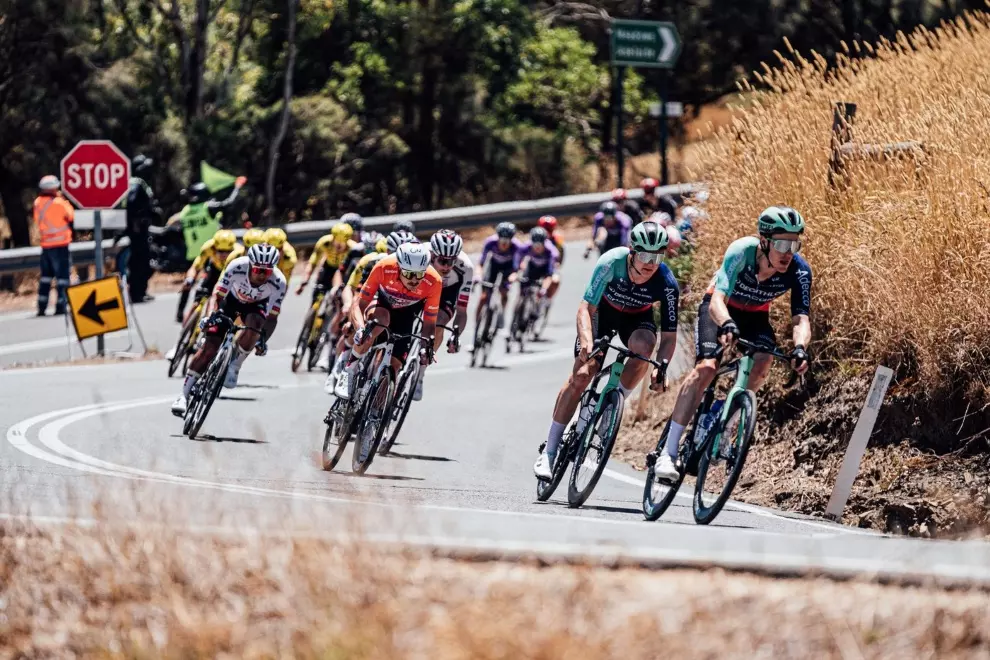
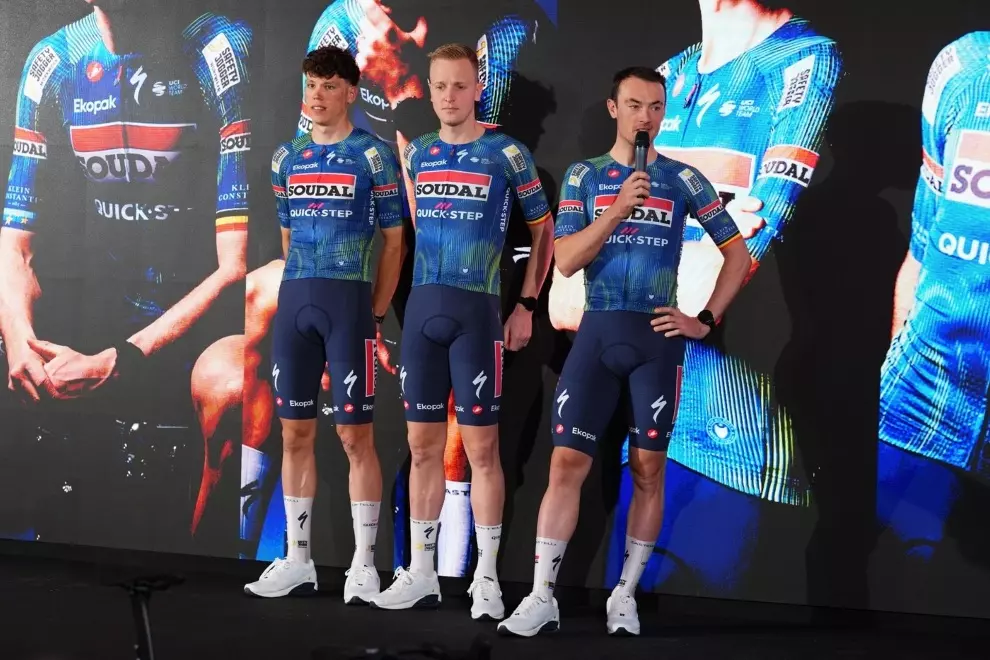
This increase in racing speeds has had the inevitable consequences: more crashes, serious injuries and deaths in the peloton. An amateur named Fred Sirvalo calculated the relationship between average race speed and number of injuries per kilometre from 2014 to 2024, drew a graph and posted it on Reddit. According to his research and calculations, as average speeds increased from 40kp/h to nearly 43kp/h in that period, injuries in races increased nearly threefold. As Sirvalo writes in his posting: “There seems to be something there between injuries and race speed.”
Also inevitable has been the UCI’s attempts to reduce crashes by seeking to adopt measures to reduce speeds. One measure that will soon be tested is the Maximum Gearing protocol, which will limit riders to a maximum gear ratio equivalent to 54×11. According to Cycling Weekly the test is limited to the Tour of Guangxi in China at present.
The proposal is not popular in the peloton, especially with teams that will be forced to totally revamp their setups. Q36.5 leader Tom Pidcock believes the proposal will actually produce the opposite of what it seeks to achieve. “Limiting gears will only make everything more dangerous,” Pidcock told Marca. “If we’re all going at the same top speed, we’ll be closer together, and on descents, that means we’ll take up more of the road.”
Red Bull–Bora–hansgrohe’s head of engineering, Dan Bigham, agreed, saying that the measure would be ineffective because riders don’t spend much time at top speed. “It’ll impact on as little as 0.01 per cent of a race and will arguably reduce speeds by no more than 0.5km/h,” he said. “All of this to change the entire groupset design? It really doesn’t seem effective to me.”
A UCI proposal on handlebar widths in the women’s peloton has also come up against stiff opposition, with Pidcock and others calling the measure a smokescreen. The conversation about rider safety grew urgent after the death of the popular Swiss rider Gino Mäder on a high-speed descent in the 2023 Tour de Suisse and became white-hot following the fatal crash of 18-year-old Muriel Furrer in the women’s junior road race at the world championships in Zurich, Switzerland, in September 2024.
Furrer’s death moved the UCI to implement a new safety measure. According to reports, Furrer lay alone for almost an hour and a half before she was discovered at the side of the road and rushed to thehospital. As a result, all riders from Junior to Elite at this year’s UCI Road World Championships in Rwanda will be wearing GPS tracking devices. This is a decent enough measure, especially in races that are not televised and are sparsely attended, such as the Junior races.
Obviously, a measure that enables medical help to be brought to a fallen rider as quickly as possible is an excellent solution. Here’s a suggestion to make it even more effective: Put the tracker in the helmet and add a function that detects shocks to the head severe enough to cause concussions. Rugby has such a device in every player’s mouthguard. When a collision or fall involving the head or neck is signalled by the device as hard enough to cause a concussion, the player is taken off the field for 10 minutes to be examined. If there is no concussion, they are allowed to return to the field. Obviously, it’s impractical to remove a rider from the race to examine them, but the rider could be examined afterwards and appropriate steps taken if needed.
I propose that the concept behind such a measure is the direction the UCI should be taking: Protect the rider from crashes by… protecting the rider when they crash. There will always be crashes in cycling, at high speeds, low speeds, at all speeds. In fact, according to cyclists, low-speed crashes can be as dangerous as those at high speed. Moreover, while better nutrition and evolving technology have made riders stronger and bikes faster, the main reason for crashes these days is the new style of racing. Riders are more aggressive from kilometre zero, and there has been a definite increase in rider recklessness in the peloton. You can control that somewhat by issuing yellow cars and fines, as the UCI has done, but that won’t eliminate it. Not only has order speed changed, but so has racing etiquette.
To repeat: There will always be crashes in racing. So perhaps the focus should be on finding the means to protect riders when they do crash. My proposal is to initiate a generously funded programme to develop new rider equipment and kits capable of protecting riders from serious injury when they crash. For example, to reduce the severity of road rash, riders could wear jerseys, shorts and leggings made from a lightweight and durable fabric, such as one developed by Swiss fabric maker Schoeller Textiles. It developed a method of printing lightweight, breathable fabrics embedded with minute ceramic dots. That includes an ultra-lightweight summer fabric that might be perfect for cyclists. As far as I know, it hasn’t yet been put on the market. Clearly, current essential features of a rider’s kit – a full range of motion, strategic ventilation, breathability and moisture-wicking – must be retained. But given the current state of fabric technology, that should be possible.
Perhaps most important, and probably hardest to implement, would be to add lightweight but robust padding to certain vulnerable parts of a cyclist’s body, such as the shoulders, which are probably the most often injured part of a rider’s anatomy, and the spine. I’m not a scientist or researcher, but it seems to me that something similar to Dyneema®, a flexible fibre light enough to float on water while being 15 times stronger than steel, might be a solution. It is used by Dyneema to make soft body armour for soldiers and police officers who need lightweight and flexible protection. Which is exactly what riders need.
I know these solutions could reduce a rider’s aerodynamics and add 500 grams (to pull a number out of my hat) to their weight, which would slow them down a bit. But isn’t that the goal of UCI’s unpopular measures? Something does have to be done, and providing on-body protection for riders seems to be the least inimical to the rider’s mission: to ride as fast as possible. And so what if the average speed of next year’s Tour de France is “only” 42.449kp/h? It won’t reduce the way the riders ride or dampen the excitement and drama of the race. But it would definitely reduce the number and severity of injuries suffered in crashes, which should be the goal of all new safety measures.