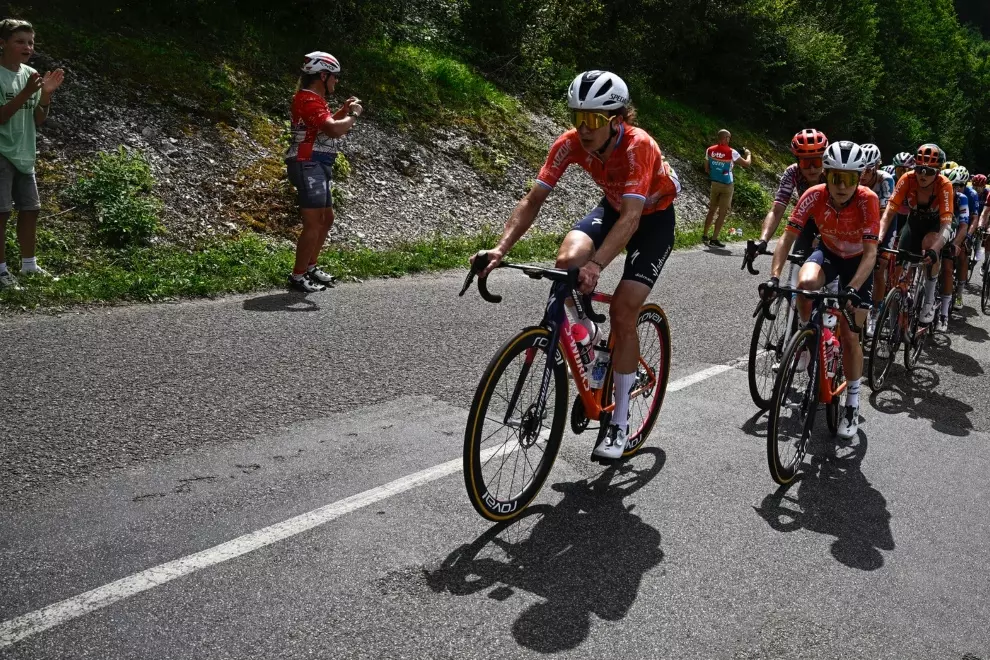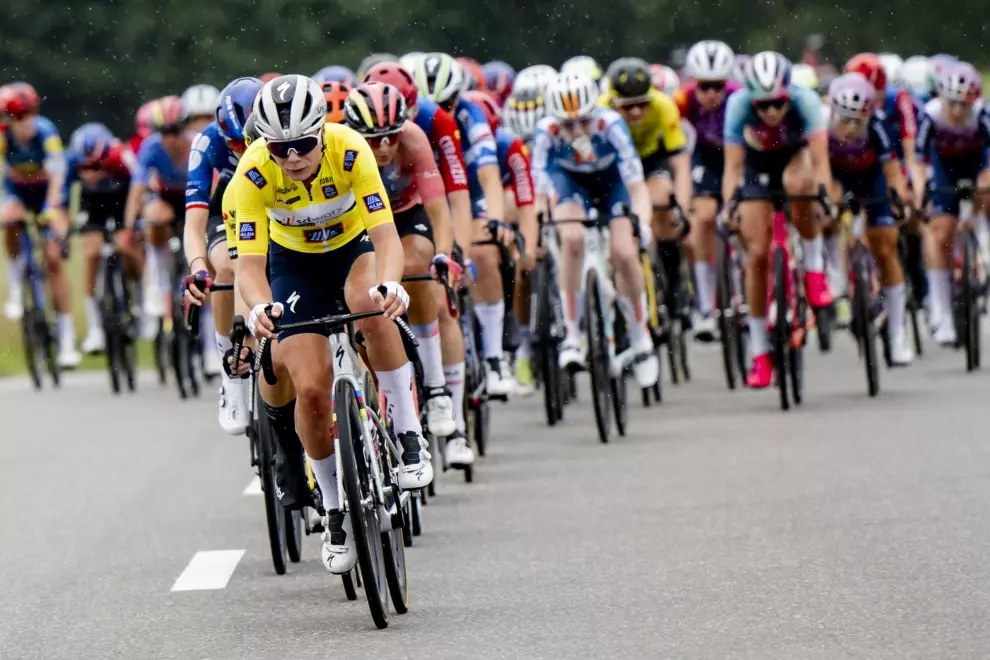
From August 15–17, the Tour de Romandie Féminin will thread its way through this postcard-perfect landscape, bringing with it three days of high-stakes racing on the UCI Women’s WorldTour. Still a newcomer, it launched in 2022 to mark the men’s race’s 75th anniversary, it’s already earned a reputation for sharp, unpredictable competition. With just three stages to settle the general classification, the race has no time for slow burns. Every day matters, and every road, whether sunlit or shrouded in Alpine mist, feels like a stage waiting for something decisive to happen.
A Swiss stage race with its own personality
Part of the Tour de Romandie Féminin’s appeal is its variety. In only three stages, the peloton must contend with climbing, time trialling, and tactical fireworks. There’s no easing into form—if you start slowly here, you won’t have time to recover.
This year’s route covers just under 250 kilometres with more than 3,300 metres of climbing. It opens with a rare treat in women’s racing: a short, uphill time trial from Huémoz to Villars-sur-Ollon. At 4.4 km and 295 m of elevation gain, it’s long enough to sting the legs, short enough to keep time gaps tantalisingly close, and steep enough to give pure climbers the edge over traditional TT specialists. It’s an opener designed to shake up the order from the first pedal stroke.
Stage two, from Conthey to La Tzoumaz, is the race’s queen stage and its most decisive test. At 123 km, it’s not about distance, it’s about timing. The route loops twice over the category-3 Chamoson climb before a summit finish on the category-1 ascent to La Tzoumaz, averaging over 7%. This final climb invites bold moves from riders chasing yellow, but it can be equally cruel to anyone who overestimates their form.
The closing stage in Aigle, home of the UCI headquarters, may look tamer on paper—122 km and rolling terrain—but five category-3 climbs ensure no one coasts to the finish. The final ascent at Antagnes, just 10 km from the line, is a springboard for late attacks. In Romandie, history shows the last day can still upend the standings.
A late-summer test for Tour de France legs
Because it comes only two weeks after the Tour de France Femmes, Romandie carries a unique dynamic. Some riders arrive fresh from the heat of July with race legs sharpened to perfection; others skipped the Tour and bring fresher energy. It creates a peloton full of unknowns, who’s still flying, who’s fatigued, and who has been quietly targeting this race all along.
For Swiss fans, the race is also personal. Elise Chabbey, already a national favourite, will have home roads, familiar climbs, and loud support at every turn. And if Marlen Reusser takes the start, expect the atmosphere to turn electric—few riders in the women’s peloton can light up a crowd like she can.

Riders to watch in 2025
The start list brings together GC heavy-hitters, climbing specialists, and opportunists.
Juliette Labous (FDJ-SUEZ) has been quietly building one of the most consistent stage race résumés in the peloton, with podiums in major WorldTour events. The uphill TT could give her an early platform to defend. Teammate Elise Chabbey, fresh off her Tour de France polka-dot jersey, thrives in rolling, attritional stages and will be extra motivated in front of home fans.
Lidl-Trek’s Niamh Fisher-Black and Gaia Realini bring serious mountain pedigree. Fisher-Black’s all-around strength was on display at both the Giro and Tour de Suisse, while Realini’s pure climbing ability makes her dangerous on La Tzoumaz.
AG Insurance-Soudal comes with depth. Ashleigh Moolman-Pasio knows precisely what it takes to win here; she did it in 2022, and Urška Žigart has been steadily building form through the summer.
Canyon-SRAM’s Kasia Niewiadoma-Phinney remains one of the most reliable GC contenders in the peloton. She has the consistency to hold her own in the TT and the punch to match attacks on the climbs.
And don’t overlook Mavi García (Liv AlUla Jayco), whose Tour de France stage win proved she’s not just a breakaway threat; she can finish the job.
A race that rewards boldness
If there’s one thing the Tour de Romandie Féminin has shown in its brief history, it’s that fortune favours the brave. With only three days to play with, riders can’t afford to be cautious. The uphill time trial sets the hierarchy early, the queen stage offers the decisive GC blows, and the final circuit around Aigle tempts those willing to gamble everything for one last shot.
It’s also an event that symbolises the broader momentum of women’s cycling. In just four editions, it has delivered live coverage, strong organisation, and challenging routes that match the professionalism of its men’s counterpart. More than that, it’s become a showcase for the diversity of talent in the peloton, sprinters turned climbers, climbers learning to time-trial, and young riders stepping up on the biggest stage.
Why you’ll want to tune in
There’s something addictive about these short stage races. The racing is tighter, the stakes feel higher, and the scenery, which includes jagged peaks, glass-topped lakes, and villages that seem frozen in time, makes the whole thing even more captivating.
Whether you’re watching to see if a Swiss rider can win at home, curious to follow the form riders are carrying from the Tour de France Femmes, or just in love with the strategy and unpredictability of stage racing, the Tour de Romandie Féminin delivers a concentrated hit of everything that makes women’s cycling so compelling.
This weekend, the Alps will be alive with the sound of cowbells, the blur of team colours against green hillsides, and the constant question of who’s willing to risk it all in pursuit of victory. Three days, countless storylines, and no room for hesitation—the perfect August fix for anyone not ready to let summer racing go.