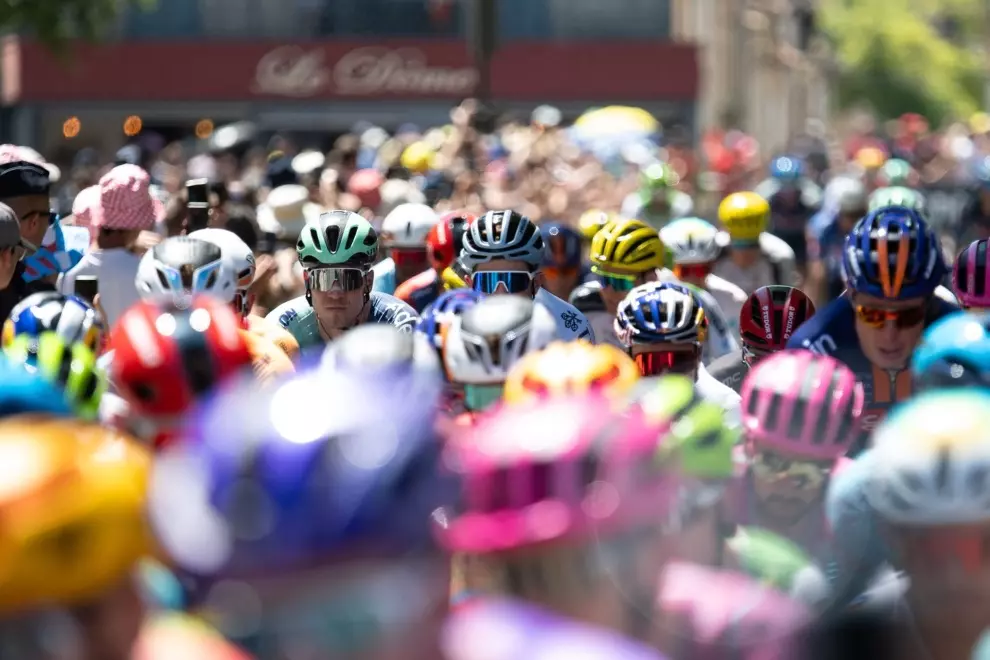
And sometimes, next year’s employer has yet to return your agent’s call.
September gives professional cycling an extra layer of suspense. Up front, riders are racing for victories, jerseys and the satisfaction of finally getting something out of a long season. Behind the scenes, some are also racing for a place on next year’s team bus.
Preferably with a salary attached.
By this point, much of the transfer business is already settled. Teams have committed money, signed their priority riders and started working out who will fetch bottles for whom. For anyone still without a deal, the remaining opportunities can feel uncomfortably specific: one roster spot, one particular role, one manager who needs convincing.
A good September cannot reopen every closed door. But it can give an agent a much better reason to knock.
The breakaway is the obvious place to start. Sitting in the peloton might be sensible, but it offers limited scope for reminding the world what you can do. Get into the right move and suddenly there is a chance to show climbing ability, tactical judgement and the useful habit of still being there when everyone else has had enough.
A stage win is the dream. Even a strong performance can turn a rider from a name on a spreadsheet into someone a sports director wants to discuss.
That does not mean every September attack is a rolling job application. Plenty of riders already have contracts, and plenty are simply following instructions. Nor does employment anxiety magically produce better legs. It can just as easily persuade someone to chase too many moves and arrive at the decisive moment thoroughly cooked.
The opportunity is real. So is the temptation to overdo it.
For domestiques, the calculation is more awkward. Their job often involves making sure somebody else gets the attractive finish-line photograph.
Imagine spending the season protecting a leader, closing gaps and riding into the wind, then reaching contract talks with a results page that suggests you have mostly been sightseeing.
Inside the team, that work should be visible. The rider who keeps a nervous contender near the front or calmly fixes a bad situation can be enormously valuable. Outside it, those qualities take more explaining than a victory.
Which creates a difficult September question: do you ask for your own chance, or keep demonstrating that you are the teammate everyone wants?
There is no universal answer. But abandoning the plan to chase personal exposure can be a terrible audition. A prospective employer might notice the attack. They might also notice the leader left stranded behind it. Reliability is a marketable skill. So is knowing when to ask for freedom rather than simply taking it.
Then there are the points.
To a spectator, sprinting for ninth might look like an argument over leftovers. To a team watching its ranking, it can be thoroughly serious business. A rider who consistently collects useful finishes may offer something more dependable than the promise of one spectacular afternoon.
The pressure can influence which races teams enter, whom they send and how much risk they want to take. Cofidis, for example, described a more selective calendar and greater emphasis on scoring points after losing its WorldTour place. A smaller race can become a very important appointment.
A calendar clarification matters here: the men’s current WorldTour licensing cycle runs from 2026 to 2028. September 2026 is not an immediate relegation deadline. The sporting battle builds across the cycle, alongside the other requirements for a licence. The last autumn of that cycle carries a different urgency from the first.
Even so, the incentive to recruit riders who can deliver results does not wait until the final few weeks.
That can put personal ambition and team priorities in an interesting relationship. A rider might need a breakthrough victory to attract attention. Their team might prefer a controlled race that offers several respectable finishes.
Sometimes both interests line up beautifully. Sometimes the most employable thing a rider can do is considerably less exciting than attacking.
And sometimes performance is only part of the problem.
A sponsor leaves. A team closes. Suddenly, riders who expected to be discussing their winter training are competing for the few jobs still available. Simon Clarke experienced that after Qhubeka’s collapse, eventually securing a deal with Israel-Premier Tech in January 2022. Months later, he won a Tour de France stage. His ability had not conveniently appeared when the contract did.
That is why “one result can save a career” is both plausible and incomplete.
A late win can settle a manager’s doubts, justify a remaining slice of budget or put a rider ahead of another candidate. It cannot guarantee that a team has money or space. Equally, a rider without a September headline may have secured another season through years of dependable work.
For those still waiting, though, the difference between a quiet finish and a breakthrough can be enormous: another WorldTour contract, a move down a level, or no professional ride at all.
So when a rider launches another attack late in the season, there may be more at stake than the television graphic can show.
The finish line is visible. Next year is still being negotiated.