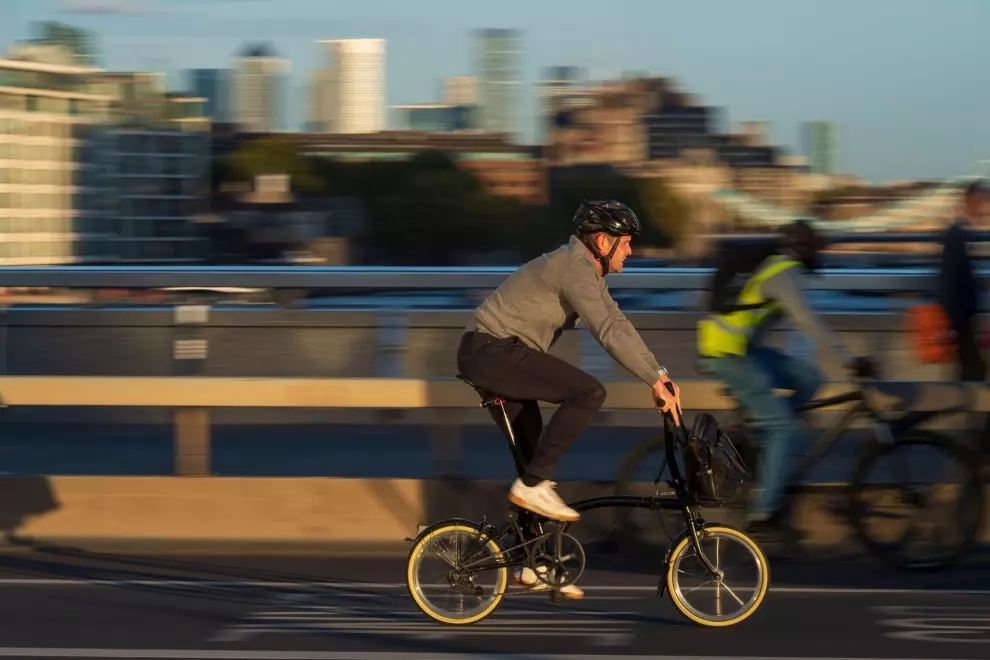
And that’s actually quite hard to achieve. Make a bike small enough to carry onto a train, and you can quickly end up with tiny wheels, limited range, and a riding position that feels more like a piece of luggage than a bicycle. Add a bigger battery and a more powerful motor, and you’ve got something you’d rather not carry anywhere.
The good news is that folding e-bikes have gotten much better at striking the right balance. In 2026, genuinely capable bikes fold small enough for city living without making you feel like you’re riding a compromise.
These are the ones worth knowing about.
Brompton Electric G Line: Best overall
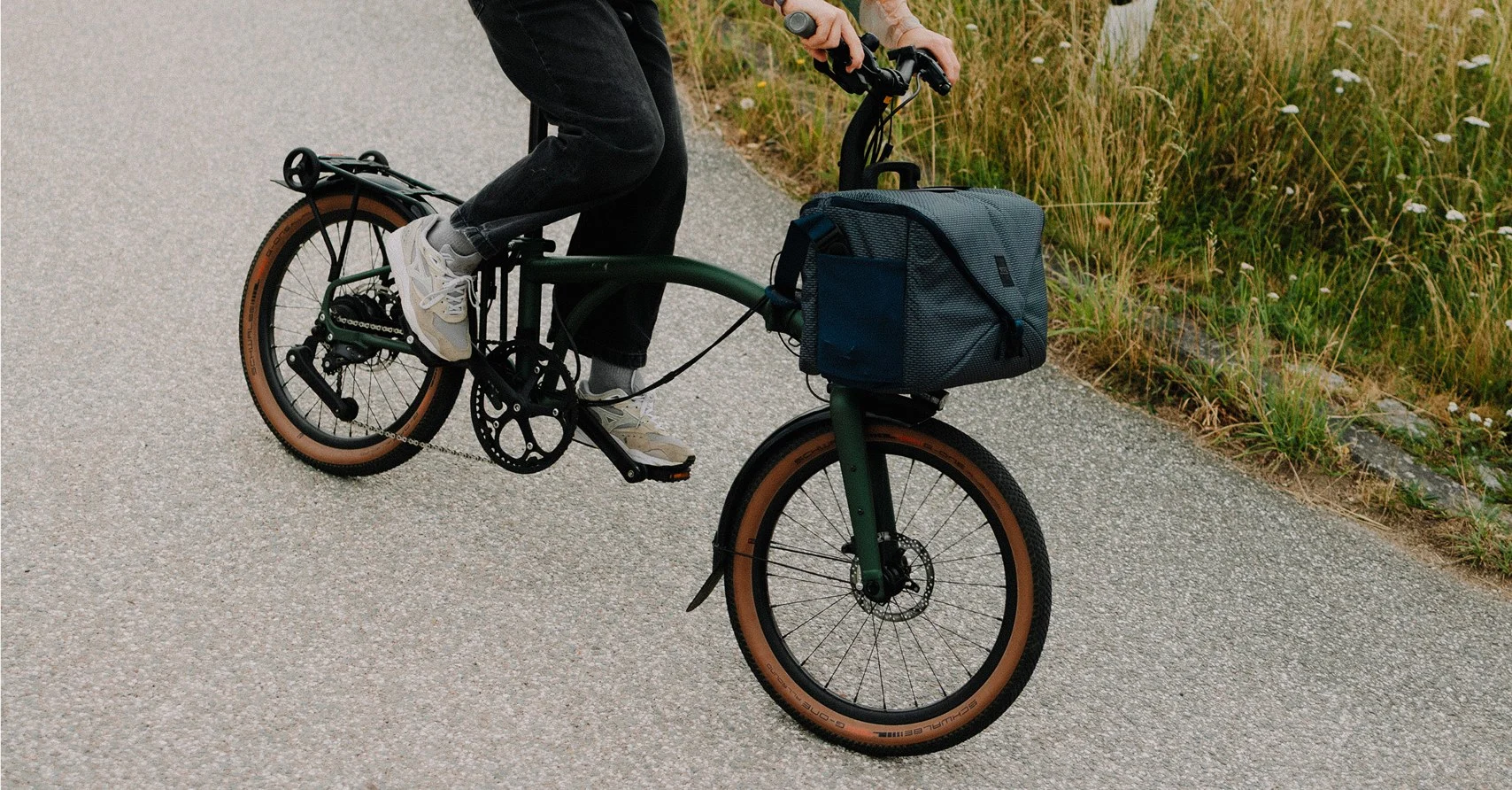
Brompton has spent decades making one very particular folding bike, and the G Line is where that dedication really shines. The most obvious change is the wheel size. The G Line uses 20-inch wheels rather than the 16-inch wheels found on Brompton’s traditional models. That may sound like a small detail, but it changes the bike’s character considerably. The larger wheels roll more confidently over rough surfaces and make the bike feel much closer to a conventional city or gravel bike.
Then there is the electric system. The G Line uses Brompton’s new e-Motiq rear-wheel-drive system and a 345Wh battery, with a claimed range of up to 90 km. It has four gears, hydraulic disc brakes, and weighs from 19.5 kg, including the battery.
It is still unmistakably a Brompton when folded, although the larger wheels mean that the G Line takes up more space than its smaller siblings. And that’s really the point. This isn’t the folding e-bike for someone whose only requirement is getting onto a crowded train with the smallest possible package. It is for someone who wants the folding mechanism without giving up the ability to ride beyond smooth city streets. Brompton itself positions the G Line for everything from asphalt and towpaths to gravel and well-maintained off-road routes.
Best for: commuters who mix cycling with public transport, travellers, and anyone who wants one folding bike capable of considerably more than getting from the station to the office.
Watch out for: it is still a relatively heavy object to carry compared with a non-electric Brompton.
Tern Vektron P10: Best for serious commuting
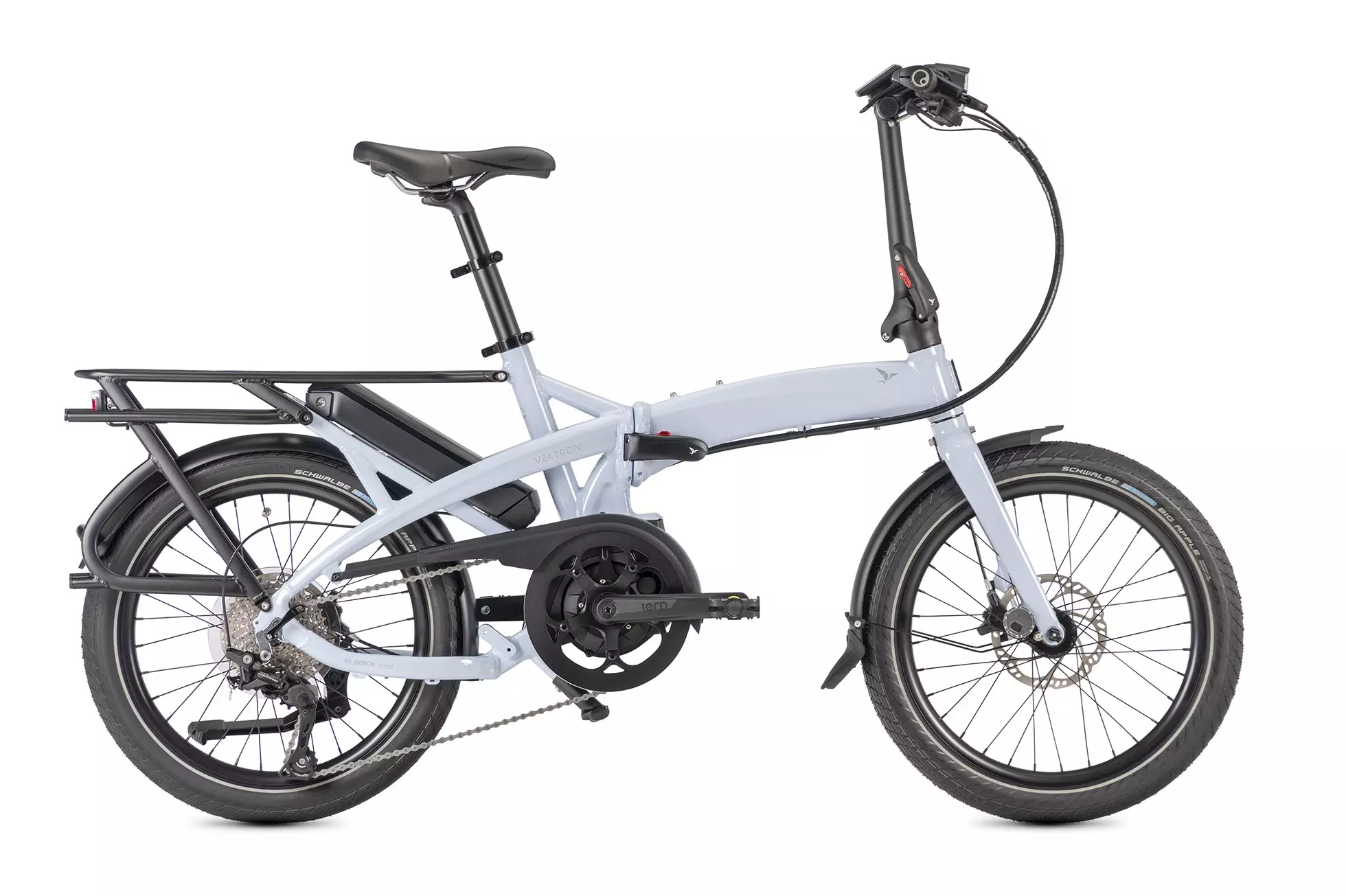
If the Brompton is the folding bike that happens to be extremely capable, the Tern Vektron is closer to a full-size e-bike that happens to fold. The latest Vektron P10 uses Bosch’s Performance motor, producing up to 75 Nm of torque and 340% support, with a choice of 545Wh or 400Wh batteries. The larger battery gives a claimed range of up to 120 km. It also gets a Shimano Deore 10-speed drivetrain, hydraulic disc brakes and an integrated rear rack rated to carry up to 27 kg.
That rack is worth mentioning. Folding e-bikes are often treated as purely personal transport, but the Vektron is much more practical if your commute involves an actual bag, shopping, work equipment or a child-related cargo explosion.
It folds in around ten seconds and can stand upright and roll while folded, which is exactly the sort of detail that matters after you’ve used a folding bike for a few weeks. Tern also gives it a wide adjustment range, accommodating riders from 147 to 195 cm.
At 22.2 kg, it isn’t light. But that’s the trade-off: Bosch motor, a large battery, substantial brakes, proper gears and a load-carrying frame all have to go somewhere.
Best for: demanding daily commuters, hilly routes, carrying luggage and riders who want the closest thing to a full-size e-bike experience.
Watch out for: at over 22 kg, you won’t want to carry it very far.
Gocycle G4i: Best premium folding e-bike
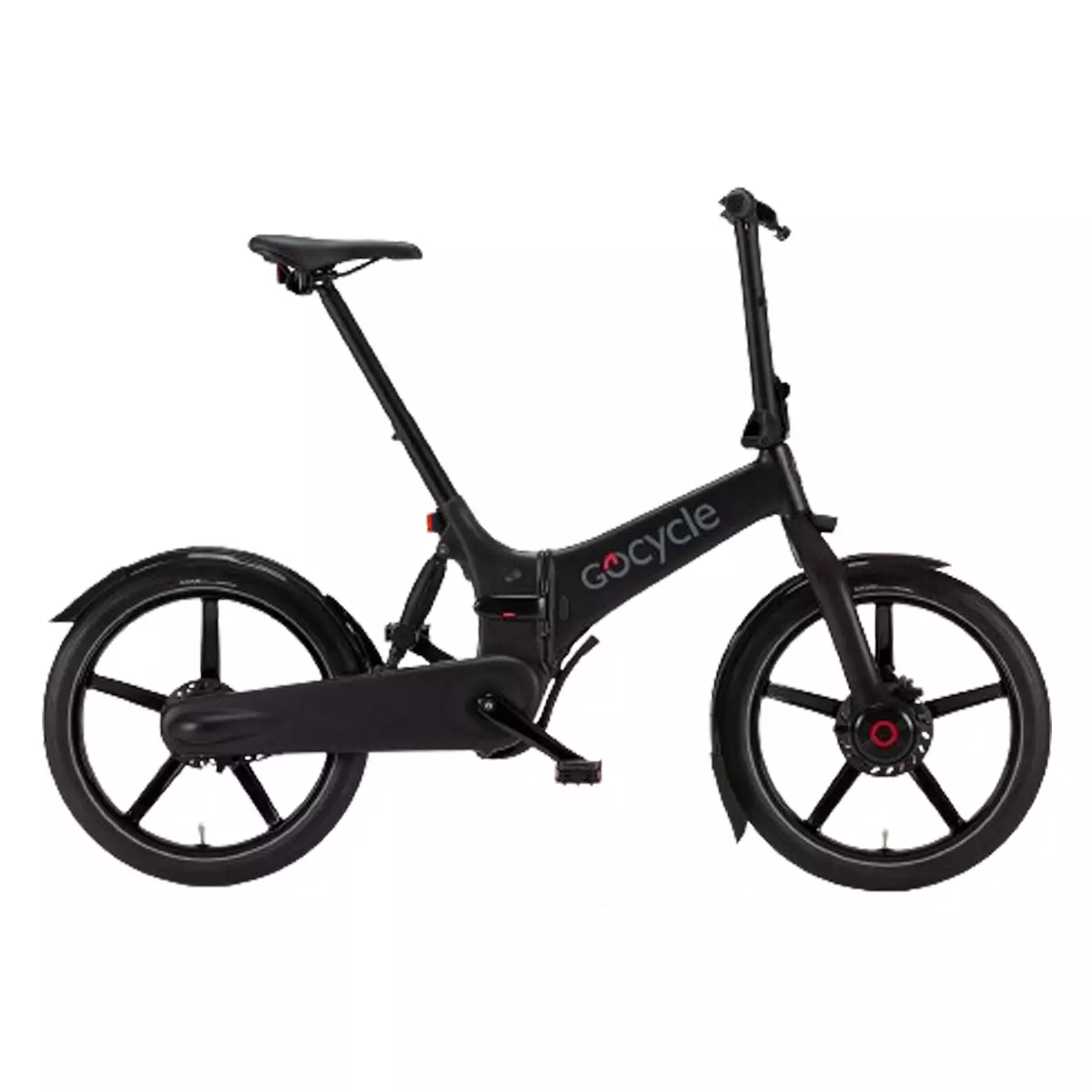
The Gocycle has always looked as though somebody asked a car designer to reinvent the bicycle. The G4 generation continues that tradition, but it has considerably more substance behind the futuristic styling than just looking good in a train station.
The G4i uses Gocycle’s proprietary G4drive motor, a carbon-fibre mid-frame and magnesium Cleandrive system. The 375Wh battery provides up to 80 km of range depending on rider input, and the bike weighs from approximately 17.6 kg.
The enclosed drivetrain is particularly clever for urban use: no exposed chain to catch trousers, bags, or your enthusiasm for wearing clean clothes on the way to work. Gocycle also uses its distinctive single-sided wheels, while the bike folds for transport and can be rolled along on its integrated wheels. The G4i also adds electronic predictive shifting and an integrated daytime running light. Its battery is removable, and Gocycle quotes a 3.5-hour charging time.
There is a catch, naturally. This is premium cycling equipment, and the price reflects it. But if you care about compactness, low maintenance and a bike that looks more like a piece of industrial design than a conventional e-bike, the Gocycle remains in a category of its own.
Best for: Design-conscious commuters, apartment dwellers and people who want a folding e-bike that feels deliberately engineered rather than simply compact.
Watch out for: The price.
CUBE Fold Hybrid 545: Best full-bike feel
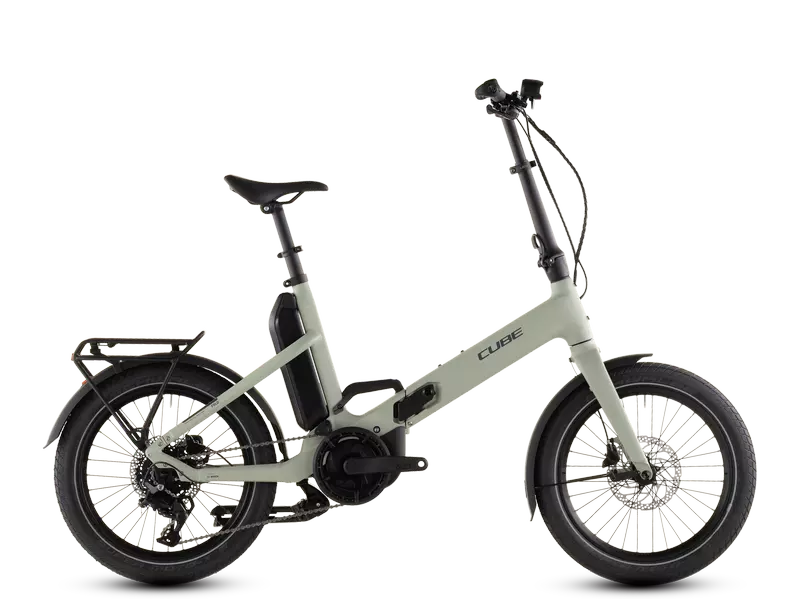
Some folding e-bikes are built around the idea that folding is their main purpose.
The CUBE Fold Hybrid takes the opposite approach. It is a substantial e-bike that folds when you need it to.
The recipe is reassuringly conventional: Bosch Performance Line power, a 545Wh battery, Shimano nine-speed gearing, hydraulic disc brakes, 20-inch wheels, mudguards, a rear rack and a proper kickstand. CUBE lists the bike at 25.3 kg.
Twenty-five kilograms sounds like a lot until you remember what you’re getting for it. This isn’t a bike designed primarily to be carried through a railway station. It is designed to get you across town comfortably, carry your things and then fold down for storage, transport or the occasional trip in the car.
The folded dimensions are 90 × 60 × 75 cm, and the integrated carrying handle makes moving it somewhat less awkward. If you don’t need to haul your bike up three flights of stairs every evening, this is one of the most sensible choices here.
Best for: everyday riding, longer commutes, campers and motorhome owners, and anyone prioritising riding quality over minimum folded weight.
Watch out for: 25.3 kg is a lot to lift.
MiRIDER 20: Best lightweight everyday option
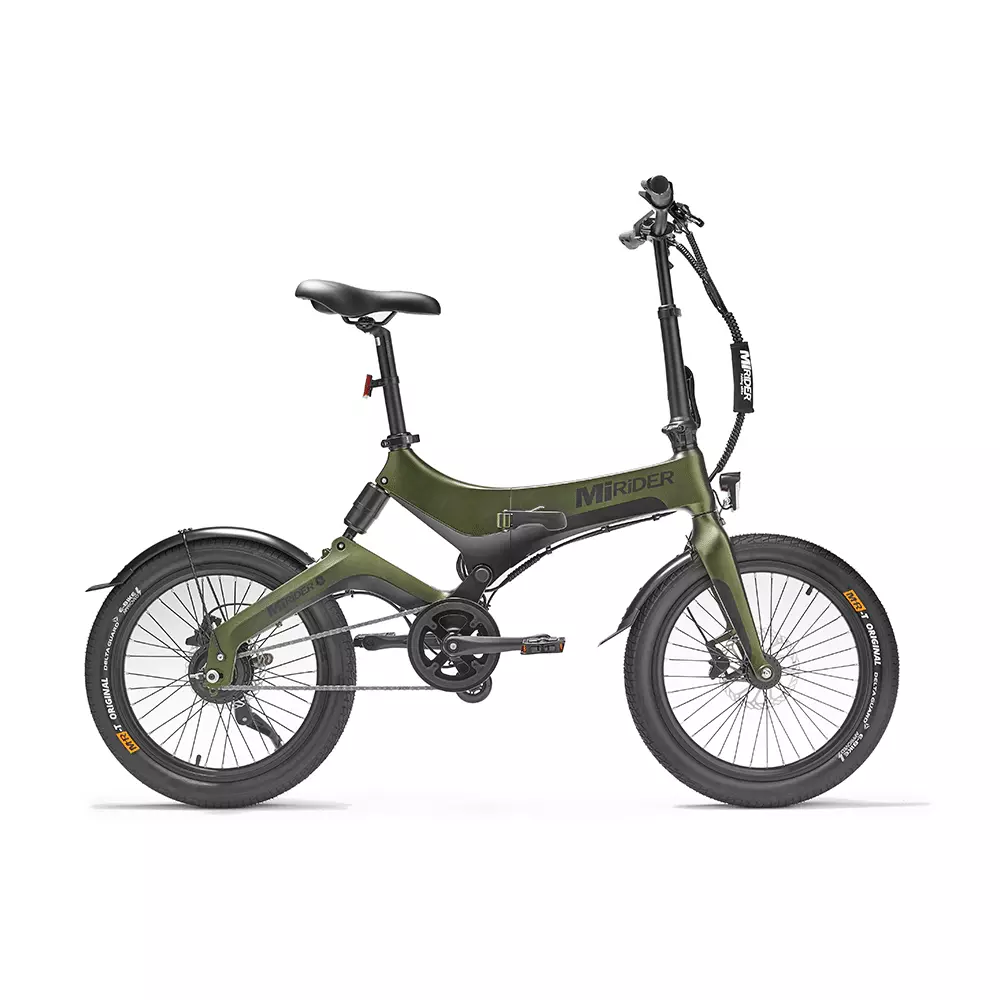
The MiRIDER 20 occupies a useful middle ground. It has the stability and ride quality advantages of 20-inch wheels, but doesn’t try to turn itself into a heavyweight touring e-bike.
At 20 kg, it is considerably easier to manoeuvre than something like the CUBE, while still offering a 250W rear-hub motor with 45 Nm of torque, a removable 252Wh battery and up to 72 km of claimed range.
The frame is magnesium alloy, and the relatively compact 105 cm wheelbase gives it a lively feel rather than the slightly cumbersome handling you can get from some small-wheel folding bikes.
There is also a three-speed GB3 version with a belt drive, which is an appealing upgrade if your definition of a good commuter includes not having to think about chain maintenance. The single-speed version starts at £1,795, while the current GB3 is considerably more expensive.
Best for: Everyday urban riding, people who actually need to lift their bike occasionally, and anyone who wants something lively rather than utilitarian.
Watch out for: The relatively small battery means its impressive claimed range is most realistic in lower assistance modes and favourable conditions.
Fiido X: Best direct-to-consumer alternative
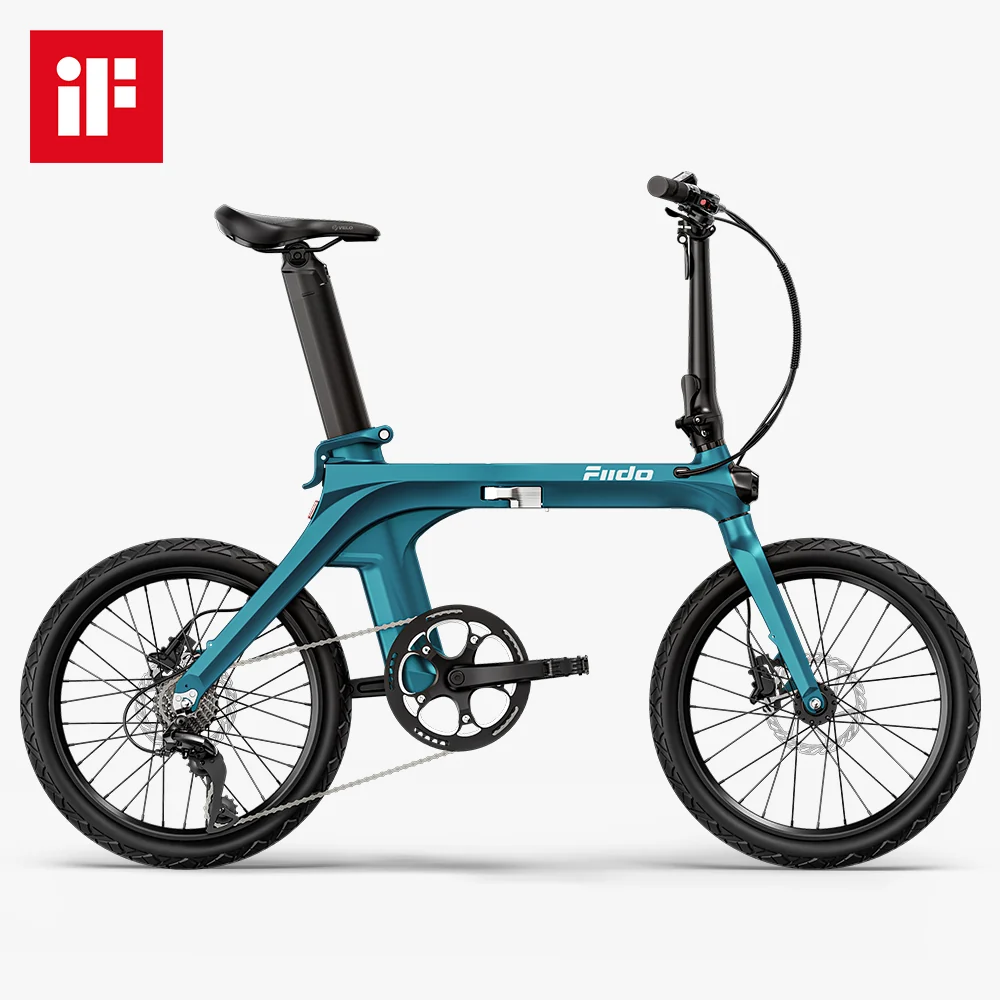
The Fiido X is an interesting one because it delivers a specification that would have been unusual at this price a few years ago.
It uses a magnesium-alloy frame, a 417.6Wh removable battery, seven-speed gearing and a Mivice torque sensor. Fiido claims up to 130 km of range and a five-second folding time. The bike weighs 19.8 kg with the battery installed.
The torque sensor is the important part. Rather than simply detecting that you’re pedalling and deciding how much assistance to provide, a torque sensor measures how hard you’re actually pushing the pedals. Done well, that makes the motor feel considerably more natural, particularly when starting, accelerating or changing effort.
Fiido’s own testing puts the X at 130 km in Eco mode, 112.78 km in Normal and 89.13 km in Sport, although those figures were obtained with a 75 kg rider on flat terrain.
That last detail is worth paying attention to. E-bike range figures are not a promise. Temperature, hills, rider weight, wind, tyre pressure and assistance level can all move the number substantially. Still, the X is a compelling package if you want a relatively light folding e-bike, a torque sensor and a large battery without moving into premium-bike pricing.
Best for: Urban commuters who want a lot of specification for their money.
Watch out for: The ownership experience of a direct-to-consumer e-bike depends more heavily on the manufacturer’s support and service network than buying from an established local bike dealer.
ENGWE P20: Best value
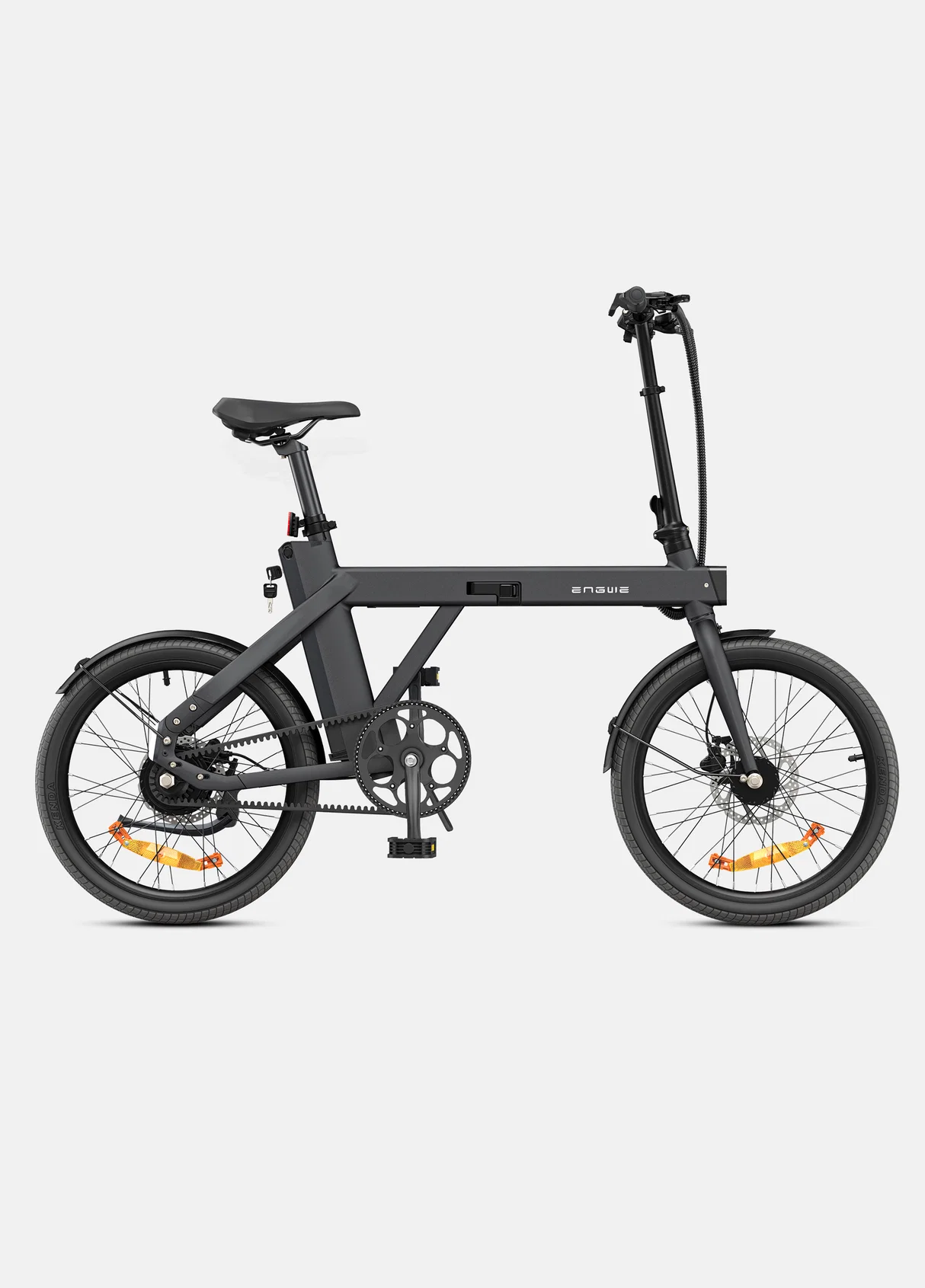
At 18.5 kg, the ENGWE P20 is one of the more interesting bikes here if portability is high on your list. It uses a 250W motor with 42 Nm of torque, hydraulic disc brakes, a 9.6Ah battery and a torque sensor. The claimed range is up to 100 km, and the bike folds to 90 × 42 × 62 cm.
More unusually, it uses a carbon belt drive rather than a conventional chain. That means less grime, less routine lubrication, and a much lower chance of arriving at work with a mysterious black mark on your trousers.
The P20 also includes mudguards and a rear rack, and ENGWE quotes a 120 kg payload. At around €1,000 on the manufacturer’s European site at the time of writing, it is significantly cheaper than most of the premium bikes in this list.
Best for: City commuters, occasional riders and anyone who wants a practical folding e-bike without spending several thousand euros.
Watch out for: As with other direct-to-consumer brands, check local servicing, warranty support and spare-parts availability before buying.
What actually matters when choosing a folding e-bike?
It’s tempting to compare battery capacity and range. Don’t stop there.
A 545Wh battery is impressive, but if you’re carrying the bike up two flights of stairs every day, you’ll probably care more about those extra kilograms.
Weight
Ask yourself what being able to fold your bike is actually going to offer you. If it means the bike lives in the boot of your car, weight matters but probably isn’t decisive. If it means carrying it onto a train, lifting it onto a luggage rack or navigating stairs, it’s critical. There’s a big difference between roughly 18 kg and 25 kg when you’re carrying a bike rather than riding it.
Wheel size
Sixteen-inch wheels make for impressively compact folding bikes. Twenty-inch wheels generally make for a more stable, forgiving ride. If your bike is primarily a last-mile commuter that spends half its life on trains, smaller wheels make sense. If you’re riding several kilometres through potholes, cobbles or gravel paths, larger wheels are usually worth the extra folded volume.
Torque sensor vs cadence sensor
A cadence sensor essentially knows that you are pedalling. A torque sensor can detect how hard you are pedalling and adjust assistance accordingly. For stop-start urban riding, hills and riders who want the bike to feel more natural, a good torque-sensing system can make a noticeable difference.
Folded size isn’t the whole story
Manufacturers are understandably proud of folded dimensions. But there’s another measurement you should care about: how easy is it to move once folded?
Does it stand upright? Can you roll it? Is there a useful handle? Do the wheels stay together? Does the folded bike stay securely folded?
Don’t believe range figures unquestioningly
A manufacturer’s maximum range is a useful comparison point, not a guarantee. The number is generally produced under relatively favourable conditions, often using low assistance and a reasonably light rider on flat terrain. Real-world range can differ dramatically in winter, into a headwind, or on a hilly commute.
If you know your regular journey is 30 km, don’t buy a bike because its headline figure says 35 km. Give yourself plenty of margin.
Think about the battery when the bike is indoors
A removable battery can be a major advantage if your bike lives somewhere without a convenient charging socket. It also means you don’t necessarily have to drag the entire bike into your home every evening.
On the other hand, an integrated battery can make for a cleaner frame and sometimes better weight distribution. Again, there isn’t one correct answer — just one that works better for your storage situation.
So, which folding e-bike should you buy?
There isn’t really a single winner because the reason you buy a folding e-bike matters almost as much as the bike itself. Buy the one whose compromises match your life because the whole point of a folding e-bike is that it should make cycling easier to fit into your day, not give you another piece of equipment to work around.