Yeah, New Year’s resolutions are just amazing when you are sipping on a glass of wine near a heat source in an atmosphere that vaguely resembles summer if you squint hard enough. Unfortunately, January is not interested in that fantasy. Unless you live below the equator – in which case good luck with the heatstroke – January is dark, cold, wet, icy, and generally hostile to anything that depends on exposed limbs and rubber contact patches. Roads turn into a slippery grey slide. Trails become a gorgeous mix of white and brown. Daylight is something people claim to have seen, although evidence remains inconclusive. So, yeah, riding outside stops being intuitive the moment the overexcited neighbour almost kicks off World War III with their fireworks, and the clock hands finally shake on it.
And yet, the goals remain. The plan remains. The execution is a bit in question, but there is always a way. For dedicated cyclists, January offers three solutions. None of them is ideal, but… Well, it’s January, and you want to ride a bike – go figure. You can stay inside and ride indoors, looking at a screen and an alarming amount of numbers. Or you can go to the velodrome and try out something new and exciting, which ultimately has little to do with regular riding. Finally, you can choose to refuse to believe that the weather exists and still go out for a ride.
Each option has its believers, its critics, and its own very specific way of breaking you. Let’s stop pretending this is about “what’s best” and talk about what actually works, who survives it, and who quietly abandons the idea halfway through January – or the rest of January anyway.
Indoor cycling: Perfect conditions, questionable mental health
Indoor cycling in January feels like the most reasonable bad decision you can make. Everything is controlled. The temperature is perfect, the road surface never changes, and the weather has been politely excluded from the room. You can ride whenever you want, for as long as you want, without negotiating with daylight, ice or common sense.
You also get structure. Real structure. Training plans stop being aspirational documents and start becoming things you actually follow. Apps like Zwift and Rouvy throw other riders on the screen so you can pretend this is social, even though you are alone, sweating aggressively, and being overtaken by someone named “FTPMonster122.” It counts. Emotionally. Sort of.
The flip side arrives quickly. Indoor riding is cycling with most of the cycling removed. There is no wind to read, no surface feedback, no positioning, no subtle drift that keeps you honest. You pedal. The trainer resists. That’s the relationship. When spring comes, your legs will be ready. The rest of you will need a reminder.
Then there’s the equipment. Trainers are not cheap, fans multiply like rabbits, and suddenly you need space. Actual space. Fitting a bike, a trainer, a mat, and that random decoration you received as a Christmas gift into a 45-square-meter apartment shared with another human is less “training” and more negotiating when it will be convenient to do your intervals.
Heat becomes its own problem. Indoors, you don’t cool down, you stew. You can always place a fan to cool you off, but that’s one more thing to find a place for and one more thing to keep somewhere when you’re not using it.
The mental demand is probably the biggest downside. Even with Rouvy or Zwift, looking at numbers and riding at home becomes dull fast. Part of the allure of regular rides is that you are getting somewhere. You have a destination – be it a coffee shop, a random hut, a friend, or whatever. At home, your only destination is the mop after the training to swipe away the three metric tons of sweat that are now covering the wooden floor.
Still, if you are out there for the numbers and not the adventure, indoor cycling can deliver like nothing else. Brutal precision, tireless effectiveness. If that’s your game, indoors is your place to ride.
The velodrome: Where you must mean every pedal stroke
If indoor training at home is not an option because of family, space or the general desire to remain on speaking terms with the people you live with, the velodrome starts looking very attractive. It’s warm, dry, and smooth, but not in the Turkish-bath way your living room becomes after twenty minutes on the trainer. This is controlled warmth. You move air. You survive.
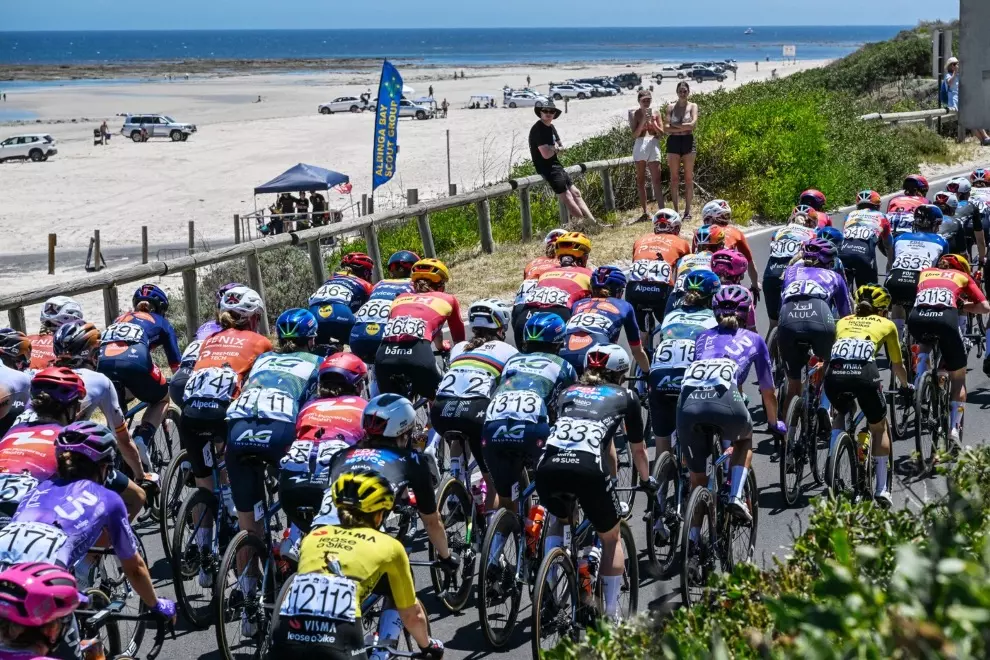
The track forces you to become precise. Power goes in cleanly. Cadence stops being a suggestion and starts being a requirement. There is no coasting, no hiding, and no casually soft-pedalling your way through an interval. When you do structured work here, it actually sticks. You feel it immediately, and so does everyone riding near you.
It’s social too, in a very specific way. You meet new people, you learn their wheels, and you learn very quickly where you fit in. There’s no small talk at speed, just shared suffering and mutual respect. It’s oddly motivating to suffer efficiently alongside strangers who are very good at what they do.
Still, let’s be honest. This is not normal cycling. There are no gears, no freewheel, and no room for improvisation. The technique is different enough to feel wrong at first, and the learning curve includes rules, etiquette, and the unspoken understanding that you are not the main character.
You also need a dedicated bike, which means another purchase and another justification. And unless you’re lucky, the velodrome is not around the corner. Sessions require planning, schedules, and commitment.
But if you want structure without isolation, speed without weather, and winter riding that actually feels alive, the velodrome makes a very convincing case.
Outside: Because the weather can’t tell you what to do
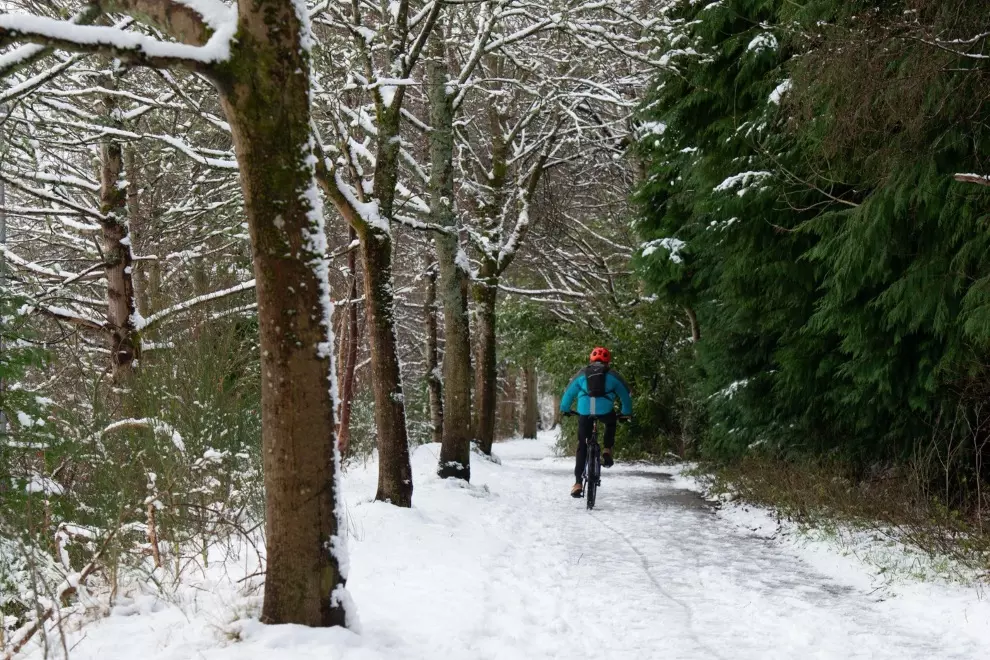
Riding outside in January is a statement. Not a very sane one, but at least it’s a clear one. You wake up, look at the temperature, check the wind, glance at the light situation, and still decide to go. At that point, it’s no longer about training. It’s about refusing to be told what to do by anyone, even the weather.
The benefits are obvious the moment you roll out. This is real cycling. Wind exists. Grip is conditional. Corners demand attention. Every input matters because the environment is actively trying to trip you up. You keep your handling sharp, your awareness switched on, and your ability to read the road intact. No screen can teach that. No erg mode can fake it.
There’s also a quiet satisfaction to it. You didn’t simulate resistance. You earned it. You come home cold, dirty, and slightly feral, which somehow feels better than finishing an immaculate indoor session in perfect comfort.
But January outside riding does not give anything away for free. Comfort disappears early. Fingers stop working. Feet turn into abstract concepts. Pacing becomes a guessing game because layers, wind, and road conditions constantly interfere. Intervals rarely survive contact with reality. They dissolve into “close enough” efforts held together by stubbornness.
Volume is capped, too. Darkness ends rides whether you agree or not. Ice forces route choices you don’t enjoy.
Outside riding in January suits riders who need the wind to feel alive. Riders who trust their instincts more than their spreadsheets. It’s inefficient, uncomfortable, and deeply satisfying. Wait, isn’t that the tagline of cycling anyway?
January doesn’t really care which one you choose
January is not the month when perfect decisions are made. It’s the month where riding survives in whatever form you can tolerate without quitting. Indoors gives you control. The velodrome gives you structure. Outside gives you honesty. None of them is complete, and none of them needs to be.
The only wrong choice is the one that turns riding into a chore you keep postponing. Everything else is valid if it keeps the legs turning and the excuses quiet. January will pass whether you train or not. You might as well come out of it still wanting to ride.