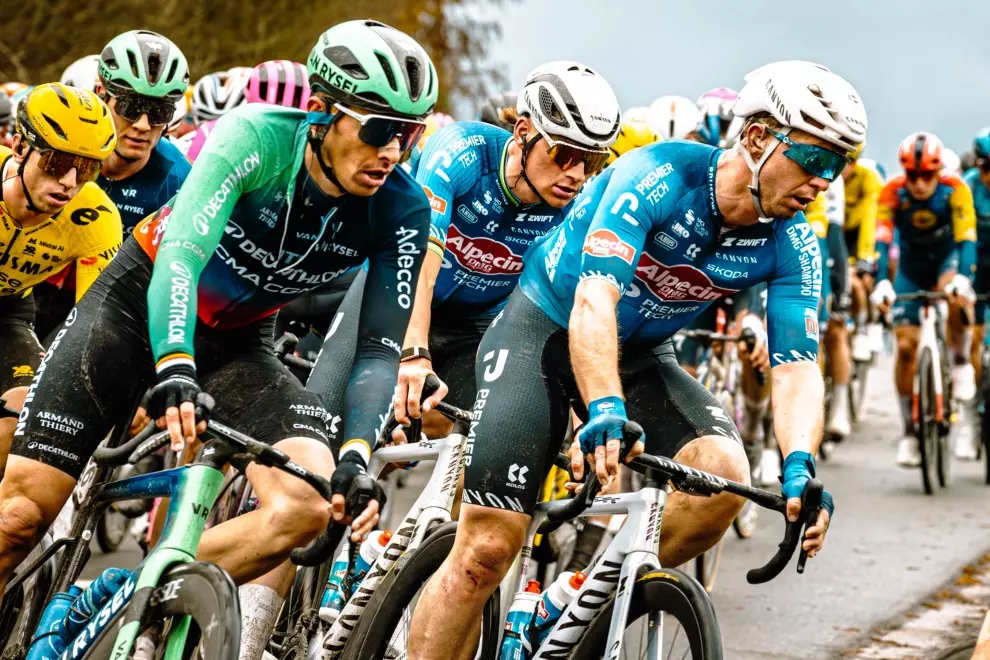
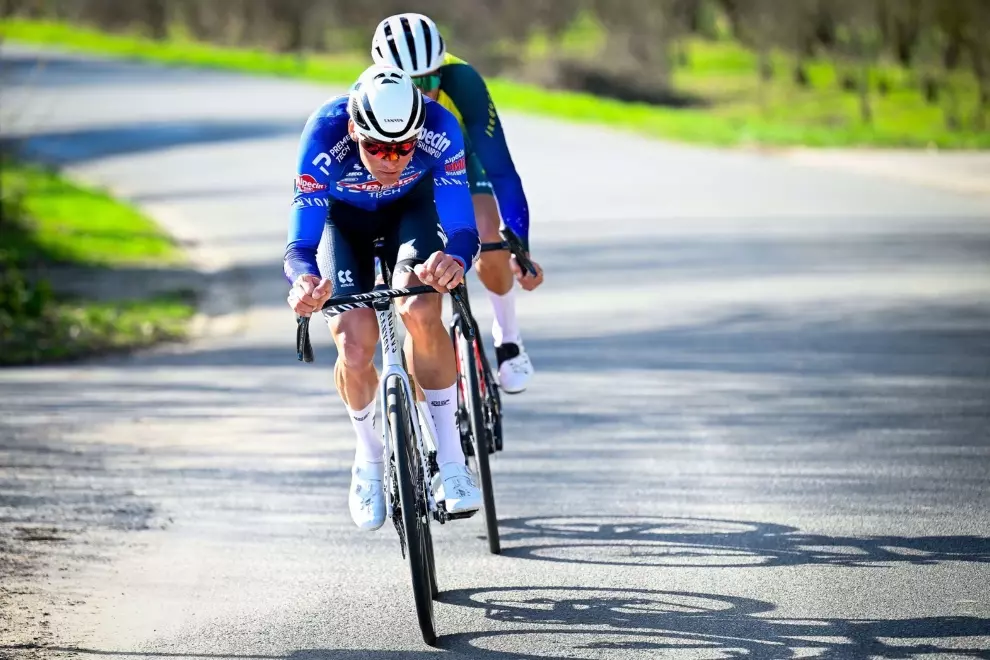
In XC racing, drafting can do more than just help you lower your heart rate or save a few watts. It can break your rivals mentally. It can win you sprints. It can be the difference between blowing up on a fire road and holding on just long enough to ruin someone else’s day.
The problem is, drafting in mountain biking doesn’t come naturally. Mountain trails, for some reason, aren’t as smooth and predictable as a freshly paved highway. More often than not, you’re dealing with technical climbs, sketchy descents, and terrain where the rider in front might do literally anything—from flipping over a rock to handing you a piece of Turkish delight. The latter is rare, but not impossible.
So let’s look at when drafting during XC races makes sense, when it absolutely doesn’t, and how to do it without becoming the rider everyone glares at on the start line.
Why does drafting work in XC, even if messy?
Drafting in XC racing is like trying to drink from a bottle while riding a bull: chaotic, ungraceful, but occasionally successful. It doesn’t have the smooth efficiency of a road peloton where everyone takes their little pull and no one hits a tree. But when the trail opens up (even briefly), drafting can give you just enough of a breather to pretend you’re not about to fire your lungs for insubordination.
Every XC course has those moments. A long fire road climb. A flat forest track. A miserable headwind section where the rider in front becomes less of a competitor and more of a human windshield you’d gladly write a thank-you letter to. These are the windows where drafting works. Maybe not for long, maybe not as well as in road biking, but it works.
Even a ten-second break from full exposure can give you enough recovery to hold a wheel, launch a pass, or, at the very least, delay the inevitable blowing of your quads, you’ve been budgeting for kilometre thirty.
On climbs, it can help keep your pace steady without you having to drag your own sorry soul through the wind. On flats, it can be the only thing keeping you in the group. On descents… well, if you’re drafting there, either you’re desperate or clinically “fearless”. Or both.
Yes, the terrain breaks it up. Yes, it’s harder to hold a line when that line includes rocks and roots. But that doesn’t mean it’s useless. It just means it takes more timing, more awareness, and slightly more willingness to risk eating dirt in exchange for saving 5-10 beats per minute.
When you should draft
There comes a point in every race when you’re making sounds usually reserved for an asthmatic elephant with sinus inflammation. Your eyes blur. Your legs send hate mail. And just ahead, there’s a rider—bigger, smoother, or simply unlucky enough to be in front. In that moment, you remember that pride is a mortal sin, and wildly overrated anyway, especially when your heart’s been pounding in your eyeballs for the past ten minutes and your HR numbers have climbed into a range that would make a cardiologist drop their coffee.
This is when you draft.
And despite what some crusty XC purists might tell you, there are plenty of good moments to do it.
Drafting works best when the trail opens up. Fire roads, doubletrack, anywhere that’s wide enough to sit in and not immediately slam into a tree if the rider ahead twitches. If there’s wind, even better. There’s nothing quite as romantic as hiding behind another racer while a crosswind tries to peel your skin off. Add a slight incline and a hangover from last night’s “carb loading,” and you’ll be weeping with gratitude for the rider towing you uphill like a disrespected sled dog.
False flats are prime ground, too. Those long, soul-draining stretches that feel like climbing even though your GPS insists you’re not. Drafting here is less about watts and more about psychological survival. If someone’s ahead of you, let them take the mental beating while you quietly collect yourself and try to stop blinking in Morse code.
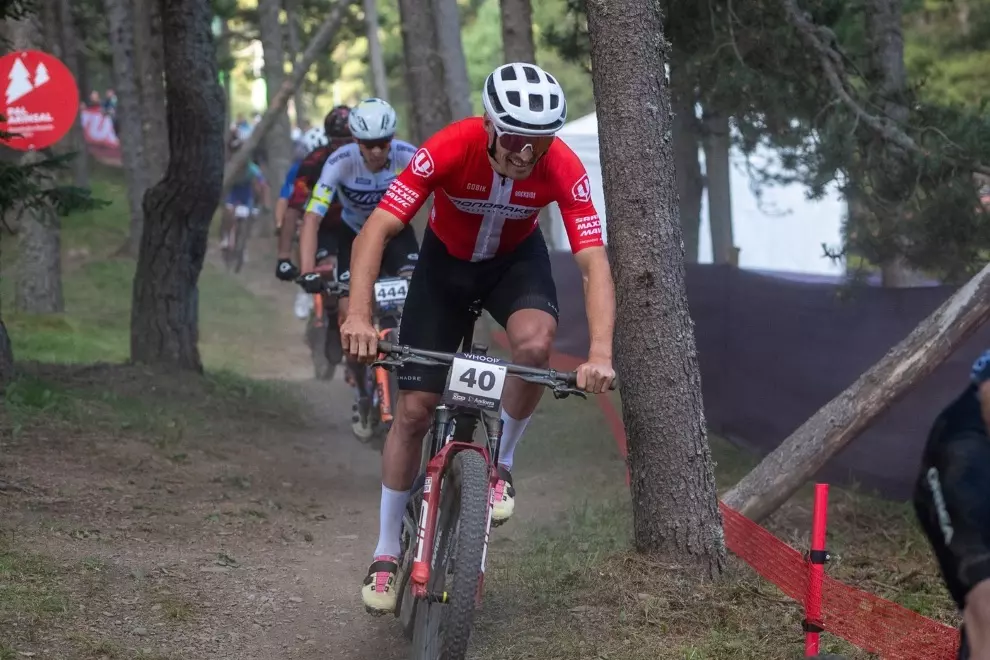
Then there’s the tactical play: use drafting to slingshot past people right before sections where overtaking is nearly impossible. Singletrack, technical climbs, brutal DH sections—these are not the places to be stuck behind a human brake lever. Draft until you’re close, then make your move before the window slams shut and you’re locked into someone else’s disaster for the next two kilometres.
And don’t underestimate its value during “recovery” moments, which is a generous term for that 20-second window where you pretend your legs are fine while quietly negotiating your will to live. Drafting gives your system a breather without forcing you to slow down. It’s like taking a nap with your eyes open – while flying downhill into a loose gravel corner.
So yes, it’s messy. But when you’re seconds away from detonating and the rider ahead is kind enough not to swerve like a malfunctioning Roomba, drafting might just keep you alive long enough to do something stupid on the next climb.
When you shouldn’t draft
There’s a very specific kind of mountain biker who tries to draft through tight singletrack. You’ve seen them. Bar-to-bar with the rider ahead, twitching through every corner like they’re auditioning for a slow-speed crash compilation. It’s not a strategy. It’s just desperation dressed as denial.
Drafting only works when there’s space to use it. In singletrack, there isn’t. You’re too busy dodging roots, trees, and whatever internal damage your last gel packet is currently doing to your stomach. Sitting on someone’s wheel here just means you’ll eat their panic braking, their missed lines, and possibly their rear tyre when they suddenly decide to clip a rock and take a nap.
And then there’s the wild card rider. The one who changes lines like they’re swerving potholes, only they can see. Drafting them is less about energy savings and more like playing a very weird Space Invaders game.
Fast descents are another bad idea. Not because drafting doesn’t work there, but because it turns into a hostage situation. You’re stuck behind someone rolling into features like they’re scouting a new planet. You’re faster. You know you’re faster. But instead of passing, you sit there, sulking behind them like you’re in a slow, dusty traffic jam… except this one ends with you watching someone case a jump and become part of the trail.
And finally, let’s talk about the most shameful form of bad drafting: when you’re clearly stronger but too lazy to pass. This isn’t strategy. It’s passive-aggressive cardio. You tell yourself you’re “waiting for the right moment,” but really you’re just drafting out of spite and glycogen-depleted stubbornness. You’re not saving energy. You’re wasting time.
Drafting has its place. But if that place includes tight corners, sketchy riders, blind drops, or a mental monologue that starts with “I should probably…”—don’t.
Basic etiquette
Drafting isn’t illegal. But if you do it wrong, someone will fantasise about throwing a multi-tool at your head. Not because you’re drafting. It’s because you’re doing it like a barn animal with no concept of personal space or basic decency.
So, some ground rules.
Don’t overlap wheels. Unless you’ve always wondered what your teeth would look like embedded in a tree, keep your front tyre out of someone’s personal zone.
Leave a bit of space. You’re not trying to dock a space station. Drafting works without needing to inspect their cassette for wear.
Don’t half-wheel. If you’re going to pass, pass. If not, sit back. Hovering awkwardly next to someone, like you’re thinking about it, helps no one and makes you look confused by the concept of momentum.
Say something. Grunt. Nod. Mutter a wheezy “cheers.” Anything to prove you’re not some mute energy vampire sucking watts in silence.
When you pass, pass properly. No sudden moves. No weird lines. No divebombing out of the slipstream like you just remembered the finish line exists.
Braking? Smooth. If you panic-brake while drafting, you’re not saving energy. You’re planning an accident.
And yes, breathing like a dying racehorse is acceptable. Just don’t expect applause for it.
How to drop someone off your wheel
Sometimes, someone sits on your wheel a little too long. They’re not pulling. They’re not passing. They’re just back there—coasting, breathing, quietly harvesting your watts like a smug little energy leech.
Maybe you don’t mind. Perhaps you’re feeling generous. Or maybe you’ve realised they’re using you as a free ride to the final climb, where they fully intend to slingshot past and pretend they did all the work. Maybe their sketchy cornering is wrecking your lines. Maybe you’re just done with the sound of their breathing, which now seems to be synced with your will to live.
Whatever the reason, it’s time to make them go away.
There are a few ways to go for it. You can attack on the climb. Hit it just before the gradient spikes. They may follow, but at least they will burn a match, not just coast behind.
You can also get creative with the tech. Pick lines that demand confidence. Not dangerous. Just spicy enough to make them second-guess staying that close. A few fast roll-overs and they’ll back off before they end up inspecting your rear tyre with their face.
On the same note, you can also start cornering more aggressively or being disruptive. Don’t follow a rhythm, just go slow and fast at random intervals, as if you’re doing a HIIT training.
Finally, you can just trick them into going in front. Fake weakness. Let your shoulders sag. Maybe cough once for effect. Make sure to drop the tempo as if you’re gone. Once they rush to the front, stick to their tire and flip the script. Just be careful. They can capitalize on this by mounting a devastating attack.
Still, if you don’t want to be passive-aggressive, just ask them to share the load. Don’t just try to drop them. Working together is always the best way to success. If they don’t want to cooperate, well, then it’s time to show who’s boss.
Can you actually win a race by drafting?
Yes. Absolutely. But not if you treat it like a backup plan.
Drafting isn’t a passive strategy. It’s a tool for control. You sit in when it hurts. You recover while others burn. You hide in the wind just long enough to sharpen the knife. And when the time comes, you don’t hesitate.
You use it to move up before a key section. You use it to stay in contact when your legs are screaming. You use it to bluff, to wait, to strike. Drafting is chess with a heart rate of 190.
You won’t win a race because you drafted. You’ll win it because you know when to stop drafting and go all in.
Because no one remembers who sat on a wheel for 30k, but they’ll remember who came around that last corner first, and made sure no one else had the legs to follow.