When rim brakes ruled the world
Ten years ago, rim brakes were still standard on almost every road bike, even high-end carbon models. My 2015 Giant TCR had rim brakes and I was happy it did. I knew how to service them myself and if it was good enough for the pro peloton, it was good enough for me.
Disc brakes existed, but they were controversial: heavier, more expensive, and seen as unnecessary for smooth tarmac. There were also concerns about safety during crashes and compatibility across wheel brands.
On the mountain bike side, disc brakes had already taken hold, but not universally. Hydraulic systems were becoming the norm for serious riders, while many budget or older bikes still used mechanical discs or even rim brakes.
As for axles, quick-release skewers (QR) were everywhere. They were light and convenient, but they came with compromises: flex, occasional wheel slippage, and alignment issues, especially with disc brakes.
The 2025 reality check
Today, you’d be hard pressed to find any new bike that doesn’t have disc brakes and thru-axles. Even lightweight climbing bikes are disc-only. The systems have become lighter, more compact, and far more reliable. Shimano’s latest hydraulic brakes and SRAM’s fully integrated systems are as close to maintenance-free as bike components get.
Why disc brakes took over?
To be honest, until I bough my first mountain bike earlier this year, I really didn’t think disc-brakes were a big deal. But when I first felt the stopping power and how little grip it required, I was immediately convinced. And then after doing a long descent in the rain, I felt so much safer that I just can’t really go back now.
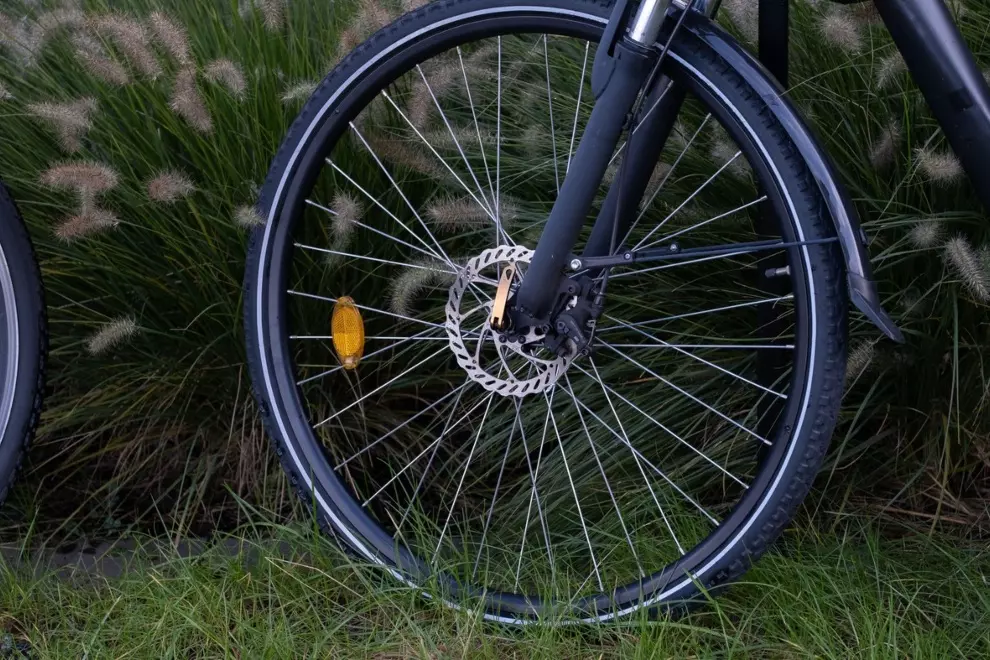
The main advantage is simple: consistent stopping power in all conditions. Rain, mud, and long alpine descents no longer mean guessing how long it will take to slow down. But there are other benefits too.
More precise braking modulation.
Rim longevity: braking happens on the rotor, not your expensive carbon rim.
Better tyre clearance: with no brake callipers in the way, frames can accommodate wider tyres.
Less hand fatigue: hydraulic systems require less force at the lever.
Of course, there are a few downsides. Disc brakes add a bit of weight, though not much anymore, and require occasional bleeding. Travelling with a disc-brake bike can also be trickier, as rotors need to be protected when packing the bike. But I would say that the trade-off is more than worth it.
UCI approval
The shift from rim to disc brakes on road bikes didn’t happen overnight. Shimano introduced its first proper road hydraulic disc systems around 2014. The UCI only began trialling disc brakes in professional racing in 2016, and it wasn’t until 2018–2021 that they became fully accepted in the peloton. By then, virtually every major brand had refined its disc-brake platforms, and the benefits in modulation and reliability had become impossible to ignore. Within just a few seasons, rim brakes went from standard issue to near extinction on new performance road bikes.
Thru-axles: small parts, big difference
Thru-axles are an innovation that might not be as talked about or as visible, but they’re closely linked to disc brakes. Ten years ago, quick-releases were the standard. They were simple and fast, but not always precise. With disc brakes, wheel alignment became critical, and a slightly misaligned wheel could mean rotor rub or brake noise.
With thru-axles, instead of clamping the wheel between open dropouts, the axle slides through the frame and hub, creating a stiffer connection with better power transfer and perfect rotor alignment every time. They’re a tiny bit heavier, and wheel changes are slightly slower than with a quick release, but that’s a small price to pay. For me, it would be enough to know that I need them to fully enjoy the benefits of disc brakes. But getting a road bike with thru-axles also made the bike feel stiffer when sprinting out of the saddle, and who doesn’t like more confidence and power when sprinting?
So, is it worth it?
If you’re still riding rim brakes and quick-releases, upgrading to discs and thru-axles will be one of the biggest confidence boosts you can make on a bike. Being able to transfer more power through the frame, brake later into corners, descend faster in the wet, and feel the bike stay planted is something you won’t want to give up once you experience it.
Disc brakes are one of those things that words can’t really describe. You simply have to try them, and once you do, you’ll want them. And when your 2015 frame can’t fit them, you know what that means. A new bike is starting to feel inevitable. Let’s seal the deal in the next and final article in the series.